LabMedica

Download Mobile App
Recent News Expo Clinical Chem. Molecular Diagnostics Hematology Immunology Microbiology Pathology Technology Industry Focus

Electron Microscopy Reveals How Viral DNA Survives Extremes of Heat and Acidity

By LabMedica International staff writers
Posted on 07 Jun 2015
The Titan Krios cryo-electron microscope tailored for use in protein and cellular imaging applications
The Titan Krios cryo-electron microscope tailored for use in protein and cellular imaging applications (Photo courtesy of FEI COMPANY)
A team of molecular biologists has used advanced electron microscopy techniques to unlock the structure of a unique virus that infects bacteria that live under conditions of extreme heat and acidity.

The nonenveloped, rod-shaped virus SIRV2 (Sulfolobus islandicus rod-shaped virus 2) infects the hyperthermophilic acidophile Sulfolobus islandicus, a species of archaea that lives in hot springs at 80 degrees Celsius and pH 3. Investigators at the University of Virginia (Charlottesville, USA) wanted to know how the virus managed to safeguard its critical DNA core and whether the virus could be exploited for use as a delivery system for gene therapy in humans.

To study the structure of the viral DNA, the investigators turned to the FEI (Hillsboro, OR, USA) Titan Krios electron microscope, which had recently become operational at the University of Virginia. The Titan Krios transmission electron microscope (TEM) was tailored for use in protein and cellular imaging. Its revolutionary cryo-based technology and stability was designed to permit a full range of semi-automated applications, including: electron crystallography, single particle analysis, cryo-electron microscopy, and dual-axis cellular tomography of frozen hydrated cell organelles and cells.

The investigators reported in the May 22, 2015, issue of the journal Science that they used the Titan Krios to generate a three-dimensional reconstruction of the SIRV2 virion at approximately 0.4 nm resolution. Their study revealed a previously unknown form of virion organization. Although almost half of the capsid protein was unstructured in solution, this unstructured region folded in the virion into a single extended alpha helix that wrapped around the DNA. The DNA was entirely in the A-form, which suggested that there might be a mechanism shared by the virus with bacterial spores for protecting DNA in the most adverse environments.

"Many people have felt that this A-form of DNA is only found in the laboratory under very non-biological conditions, when DNA is dehydrated or dry," said senior author Dr. Edward H. Egelman, professor of biochemistry and molecular genetics at the University of Virginia. "Instead, it appears to be a general mechanism in biology for protecting DNA."

"What is interesting and unusual is being able to see how proteins and DNA can be put together in a way that is absolutely stable under the harshest conditions imaginable," said Dr. Engelman. “We have discovered what appears to be a basic mechanism of resistance—to heat, to desiccation, to ultraviolet radiation. And knowing that, then, we can go in many different directions, including developing ways to package DNA for gene therapy."

Related Links:

University of Virginia

New
Gold Member
Clinical Drug Testing Panel
DOA Urine MultiPlex
POC Helicobacter Pylori Test Kit
Hepy Urease Test
New
Gold Member
Genetic Type 1 Diabetes Risk Test
T1D GRS Array

Gold Member
Collection and Transport System
PurSafe Plus®
Read the full article by registering today, it's FREE! It's Free!
Register now for FREE to LabMedica.com and get access to news and events that shape the world of Clinical Laboratory Medicine.
  • Free digital version edition of LabMedica International sent by email on regular basis
  • Free print version of LabMedica International magazine (available only outside USA and Canada).
  • Free and unlimited access to back issues of LabMedica International in digital format
  • Free LabMedica International Newsletter sent every week containing the latest news
  • Free breaking news sent via email
  • Free access to Events Calendar
  • Free access to LinkXpress new product services
  • REGISTRATION IS FREE AND EASY!
Click here to Register


Channels

Molecular Diagnostics

view channel
Image: The diagnostic device can tell how deadly brain tumors respond to treatment from a simple blood test (Photo courtesy of UQ)

Diagnostic Device Predicts Treatment Response for Brain Tumors Via Blood Test

Glioblastoma is one of the deadliest forms of brain cancer, largely because doctors have no reliable way to determine whether treatments are working in real time. Assessing therapeutic response currently... Read more

Immunology

view channel
Image: Circulating tumor cells isolated from blood samples could help guide immunotherapy decisions (Photo courtesy of Shutterstock)

Blood Test Identifies Lung Cancer Patients Who Can Benefit from Immunotherapy Drug

Small cell lung cancer (SCLC) is an aggressive disease with limited treatment options, and even newly approved immunotherapies do not benefit all patients. While immunotherapy can extend survival for some,... Read more

Microbiology

view channel
Image: New evidence suggests that imbalances in the gut microbiome may contribute to the onset and progression of MCI and Alzheimer’s disease (Photo courtesy of Adobe Stock)

Comprehensive Review Identifies Gut Microbiome Signatures Associated With Alzheimer’s Disease

Alzheimer’s disease affects approximately 6.7 million people in the United States and nearly 50 million worldwide, yet early cognitive decline remains difficult to characterize. Increasing evidence suggests... Read more

Technology

view channel
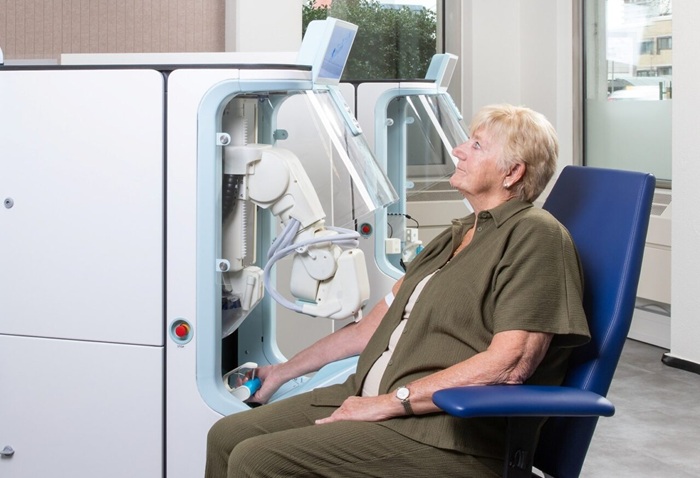
Image: Vitestro has shared a detailed visual explanation of its Autonomous Robotic Phlebotomy Device (photo courtesy of Vitestro)

Robotic Technology Unveiled for Automated Diagnostic Blood Draws

Routine diagnostic blood collection is a high‑volume task that can strain staffing and introduce human‑dependent variability, with downstream implications for sample quality and patient experience.... Read more

Industry

view channel
Image: Roche’s cobas® Mass Spec solution enables fully automated mass spectrometry in routine clinical laboratories (Photo courtesy of Roche)

New Collaboration Brings Automated Mass Spectrometry to Routine Laboratory Testing

Mass spectrometry is a powerful analytical technique that identifies and quantifies molecules based on their mass and electrical charge. Its high selectivity, sensitivity, and accuracy make it indispensable... Read more