Extracellular Vesicles Linked to Heart Failure Risk in CKD Patients
Posted on 29 Jan 2026
Chronic kidney disease (CKD) affects more than 1 in 7 Americans and is strongly associated with cardiovascular complications, which account for more than half of deaths among people with CKD. However, the specific drivers of cardiac injury have remained unclear, in part because shared risk factors such as hypertension and obesity complicate efforts to determine cause and effect. New findings now point to a kidney-specific factor that could help identify CKD patients at risk for heart failure earlier in the course of disease.
A team of researchers from the University of Virginia and Mount Sinai investigated kidney-derived signals that may directly impair cardiac tissue. The researchers pinpointed circulating extracellular vesicles (EVs) produced by diseased kidneys as a toxic influence on the heart. EVs, which normally shuttle proteins and other materials between cells, were found to carry small, non-coding microRNA (miRNA) that is harmful to cardiac tissue. In laboratory mice, blocking the circulation of these EVs significantly improved heart function and alleviated heart failure.
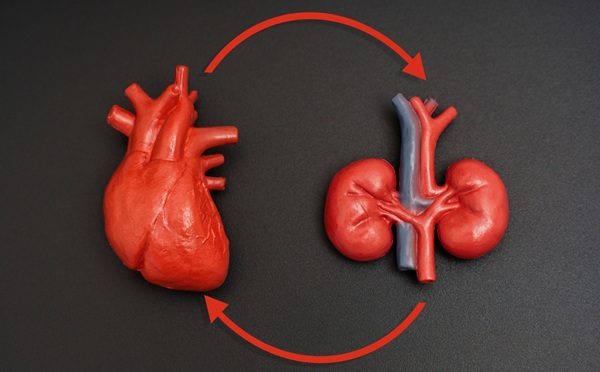
The researchers also analyzed blood plasma from patients with CKD and healthy controls, confirming the presence of harmful extracellular vesicles specifically in the CKD samples. Based on these findings, detailed in a study published in Circulation, the investigators note that EVs could form the basis of a blood test to identify CKD patients at heightened risk for heart failure. The circulating extracellular vesicles could also be targeted to treat or prevent their toxic effects on the heart.
“Kidney and heart disease can develop silently, so they are often discovered only after damage has already been done. Our findings can help to identify patients at risk for heart failure earlier, enabling earlier treatment and improved outcomes,” said Uta Erdbrügger, MD, an internal medicine physician-scientist at the University of Virginia School of Medicine’s Division of Nephrology. “Our findings can help to identify patients at risk for heart failure earlier, enabling earlier treatment and improved outcomes.”
“Doctors always wondered how organs such as the kidney and heart communicate with each other. We show that EVs from the kidney can travel to the heart and be toxic,” said Erdbrügger. “We are just at the beginning to understand this communication.”
Related Links:
Icahn School of Medicine at Mount Sinai
University of Virginia School of Medicine





.jpg)