Rapid Assay Detects Pyrazinamide-Resistant Tuberculosis
|
By LabMedica International staff writers Posted on 27 May 2019 |


|

Image: The Alere q is a fully automated nucleic acid testing platform that brings the power of molecular testing to bench tops in any healthcare setting (Photo courtesy of Alere Technologies).
Tuberculosis (TB), caused by Mycobacterium tuberculosis complex (MTBC) strains, remains one of the most frequent infectious diseases worldwide. Due to its high frequency and the increased risk of co-resistance to other drugs, rapid detection of pyrazinamide (PZA) resistance is essential to control the MDR-TB epidemic.
Pyrazinamide is a key antibiotic for the treatment of drug susceptible tuberculosis. PZA-resistance is mainly mediated by mutations in the pncA gene; however the current gold standard is a phenotypic drug susceptibility test requiring a well-adjusted pH-value for reliable results. However, PZA resistance testing is not routinely performed.
A team of microbiologists working with Alere Technologies GmbH (Jena, Germany) used 271 clinical MTBC isolates, which were derived from a national survey of drug resistance in Swaziland, for the clinical evaluation of the melting curve assay. All isolates were previously analyzed by Sanger sequencing of the pncA gene using flanking primers from position −104 to 560 out of 561 coding nucleotides. The sequence analysis showed wild type genotype for 153 isolates and different mutations in the analyzed pncA sequence for 118 isolates.
To test rare mutations (Ala25Ala, Ser74Ser, Leu116Arg and Asn147Asn) plasmids with the respective sequences were generated by Eurofins Genomics GmbH, (Ebersberg, Germany). The array probes had a C7-amino linker for immobilization on the solid array phase. The forward primers for the melting curve analysis were Cy5 labeled at the 5′ end, whereas the reverse primers for the melting curve analysis had no label as well as the primers for the TaqMan analysis. The amplification and melting curve assay was performed in a prototype cartridge produced by Alere Technologies GmbH.
The investigators reported that the melting curve assay detects a non-wild type genotype in selected pncA regions in at least 3,750 gene copies/mL within 2.5 hours. The performance of the melting curve assay was evaluated with 271 clinical isolates from Swaziland. Among 118 isolates with 21 different pncA mutations, 98 (83.05%) were detected as a non-wild type genotype. In comparison to Sanger sequencing, the melting curve assay showed a sensitivity of 83.05% and a specificity of 100%.
The authors concluded that the current prototype cartridge comprises 57 different probes but has a maximum capacity of 88 probes to be analyzed by microarray hybridization. The assay already detects reliably MTBC DNA down to 3,750 gene copies/mL with a turnaround time of 2.5 hours and works with genomic DNA as well as with cell lysates. The test can be automatically performed in a closed cartridge using the battery powered Alere q analyzer and has the potential to be applied in resource-limited settings as a point-of-care test allowing for a rapid inclusion of PZA into early treatment regimens. The study was published in the June 2019 issue of the journal Diagnostic Microbiology and Infectious Disease.






Pyrazinamide is a key antibiotic for the treatment of drug susceptible tuberculosis. PZA-resistance is mainly mediated by mutations in the pncA gene; however the current gold standard is a phenotypic drug susceptibility test requiring a well-adjusted pH-value for reliable results. However, PZA resistance testing is not routinely performed.
A team of microbiologists working with Alere Technologies GmbH (Jena, Germany) used 271 clinical MTBC isolates, which were derived from a national survey of drug resistance in Swaziland, for the clinical evaluation of the melting curve assay. All isolates were previously analyzed by Sanger sequencing of the pncA gene using flanking primers from position −104 to 560 out of 561 coding nucleotides. The sequence analysis showed wild type genotype for 153 isolates and different mutations in the analyzed pncA sequence for 118 isolates.
To test rare mutations (Ala25Ala, Ser74Ser, Leu116Arg and Asn147Asn) plasmids with the respective sequences were generated by Eurofins Genomics GmbH, (Ebersberg, Germany). The array probes had a C7-amino linker for immobilization on the solid array phase. The forward primers for the melting curve analysis were Cy5 labeled at the 5′ end, whereas the reverse primers for the melting curve analysis had no label as well as the primers for the TaqMan analysis. The amplification and melting curve assay was performed in a prototype cartridge produced by Alere Technologies GmbH.
The investigators reported that the melting curve assay detects a non-wild type genotype in selected pncA regions in at least 3,750 gene copies/mL within 2.5 hours. The performance of the melting curve assay was evaluated with 271 clinical isolates from Swaziland. Among 118 isolates with 21 different pncA mutations, 98 (83.05%) were detected as a non-wild type genotype. In comparison to Sanger sequencing, the melting curve assay showed a sensitivity of 83.05% and a specificity of 100%.
The authors concluded that the current prototype cartridge comprises 57 different probes but has a maximum capacity of 88 probes to be analyzed by microarray hybridization. The assay already detects reliably MTBC DNA down to 3,750 gene copies/mL with a turnaround time of 2.5 hours and works with genomic DNA as well as with cell lysates. The test can be automatically performed in a closed cartridge using the battery powered Alere q analyzer and has the potential to be applied in resource-limited settings as a point-of-care test allowing for a rapid inclusion of PZA into early treatment regimens. The study was published in the June 2019 issue of the journal Diagnostic Microbiology and Infectious Disease.

Gold Member
Collection and Transport System
PurSafe Plus®
Clinical Chemistry System
P780
Gram-Negative Blood Culture Assay
LIAISON PLEX Gram-Negative Blood Culture Assay
Latest Microbiology News
- Comprehensive Review Identifies Gut Microbiome Signatures Associated With Alzheimer’s Disease
- AI-Powered Platform Enables Rapid Detection of Drug-Resistant C. Auris Pathogens
- New Test Measures How Effectively Antibiotics Kill Bacteria
- New Antimicrobial Stewardship Standards for TB Care to Optimize Diagnostics
- New UTI Diagnosis Method Delivers Antibiotic Resistance Results 24 Hours Earlier
- Breakthroughs in Microbial Analysis to Enhance Disease Prediction
- Blood-Based Diagnostic Method Could Identify Pediatric LRTIs
- Rapid Diagnostic Test Matches Gold Standard for Sepsis Detection
- Rapid POC Tuberculosis Test Provides Results Within 15 Minutes
- Rapid Assay Identifies Bloodstream Infection Pathogens Directly from Patient Samples
- Blood-Based Molecular Signatures to Enable Rapid EPTB Diagnosis
- 15-Minute Blood Test Diagnoses Life-Threatening Infections in Children
- High-Throughput Enteric Panels Detect Multiple GI Bacterial Infections from Single Stool Swab Sample
- Fast Noninvasive Bedside Test Uses Sugar Fingerprint to Detect Fungal Infections
- Rapid Sepsis Diagnostic Device to Enable Personalized Critical Care for ICU Patients
- Microfluidic Platform Assesses Neutrophil Function in Sepsis Patients
Channels
Clinical Chemistry
view channel
New PSA-Based Prognostic Model Improves Prostate Cancer Risk Assessment
Prostate cancer is the second-leading cause of cancer death among American men, and about one in eight will be diagnosed in their lifetime. Screening relies on blood levels of prostate-specific antigen... Read more
Extracellular Vesicles Linked to Heart Failure Risk in CKD Patients
Chronic kidney disease (CKD) affects more than 1 in 7 Americans and is strongly associated with cardiovascular complications, which account for more than half of deaths among people with CKD.... Read more

Molecular Diagnostics
view channel
Diagnostic Device Predicts Treatment Response for Brain Tumors Via Blood Test
Glioblastoma is one of the deadliest forms of brain cancer, largely because doctors have no reliable way to determine whether treatments are working in real time. Assessing therapeutic response currently... Read more
Blood Test Detects Early-Stage Cancers by Measuring Epigenetic Instability
Early-stage cancers are notoriously difficult to detect because molecular changes are subtle and often missed by existing screening tools. Many liquid biopsies rely on measuring absolute DNA methylation... Read more
“Lab-On-A-Disc” Device Paves Way for More Automated Liquid Biopsies
Extracellular vesicles (EVs) are tiny particles released by cells into the bloodstream that carry molecular information about a cell’s condition, including whether it is cancerous. However, EVs are highly... Read more
Blood Test Identifies Inflammatory Breast Cancer Patients at Increased Risk of Brain Metastasis
Brain metastasis is a frequent and devastating complication in patients with inflammatory breast cancer, an aggressive subtype with limited treatment options. Despite its high incidence, the biological... Read moreHematology
view channel
New Guidelines Aim to Improve AL Amyloidosis Diagnosis
Light chain (AL) amyloidosis is a rare, life-threatening bone marrow disorder in which abnormal amyloid proteins accumulate in organs. Approximately 3,260 people in the United States are diagnosed... Read more
Fast and Easy Test Could Revolutionize Blood Transfusions
Blood transfusions are a cornerstone of modern medicine, yet red blood cells can deteriorate quietly while sitting in cold storage for weeks. Although blood units have a fixed expiration date, cells from... Read more
Automated Hemostasis System Helps Labs of All Sizes Optimize Workflow
High-volume hemostasis sections must sustain rapid turnaround while managing reruns and reflex testing. Manual tube handling and preanalytical checks can strain staff time and increase opportunities for error.... Read more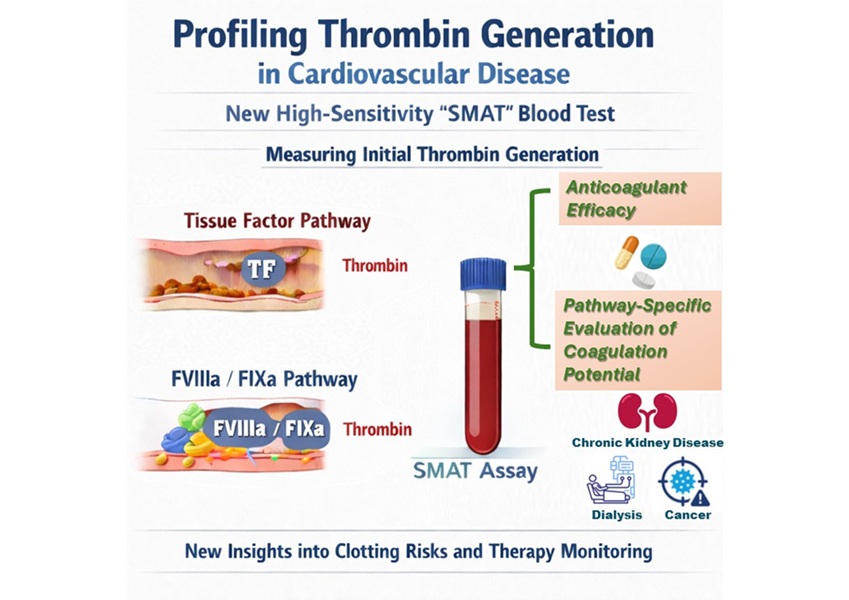
High-Sensitivity Blood Test Improves Assessment of Clotting Risk in Heart Disease Patients
Blood clotting is essential for preventing bleeding, but even small imbalances can lead to serious conditions such as thrombosis or dangerous hemorrhage. In cardiovascular disease, clinicians often struggle... Read moreImmunology
view channel
Blood Test Identifies Lung Cancer Patients Who Can Benefit from Immunotherapy Drug
Small cell lung cancer (SCLC) is an aggressive disease with limited treatment options, and even newly approved immunotherapies do not benefit all patients. While immunotherapy can extend survival for some,... Read more
Whole-Genome Sequencing Approach Identifies Cancer Patients Benefitting From PARP-Inhibitor Treatment
Targeted cancer therapies such as PARP inhibitors can be highly effective, but only for patients whose tumors carry specific DNA repair defects. Identifying these patients accurately remains challenging,... Read more
Ultrasensitive Liquid Biopsy Demonstrates Efficacy in Predicting Immunotherapy Response
Immunotherapy has transformed cancer treatment, but only a small proportion of patients experience lasting benefit, with response rates often remaining between 10% and 20%. Clinicians currently lack reliable... Read more
Pathology
view channel
Engineered Yeast Cells Enable Rapid Testing of Cancer Immunotherapy
Developing new cancer immunotherapies is a slow, costly, and high-risk process, particularly for CAR T cell treatments that must precisely recognize cancer-specific antigens. Small differences in tumor... Read more
First-Of-Its-Kind Test Identifies Autism Risk at Birth
Autism spectrum disorder is treatable, and extensive research shows that early intervention can significantly improve cognitive, social, and behavioral outcomes. Yet in the United States, the average age... Read more

Technology
view channel
Robotic Technology Unveiled for Automated Diagnostic Blood Draws
Routine diagnostic blood collection is a high‑volume task that can strain staffing and introduce human‑dependent variability, with downstream implications for sample quality and patient experience.... Read more
ADLM Launches First-of-Its-Kind Data Science Program for Laboratory Medicine Professionals
Clinical laboratories generate billions of test results each year, creating a treasure trove of data with the potential to support more personalized testing, improve operational efficiency, and enhance patient care.... Read more
Aptamer Biosensor Technology to Transform Virus Detection
Rapid and reliable virus detection is essential for controlling outbreaks, from seasonal influenza to global pandemics such as COVID-19. Conventional diagnostic methods, including cell culture, antigen... Read more
AI Models Could Predict Pre-Eclampsia and Anemia Earlier Using Routine Blood Tests
Pre-eclampsia and anemia are major contributors to maternal and child mortality worldwide, together accounting for more than half a million deaths each year and leaving millions with long-term health complications.... Read moreIndustry
view channel
New Collaboration Brings Automated Mass Spectrometry to Routine Laboratory Testing
Mass spectrometry is a powerful analytical technique that identifies and quantifies molecules based on their mass and electrical charge. Its high selectivity, sensitivity, and accuracy make it indispensable... Read more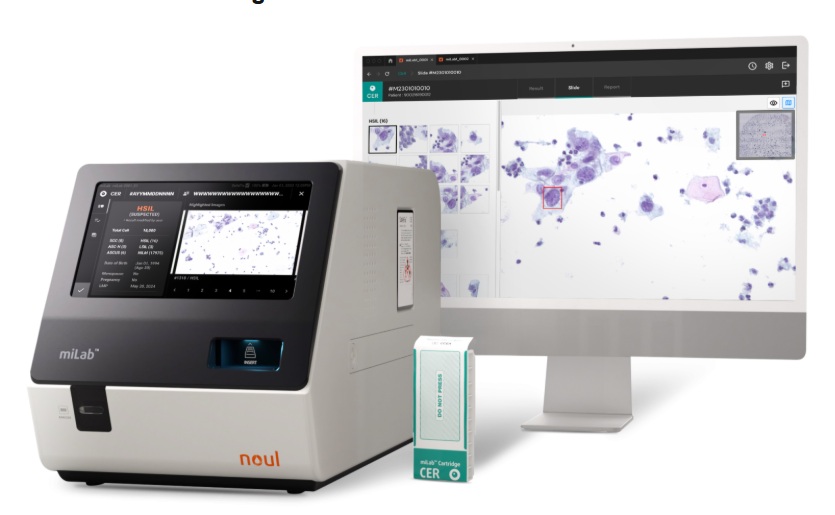
AI-Powered Cervical Cancer Test Set for Major Rollout in Latin America
Noul Co., a Korean company specializing in AI-based blood and cancer diagnostics, announced it will supply its intelligence (AI)-based miLab CER cervical cancer diagnostic solution to Mexico under a multi‑year... Read more
Diasorin and Fisher Scientific Enter into US Distribution Agreement for Molecular POC Platform
Diasorin (Saluggia, Italy) has entered into an exclusive distribution agreement with Fisher Scientific, part of Thermo Fisher Scientific (Waltham, MA, USA), for the LIAISON NES molecular point-of-care... Read more