The most commonly used test for tuberculosis (TB) fails to accurately diagnose the disease in up to 50% percent of pregnant women who are positive for the human immunodeficiency virus (HIV+).
The performance of latent TB infection (LTBI) tests has been assessed in HIV-infected pregnant and postpartum women, and the immunology behind discordance in pregnancy investigated, and the implications for the development of postpartum tuberculosis explored.
Scientists at the Weill Cornell Medical College (New York, NY, USA) and their colleagues form other institutions enrolled 252 women who were in their second or third trimester and receiving care at a public teaching hospital in India. The women received TB testing at enrollment during pregnancy or at delivery. An additional 39 women participated in a longitudinal study to assess how the TB tests were affected by changes in different stages of pregnancy. They were tested at delivery and three months postpartum. The investigators also collected blood samples to assess for levels of infection-fighting proteins.
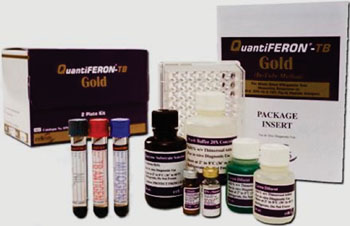
The teams screened pregnant women in their 2nd/3rd trimester and at delivery for LTBI using the tuberculin skin test (TST) and QuantiFERON Gold interferon gamma release assay (IGRA), (Quest Diagnostics; Madison, NJ, USA). A subset of antepartum women had longitudinal testing, with repeat testing at delivery and postpartum and additional cytokines measured from the IGRA supernatant. Of 252 enrolled, 71 (28%) women had a positive IGRA, but only 27 (10%) had a positive TST, and there was 75% agreement. When stratified by pregnancy versus delivery, 20% had IGRA+/TST- discordance at each time point. A positive IGRA was associated with known TB contact. Compared to IGRA+/TST+, women with IGRA+/TST- discordance produced significantly less interferon gamma (IFN-γ; 1.85 IU/mL vs 3.48 IU/mL, and less interleukin 2 (IL-2; 46.17 pg/mL vs. 84.03 pg/mL). Five developed postpartum tuberculosis, of which three had IGRA+/TST- discordance during pregnancy.
Jyoti Mathad, MD, MSc, the lead author of study said, “We found that QuantiFERON Gold positivity was almost three times higher than the more widely used TST at every time point tested. Our blood data suggests that pregnant women produce lower levels of the immune chemicals that many TB diagnostics test for. This finding has implications beyond diagnostics. For example, not all pregnant women lose immune control of TB infection. But, currently we have no way of predicting which women are most likely to get sick from the disease. Our findings about these immune chemicals provide a starting point for developing a test that will tell us who in this already high-risk population is at greatest risk of disease and death and is in most need of treatment.” The study was published on January 14, 2016, in the
American Journal of Respiratory and Critical Care Medicine.
Related Links:
Weill Cornell Medical College
Quest Diagnostics

Gold Member
Collection and Transport System
PurSafe Plus®
POC Helicobacter Pylori Test Kit
Hepy Urease Test
Alcohol Testing Device
Dräger Alcotest 7000
8-Channel Pipette
SAPPHIRE 20–300 µL