LabMedica

Download Mobile App
Recent News Expo Clinical Chem. Molecular Diagnostics Hematology Immunology Microbiology Pathology Technology Industry Focus

Nose and Throat Specimens Compared for Rapid Adenovirus Detection

By LabMedica International staff writers
Posted on 02 Dec 2014
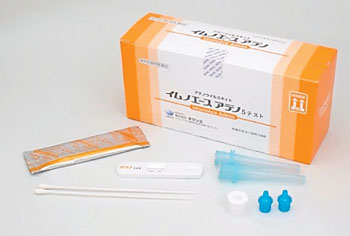
TAUNS Laboratories\' Adenovirus antigen detection kit ImmunoAce Adeno
The Adenovirus antigen detection kit ImmunoAce Adeno (Photo courtesy of Tauns Laboratories)
The diagnosis of adenovirus infection on clinical grounds alone is sometimes difficult and now chromatographic immunoassay tests have begun to be available for point-of-care use.

Adenovirus is among the most common causes of upper respiratory tract infections in febrile pediatric outpatients throughout the year and rapid, accurate diagnosis is important because adenoviral diseases are often associated with prolonged, high-grade fever.

Scientists at the Hiroshima Prefectural Technology Research Institute (Japan) conducted a prospective study between September 2008 and July 2012 to determine whether nasopharyngeal aspirate (NPS) and throat swab (TS) specimens from individual patients could be compared with regard to usefulness for adenovirus detection.

One pediatrician collected TS and NPA specimens in parallel from outpatient children suspected of having adenovirus infection and performed the rapid diagnosis using a chromatographic immunoassay test, the ImmunoAce Adeno (TAUNS Laboratories, Inc.; Numazu, Japan). TS and NPA were tested in separate identical devices and each NPA swab was prepared after being dipped in NPA fluid. Aliquots of NPAs were stored at -70 °C until tested with culture and real-time polymerase chain reaction (PCR) assays to detect and identify adenovirus.

Among the 309 children enrolled, real-time PCR assay, which did not distinguish among serotypes, identified 153 patients with adenovirus and these were considered to be adenovirus-infected patients. Of these 153 patients, viral cultures identified 139 patients with adenovirus, including six serotypes, accounting for 90.8% of the adenovirus detection rate. Among the 153 adenovirus-positive specimens, based on real-time PCR findings, the sensitivities of the rapid test ImmunoAce Adeno were 91.5% for TS and 90.8% for NPA.

The authors concluded that the diagnostic accuracy between TS and NPA specimen types for the rapid diagnosis of adenovirus infections, and the detection rates between the two specimen types were nearly equivalent. Throat swabs are commonly used for the rapid diagnosis of adenoviral infections, while NPAs are routinely used for rapid detection of influenza virus. The present findings will be helpful for pediatricians in primary care clinics because they may be able to use the remaining NPA specimen for the detection of adenovirus or other respiratory viruses in cases when an influenza-negative result is unexpectedly obtained. The study was published on November 12, 2014, in the journal Diagnostic Microbiology and Infectious Disease.

Related Links:

Hiroshima Prefectural Technology Research Institute
TAUNS Laboratories 

Gold Member
Respiratory Syncytial Virus Test
OSOM® RSV Test
POC Helicobacter Pylori Test Kit
Hepy Urease Test
Urine Chemistry Control
Dropper Urine Chemistry Control
6 Part Hematology Analyzer with RET + IPF
Mispa HX 88
Read the full article by registering today, it's FREE! It's Free!
Register now for FREE to LabMedica.com and get access to news and events that shape the world of Clinical Laboratory Medicine.
  • Free digital version edition of LabMedica International sent by email on regular basis
  • Free print version of LabMedica International magazine (available only outside USA and Canada).
  • Free and unlimited access to back issues of LabMedica International in digital format
  • Free LabMedica International Newsletter sent every week containing the latest news
  • Free breaking news sent via email
  • Free access to Events Calendar
  • Free access to LinkXpress new product services
  • REGISTRATION IS FREE AND EASY!
Click here to Register


Channels

Molecular Diagnostics

view channel
Image: The diagnostic device can tell how deadly brain tumors respond to treatment from a simple blood test (Photo courtesy of UQ)

Diagnostic Device Predicts Treatment Response for Brain Tumors Via Blood Test

Glioblastoma is one of the deadliest forms of brain cancer, largely because doctors have no reliable way to determine whether treatments are working in real time. Assessing therapeutic response currently... Read more

Immunology

view channel
Image: Circulating tumor cells isolated from blood samples could help guide immunotherapy decisions (Photo courtesy of Shutterstock)

Blood Test Identifies Lung Cancer Patients Who Can Benefit from Immunotherapy Drug

Small cell lung cancer (SCLC) is an aggressive disease with limited treatment options, and even newly approved immunotherapies do not benefit all patients. While immunotherapy can extend survival for some,... Read more

Technology

view channel
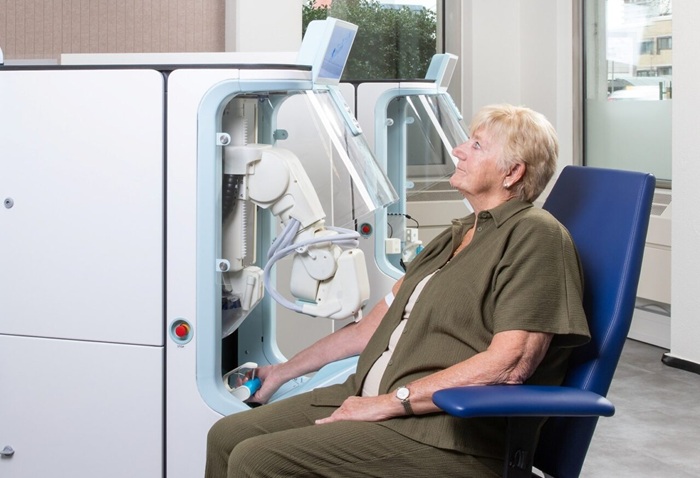
Image: Vitestro has shared a detailed visual explanation of its Autonomous Robotic Phlebotomy Device (photo courtesy of Vitestro)

Robotic Technology Unveiled for Automated Diagnostic Blood Draws

Routine diagnostic blood collection is a high‑volume task that can strain staffing and introduce human‑dependent variability, with downstream implications for sample quality and patient experience.... Read more

Industry

view channel
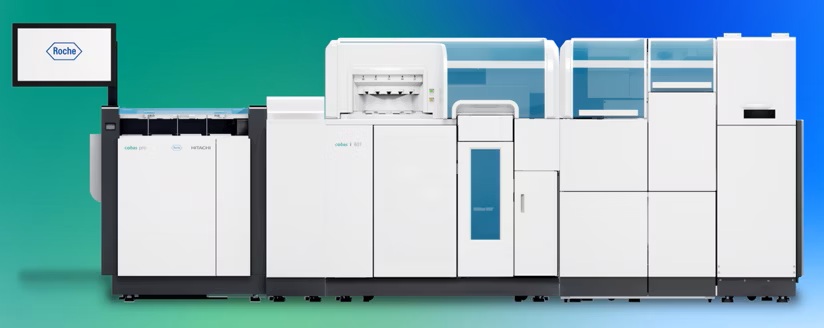
Image: Roche’s cobas® Mass Spec solution enables fully automated mass spectrometry in routine clinical laboratories (Photo courtesy of Roche)

New Collaboration Brings Automated Mass Spectrometry to Routine Laboratory Testing

Mass spectrometry is a powerful analytical technique that identifies and quantifies molecules based on their mass and electrical charge. Its high selectivity, sensitivity, and accuracy make it indispensable... Read more