LabMedica

Download Mobile App
Recent News Expo Clinical Chem. Molecular Diagnostics Hematology Immunology Microbiology Pathology Technology Industry Focus

Sound Waves Separate Tumor and Blood Cells

By LabMedica International staff writers
Posted on 10 Sep 2014
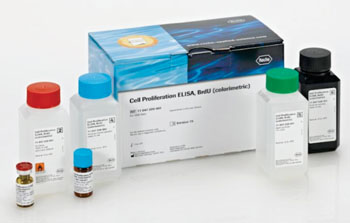
Roche Diagnostic\'s BrdU Cell Proliferation enzyme-linked immunosorbent assay kit
The BrdU Cell Proliferation enzyme-linked immunosorbent assay kit (Photo courtesy of Roche Diagnostics)
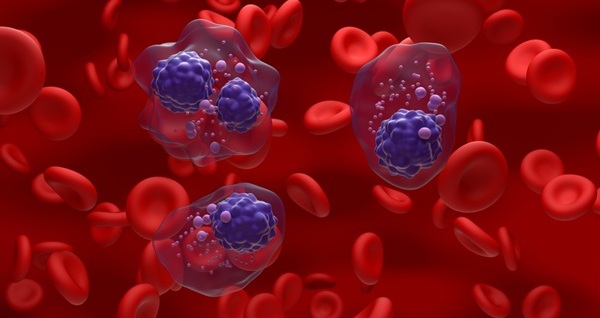
A device has been developed that can test a cancer patient's blood for rare tumor cells and will be extremely useful for checking if a tumor is going to spread.

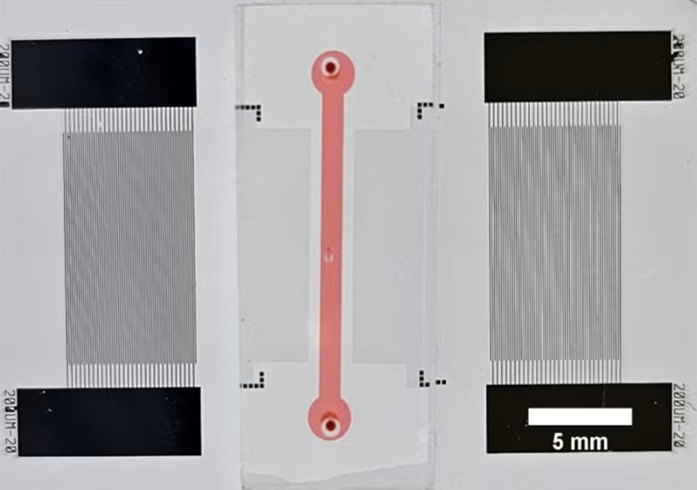
The relatively small device uses “tilted” sound waves, offering an effective way of sorting cells without having to treat them with chemicals or deform them mechanically. These sound waves cross the cells' trajectory at an angle instead of going straight across, ensuring that each cell encounters several low-pressure nodes on its journey through the microchannel instead of just one.

Scientists at the Pennsylvania State University (University Park, PA, USA) working with colleagues from other institutes developed a unique configuration of tilted-angle standing surface acoustic waves (taSSAW),which are oriented at an optimally designed inclination to the flow direction in the microfluidic channel. To optimize the device design, they carried out systematic simulations of cell trajectories, matching closely with experimental results.

In their study, the team first tested their device using plastic beads and showed it could separate beads of 9.9 micrometers from beads of 7.3 micrometers in diameter with around 97% accuracy. The team also tested how well the device was able to separate a human breast cancer epithelial cell line Michigan Cancer Foundation-7 (MCF-7) that are 20 micrometers diameter from white blood cells that are about 12 micrometers in diameter. The cells also differ by compressibility and density. The results showed the cell sorter recovered around 71% of the cancer cells. One of the tests used to test cell viability and proliferation was the BrdU Cell Proliferation enzyme-linked immunosorbent assay (Roche Diagnostics, Indianapolis, IN, USA).

The team now plans to test the 18 mm device with blood samples from cancer patients in clinical settings. Circulating tumor cells are very rare as 1 mL of a typical cancer patient's blood may only contain a few tumor cells. The scientists have filed for a patent on their device. They see it helping clinicians determine whether a patient's tumor is about to spread to other sites of the body as tumors that are about to metastasize begin to send out cells that travel through the bloodstream.

The authors concluded that the simple design, low cost, and standard fabrication process of the device allows for easy integration with other laboratory-on-a-chip technologies and small radio frequency (RF) power supplies to further develop a fully integrated cell separation and analysis system. The study was published on August 25, 2014, in the journal Proceedings of the National Academy of Sciences of the United States of America (PNAS).

Related Links:

Pennsylvania State University 
Roche Diagnostics 

New
Gold Member
Clinical Drug Testing Panel
DOA Urine MultiPlex
POC Helicobacter Pylori Test Kit
Hepy Urease Test
Alcohol Testing Device
Dräger Alcotest 7000
ESR Analyzer
TEST1 2.0
Read the full article by registering today, it's FREE! It's Free!
Register now for FREE to LabMedica.com and get access to news and events that shape the world of Clinical Laboratory Medicine.
  • Free digital version edition of LabMedica International sent by email on regular basis
  • Free print version of LabMedica International magazine (available only outside USA and Canada).
  • Free and unlimited access to back issues of LabMedica International in digital format
  • Free LabMedica International Newsletter sent every week containing the latest news
  • Free breaking news sent via email
  • Free access to Events Calendar
  • Free access to LinkXpress new product services
  • REGISTRATION IS FREE AND EASY!
Click here to Register


Channels

Molecular Diagnostics

view channel
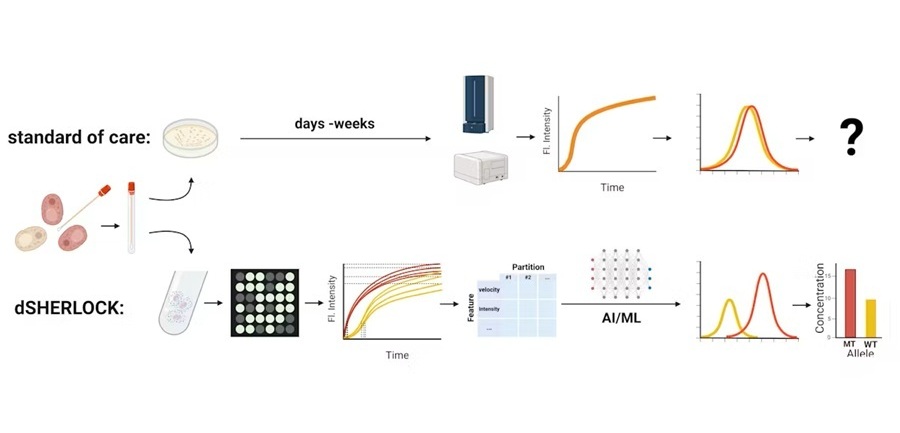
Image: The diagnostic device can tell how deadly brain tumors respond to treatment from a simple blood test (Photo courtesy of UQ)

Diagnostic Device Predicts Treatment Response for Brain Tumors Via Blood Test

Glioblastoma is one of the deadliest forms of brain cancer, largely because doctors have no reliable way to determine whether treatments are working in real time. Assessing therapeutic response currently... Read more

Immunology

view channel
Image: Circulating tumor cells isolated from blood samples could help guide immunotherapy decisions (Photo courtesy of Shutterstock)

Blood Test Identifies Lung Cancer Patients Who Can Benefit from Immunotherapy Drug

Small cell lung cancer (SCLC) is an aggressive disease with limited treatment options, and even newly approved immunotherapies do not benefit all patients. While immunotherapy can extend survival for some,... Read more

Microbiology

view channel
Image: New evidence suggests that imbalances in the gut microbiome may contribute to the onset and progression of MCI and Alzheimer’s disease (Photo courtesy of Adobe Stock)

Comprehensive Review Identifies Gut Microbiome Signatures Associated With Alzheimer’s Disease

Alzheimer’s disease affects approximately 6.7 million people in the United States and nearly 50 million worldwide, yet early cognitive decline remains difficult to characterize. Increasing evidence suggests... Read more

Technology

view channel
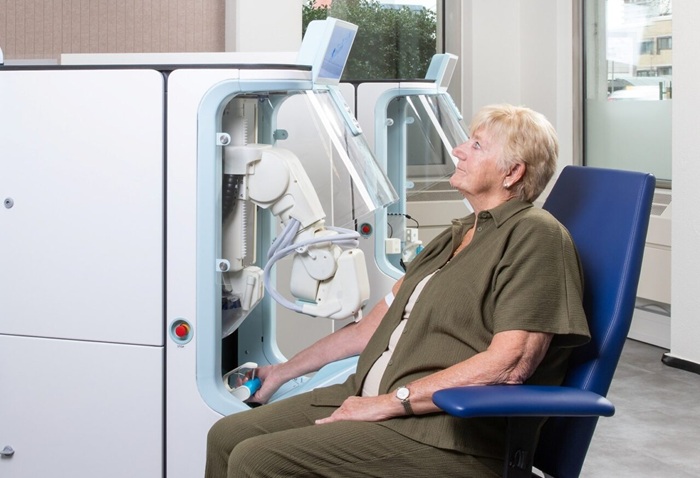
Image: Vitestro has shared a detailed visual explanation of its Autonomous Robotic Phlebotomy Device (photo courtesy of Vitestro)

Robotic Technology Unveiled for Automated Diagnostic Blood Draws

Routine diagnostic blood collection is a high‑volume task that can strain staffing and introduce human‑dependent variability, with downstream implications for sample quality and patient experience.... Read more

Industry

view channel
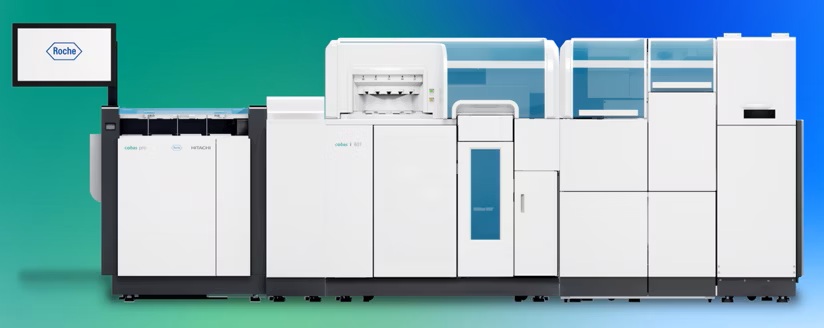
Image: Roche’s cobas® Mass Spec solution enables fully automated mass spectrometry in routine clinical laboratories (Photo courtesy of Roche)

New Collaboration Brings Automated Mass Spectrometry to Routine Laboratory Testing

Mass spectrometry is a powerful analytical technique that identifies and quantifies molecules based on their mass and electrical charge. Its high selectivity, sensitivity, and accuracy make it indispensable... Read more