Rapid Low-Cost Tests Can Prevent Child Deaths from Contaminated Medicinal Syrups
Posted on 17 Dec 2025
Medicinal syrups contaminated with toxic chemicals have caused the deaths of hundreds of children worldwide, exposing a critical gap in how these products are tested before reaching patients. In 2022 alone, contaminated syrups were linked to the deaths of more than 300 children in Indonesia, The Gambia, Uzbekistan, and Cameroon. More recently, at least 24 additional deaths were reported in India. These incidents were traced to toxic industrial chemicals mistakenly or fraudulently used in place of pharmaceutical-grade ingredients. Now, researchers are developing simple, rapid, and inexpensive tests that can reliably detect these deadly contaminants, offering a practical way to prevent future tragedies.
Researchers at the University of Oxford (Oxford, UK), working with international collaborators, have demonstrated that commonly available alcohol detection tools can be repurposed to identify harmful contaminants in medicinal syrups and their raw ingredients. In research published in Nature Scientific Reports, the team tested two low-cost tools, each costing less than GBP 1. Alcohol test strips, typically used to detect traces of alcohol in saliva or breast milk, were able to identify contaminants in syrups and raw materials in under two minutes. Disposable breathalyzers, also designed for alcohol detection, flagged contamination in raw materials in as little as ten seconds.
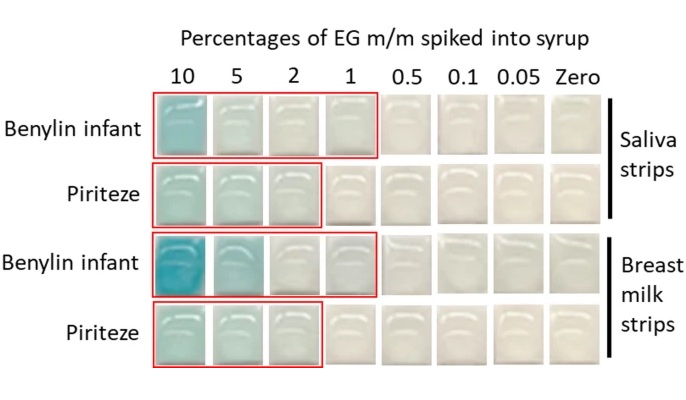
Current detection methods rely on gas chromatography or thin-layer chromatography, which are slow, require hazardous solvents, and need trained technicians. In contrast, the new approach is water-based, rapid, and supported by a simple step-by-step protocol that can be followed by inspectors, regulators, and manufacturers. Together, these tools provide a fast, affordable, and easy-to-use screening method that could be deployed throughout pharmaceutical supply chains, especially in low-resource settings where advanced laboratory testing is unavailable.
By adapting tools that are widely available and inexpensive, the team believes on-the-spot testing could become a practical safeguard for vulnerable populations. The researchers hope these rapid tests can be adopted quickly to strengthen medicine safety checks and reduce the risk of future outbreaks linked to contaminated syrups.
“Urgent interventions are needed to be implemented to prevent these recurring tragedies of childhood deaths, and screening devices for detecting the toxins offer great promise in enabling this,” said project leader, Professor Paul Newton.
“Our findings show that solutions to this devastating global problem may already be within reach,” added study co-leader Professor Nicole Zitzmann. “By adapting tools that are widely available and inexpensive, we can enable on-the-spot testing to protect vulnerable children.”
Related Links
University of Oxford