LabMedica

Download Mobile App
Recent News Expo Clinical Chem. Molecular Diagnostics Hematology Immunology Microbiology Pathology Technology Industry Focus

Blood Test for TB Could Eliminate Unnecessary Treatment

By LabMedica International staff writers
Posted on 25 Jun 2014
T-SPOT TB
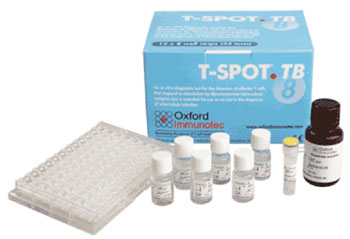
Interferon-gamma release assays (IGRA) for the detection of tuberculosis. (Photo courtesy of OXFORD IMMUNOTEC - A Revvity Company)
A new screening process for tuberculosis (TB) infections in Canadian prisons could mean that more than 50% of those screened will not undergo unnecessary treatment due to false positives.

A test for TB using interferon-gamma release assays (IGRA) will detect a preexisting TB infection, or latent TB, that might not present itself for many years, or until the body becomes weakened by another source.

A study group led by infectious disease experts from Queen’s University (Kingston, ON, Canada), tested inmates for TB at a Canadian intake institution before moving on to different corrections facilities. The scientists used both the tuberculosis skin test (TST) for TB which has been used for over 100 years but comes with two main limitations, and the IGRA. The TST requires two visits to determine the results: one to perform the test and then another visit a couple of days later to read the results and depending on the patient's exposure to other mycobacteria or the Bacille Calmette Guerin (BCG) vaccine, accordingly the TST test can give many false positives.

The IGRA tests cannot prove that latent TB infections will progress into active TB until the patient begins to show symptoms. Better tools to predict who will go on to develop active and potentially infectious TB are being actively pursued. The investigators found that 96 inmates tested positive for TB via the TST test, but only 31 of these inmates were confirmed as true latent TB infection when using the IGRA test.

Wendy L.Wobeser, MD, the study’s lead author said, “It is fairly uncommon that latent TB will reactivate, with only about a 10% chance. That said, given the crowding in corrections facilities, the mass exposure of inmates to TB could be disastrous. It is such a slow disease progression that it is hard for us to say with certainty who will actually go on to develop TB. I hope that this test will eventually be used in corrections and is able to reduce people who might otherwise be treated unnecessarily for latent TB.”

Ilan Schwartz, MD, a coauthor of the study said, “What I found surprising was just how much discordance there was between the TST and IGRA tests. Historically, all of those who tested TB-positive by the TST test would have been subjected to 12 months of drug treatments that can have considerable side effects.”

Related Links:

Queen’s University

Gold Member
Hybrid Pipette
SWITCH
POC Helicobacter Pylori Test Kit
Hepy Urease Test
Silver Member
PCR Plates
Diamond Shell PCR Plates
8-Channel Pipette
SAPPHIRE 20–300 µL
Read the full article by registering today, it's FREE! It's Free!
Register now for FREE to LabMedica.com and get access to news and events that shape the world of Clinical Laboratory Medicine.
  • Free digital version edition of LabMedica International sent by email on regular basis
  • Free print version of LabMedica International magazine (available only outside USA and Canada).
  • Free and unlimited access to back issues of LabMedica International in digital format
  • Free LabMedica International Newsletter sent every week containing the latest news
  • Free breaking news sent via email
  • Free access to Events Calendar
  • Free access to LinkXpress new product services
  • REGISTRATION IS FREE AND EASY!
Click here to Register


Channels

Molecular Diagnostics

view channel
Image: The diagnostic device can tell how deadly brain tumors respond to treatment from a simple blood test (Photo courtesy of UQ)

Diagnostic Device Predicts Treatment Response for Brain Tumors Via Blood Test

Glioblastoma is one of the deadliest forms of brain cancer, largely because doctors have no reliable way to determine whether treatments are working in real time. Assessing therapeutic response currently... Read more

Immunology

view channel
Image: Circulating tumor cells isolated from blood samples could help guide immunotherapy decisions (Photo courtesy of Shutterstock)

Blood Test Identifies Lung Cancer Patients Who Can Benefit from Immunotherapy Drug

Small cell lung cancer (SCLC) is an aggressive disease with limited treatment options, and even newly approved immunotherapies do not benefit all patients. While immunotherapy can extend survival for some,... Read more

Technology

view channel
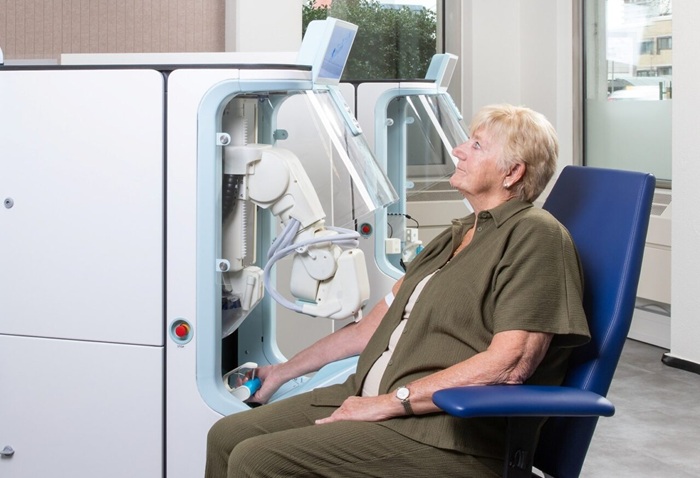
Image: Vitestro has shared a detailed visual explanation of its Autonomous Robotic Phlebotomy Device (photo courtesy of Vitestro)

Robotic Technology Unveiled for Automated Diagnostic Blood Draws

Routine diagnostic blood collection is a high‑volume task that can strain staffing and introduce human‑dependent variability, with downstream implications for sample quality and patient experience.... Read more

Industry

view channel
Image: Roche’s cobas® Mass Spec solution enables fully automated mass spectrometry in routine clinical laboratories (Photo courtesy of Roche)

New Collaboration Brings Automated Mass Spectrometry to Routine Laboratory Testing

Mass spectrometry is a powerful analytical technique that identifies and quantifies molecules based on their mass and electrical charge. Its high selectivity, sensitivity, and accuracy make it indispensable... Read more