Handheld RT-PCR System Combined with Saliva-Based Test Brings Mobility to COVID-19 Testing and Reduces Cost
|
By LabMedica International staff writers Posted on 09 Jun 2021 |


|
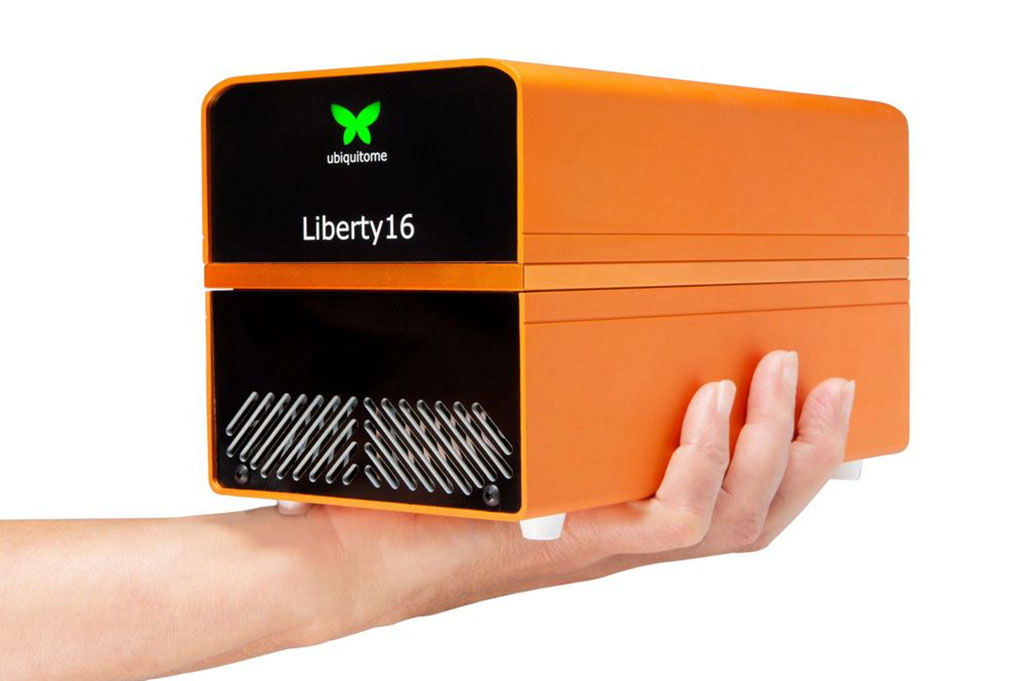
Image: Ubiquitome’s Liberty16 RT-PCR system (Photo courtesy of Ubiquitome Limited)
COVID-19 testing has been made easier and more accessible with the US FDA emergency use authorization (EUA) of the combination of SalivaDirect developed by Yale School of Public Health (New Haven, CT, USA) with Ubiquitome Limited’s (Auckland, New Zealand) handheld Liberty16 mobile real time-PCR.
SalivaDirect was developed to reduce access challenges inherent in nasal swab based COVID-19 testing. Saliva samples collected for testing by SalivaDirect do not require healthcare worker assistance, preservatives, or specialized equipment for nucleic acid extraction. SalivaDirect is now used in more than 120 US labs designated by Yale. It has also been authorized for sample collection using the Unsupervised Collection Kit (for sample drop off) and SalivaDirect At-Home Collection Kit (mail-in testing), as well as in asymptomatic individuals.
Ubiquitome’s Liberty16 RT-PCR system was one of the only international companies selected by the US National Institutes of Health’s RADx initiative to speed innovation and commercialization of technologies for COVID-19 testing. The Liberty16 is designed to bring mobility to PCR testing and reduce cost. The PCR is handheld, can run on battery power and connects to its own iPhone app, which shows the result of tests to operators easily trained to run the Liberty16 and the iPhone app. In its filing with the FDA, the Yale team demonstrated the singleplex SalivaDirect protocol performed on the Liberty16 yielded test results for SARS-CoV-2 comparable to bigger, immobile instruments. Collecting saliva samples, analyzing them in the Liberty16 and getting the result spelled out on the iPhone app, allows for outbreaks to be identified anywhere there is cell phone reception, by labs with SalivaDirect authorization.
“That’s important for quickly limiting the spread of COVID-19 when the alternative is waiting sometimes days for results as the nearest testing laboratory is hours away,” said Dr. Paul Pickering, CEO of Ubiquitome. “With Liberty16 units costing a fraction of the large, lab-based units, it means access to RT-PCR testing can be improved for millions of people in under resourced communities.”
Related Links:
Ubiquitome Limited
Yale School of Public Health




SalivaDirect was developed to reduce access challenges inherent in nasal swab based COVID-19 testing. Saliva samples collected for testing by SalivaDirect do not require healthcare worker assistance, preservatives, or specialized equipment for nucleic acid extraction. SalivaDirect is now used in more than 120 US labs designated by Yale. It has also been authorized for sample collection using the Unsupervised Collection Kit (for sample drop off) and SalivaDirect At-Home Collection Kit (mail-in testing), as well as in asymptomatic individuals.
Ubiquitome’s Liberty16 RT-PCR system was one of the only international companies selected by the US National Institutes of Health’s RADx initiative to speed innovation and commercialization of technologies for COVID-19 testing. The Liberty16 is designed to bring mobility to PCR testing and reduce cost. The PCR is handheld, can run on battery power and connects to its own iPhone app, which shows the result of tests to operators easily trained to run the Liberty16 and the iPhone app. In its filing with the FDA, the Yale team demonstrated the singleplex SalivaDirect protocol performed on the Liberty16 yielded test results for SARS-CoV-2 comparable to bigger, immobile instruments. Collecting saliva samples, analyzing them in the Liberty16 and getting the result spelled out on the iPhone app, allows for outbreaks to be identified anywhere there is cell phone reception, by labs with SalivaDirect authorization.
“That’s important for quickly limiting the spread of COVID-19 when the alternative is waiting sometimes days for results as the nearest testing laboratory is hours away,” said Dr. Paul Pickering, CEO of Ubiquitome. “With Liberty16 units costing a fraction of the large, lab-based units, it means access to RT-PCR testing can be improved for millions of people in under resourced communities.”
Related Links:
Ubiquitome Limited
Yale School of Public Health

Platinum Member
Fully Automatic ACLIA Analyzer
MAGLUMI X8
Gold Member
Flu SARS-CoV-2 Combo Test
OSOM® Flu SARS-CoV-2 Combo Test
Urine Analyzer
respons® UDS100
CMV CLIA Diagnostic
CLIA CMV IgA Screen Group
Latest COVID-19 News
- New Immunosensor Paves Way to Rapid POC Testing for COVID-19 and Emerging Infectious Diseases
- Long COVID Etiologies Found in Acute Infection Blood Samples
- Novel Device Detects COVID-19 Antibodies in Five Minutes
- CRISPR-Powered COVID-19 Test Detects SARS-CoV-2 in 30 Minutes Using Gene Scissors
- Gut Microbiome Dysbiosis Linked to COVID-19
- Novel SARS CoV-2 Rapid Antigen Test Validated for Diagnostic Accuracy
- New COVID + Flu + R.S.V. Test to Help Prepare for `Tripledemic`
- AI Takes Guesswork Out Of Lateral Flow Testing
- Fastest Ever SARS-CoV-2 Antigen Test Designed for Non-Invasive COVID-19 Testing in Any Setting
- Rapid Antigen Tests Detect Omicron, Delta SARS-CoV-2 Variants
- Health Care Professionals Showed Increased Interest in POC Technologies During Pandemic, Finds Study
- Set Up Reserve Lab Capacity Now for Faster Response to Next Pandemic, Say Researchers
- Blood Test Performed During Initial Infection Predicts Long COVID Risk
- Low-Cost COVID-19 Testing Platform Combines Sensitivity of PCR and Speed of Antigen Tests
- Finger-Prick Blood Test Identifies Immunity to COVID-19
- Quick Test Kit Determines Immunity Against COVID-19 and Its Variants
Channels
Clinical Chemistry
view channel
Screening After Pneumococcal Disease May Reveal Undiagnosed Blood Cancer or Immune Disorders
Severe pneumococcal disease requiring hospitalization often presents as pneumonia, particularly in older adults and people with cancer or compromised immune function. Because M protein testing and antibody... Read more
Global Survey Underscores Need to Standardize Bone Biomarker Testing
Bone and mineral metabolism biomarkers can complement dual-energy X-ray absorptiometry (DXA) by providing information on disease activity and treatment response. For more than 20 years, standardization... Read more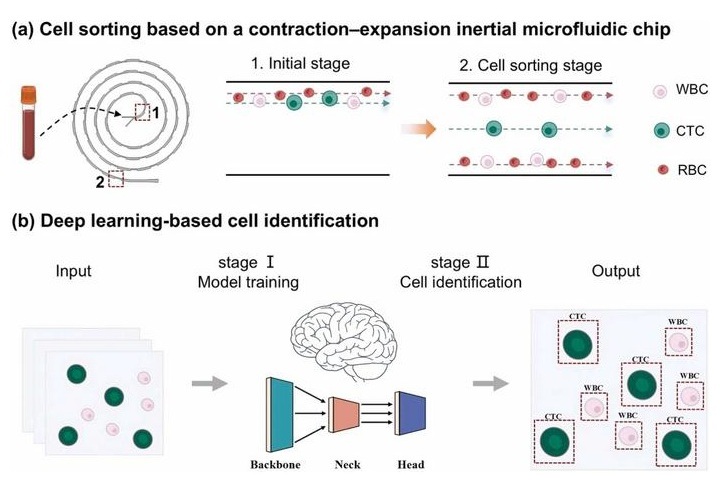
Label-Free Platform Combines Microfluidics and AI for Circulating Tumor Cell Analysis
Liquid biopsy relies on detecting rare tumor-derived material in blood, but circulating tumor cells (CTCs) are especially difficult to capture because they are vastly outnumbered by normal blood cells.... Read more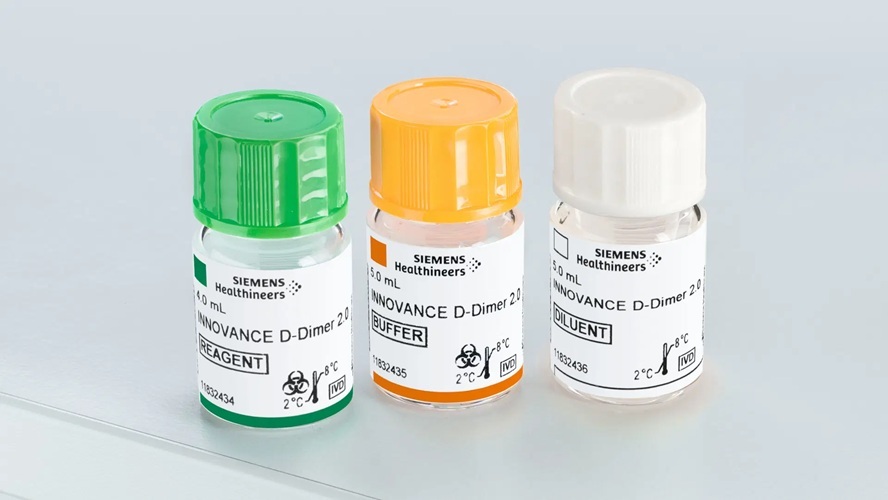
Rapid D-Dimer Assay Supports Exclusion and Monitoring of Serious Clotting Conditions
Blood clots can rapidly become life‑threatening and affect approximately 10 million people worldwide each year. During time‑sensitive evaluations, clinicians use D‑dimer testing to help rule out deep vein... Read moreMolecular Diagnostics
view channel
Urine-Based RNA Improves Bladder Cancer Detection and Monitoring
Bladder cancer affects about 85,000 people in the United States each year and is prone to recurrence. Diagnosis and surveillance commonly rely on cystoscopy, an endoscopic examination that can miss up... Read more
Blood RNA Panel Predicts Lung Cancer Risk Years Before Diagnosis
Lung cancer may begin developing during a preclinical period when the disease remains clinically undetected, creating a challenge for identifying individuals at elevated risk years before diagnosis.... Read more

Hematology
view channel
New Donor Genetic Marker May Help Predict Stem Cell Transplant Success
Donor selection for hematopoietic stem cell transplantation plays a major role in relapse risk and survival for patients with blood cancers and other blood disorders. Despite advances in genotyping, uncertainty... Read more
Updated Ferritin Thresholds Improve Detection of Iron Deficiency
Iron deficiency is one of the most common health conditions worldwide, yet its nonspecific symptoms can delay diagnosis for months. Variation in testing practices and ferritin thresholds may contribute... Read more
Immunology
view channel
Blood Test Differentiates Bacterial and Viral Infections in Febrile Infants
Fever in infants younger than 3 months is treated as a medical emergency because infections can become life-threatening while the immune system is still developing. Emergency department teams must quickly... Read more
New Autoantibody Test Targets Pre-Symptomatic Type 1 Diabetes Screening
Type 1 diabetes is often first recognized only after substantial beta-cell destruction, sometimes presenting as diabetic ketoacidosis. Population-scale screening could identify children at elevated risk... Read more
Microbiology
view channel
FDA-Cleared Multiplex PCR Test Detects 13 Respiratory Pathogens in a Single Sample
Respiratory tract infections can be difficult to distinguish at presentation because many cause overlapping, nonspecific symptoms and are initially grouped as influenza-like illnesses. Causes span a range... Read more
One-Hour Molecular Panel Expands Bloodstream Infection Testing for Gram-Negative Pathogens
Bloodstream infections can progress rapidly and lead to sepsis, organ failure, and death. In the United States, about 1.7 million adults develop sepsis each year, and at least 350,000 die during hospitalization... Read more
FDA Clears Rapid Phenotypic Antimicrobial Susceptibility System for Positive Blood Cultures
Bloodstream infections require prompt treatment, but antimicrobial susceptibility results often lag behind a positive blood culture. Conventional testing can take another 24 to 48 hours after a culture... Read more
New Urine Test Expands Mycotoxin Analysis to 31 Markers for Broader Exposure Assessment
Clinical evaluation of mold exposure increasingly relies on urinary mycotoxin testing, but limited marker coverage and metabolite masking can make results more difficult to interpret. Broader analysis... Read morePathology
view channel
Genomic Classifier Predicts Benefit From Adding Hormone Therapy to Salvage Prostate Radiation
Men who have undergone prostatectomy for prostate cancer may later develop a detectable or rising prostate-specific antigen, prompting salvage radiation therapy. A key challenge is determining who is most... Read more
New AI Model Maps Where Glioblastoma Could Return After Surgery
Glioblastoma is the most common malignant brain tumor in adults and the most lethal, with median survival of about 17 months after diagnosis. Even after surgeons remove all visible tumor and patients receive... Read more
Technology
view channel
Laser-Based Swab Analysis Shows Promise for Detecting Disease-Linked Odor Patterns
Disease-related changes in volatile organic compounds can alter body odor, producing measurable patterns in exhaled breath and bodily fluids. Current analytical methods can be complex, time-consuming,... Read more
Laser-Enhanced Assay Boosts Sensitivity for Colorectal Cancer Biomarker Detection
Colorectal cancer is the third most commonly diagnosed cancer and the second leading cause of cancer-related death worldwide. Early detection remains critical, but cancer biomarkers can produce only faint... Read more

Industry
view channel
Collaboration Combines AI Cognitive Assessment and RNA Blood Testing for Earlier Alzheimer’s Detection
Alzheimer’s disease is often identified only after substantial neurodegeneration, partly because current diagnostic pathways are fragmented and difficult to scale. As treatment shifts toward earlier intervention,... Read more
Mayo Clinic Laboratories and Pathology Asia Expand Genomic Testing Across Asia-Pacific
Mayo Clinic Laboratories and Pathology Asia Holdings (PAH), together with subsidiary LifeStrands Genomics, announced a strategic investment and collaboration focused on expanding access to advanced diagnostics... Read more