Thermo Fisher’s New High-Throughput, Automated System for Leading COVID-19 Test Granted FDA EUA
|
By LabMedica International staff writers Posted on 13 Apr 2021 |


|

Illustration
Thermo Fisher Scientific Inc. (Waltham, MA, USA) has been granted Emergency Use Authorization (EUA) by the U.S. Food and Drug Administration (FDA) for the Thermo Fisher Scientific Amplitude Solution with the TaqPath COVID-19 High-Throughput Combo Kit.
The Amplitude Solution is a molecular diagnostic testing system that helps clinical labs expand testing capacity by combining Thermo Fisher's extraction and real-time PCR instruments with liquid handling products from Tecan Group (Männedorf, Switzerland). The modular system utilizes a high-throughput version of Thermo Fisher's Applied Biosystems TaqPath COVID-19 Combo Kit, which received EUA in March 2020, to process samples in four steps with minimal hands-on time and laboratory space requirements. The kit's multi-gene target design and updated interpretive software may help labs detect SARS-CoV-2 variants.
The Amplitude Solution enables clinical and public health laboratories to scale gold standard PCR testing and process up to 8,000 samples in a single day with minimal staffing resources and a secured supply of kits, reagents and consumables to meet their testing needs. The Amplitude Solution has been implemented globally including labs in Europe and Japan.
"While COVID-19 cases globally may be decreasing in some areas as vaccines become more widely available, there continues to be a demand for frequent routine testing to control future outbreaks," said Mark Stevenson, executive vice president and chief operating officer of Thermo Fisher Scientific. "For population-wide testing programs, lab-based PCR is the best fitting technology, providing confidence in results, capacity to process thousands of samples a day, and consistent, reliable turnaround times. The Amplitude Solution can help support a systematic testing strategy by enabling labs to quickly scale their testing and begin processing high-volume samples, even with limited personnel."
Related Links:
Thermo Fisher Scientific Inc.
Tecan Group






The Amplitude Solution is a molecular diagnostic testing system that helps clinical labs expand testing capacity by combining Thermo Fisher's extraction and real-time PCR instruments with liquid handling products from Tecan Group (Männedorf, Switzerland). The modular system utilizes a high-throughput version of Thermo Fisher's Applied Biosystems TaqPath COVID-19 Combo Kit, which received EUA in March 2020, to process samples in four steps with minimal hands-on time and laboratory space requirements. The kit's multi-gene target design and updated interpretive software may help labs detect SARS-CoV-2 variants.
The Amplitude Solution enables clinical and public health laboratories to scale gold standard PCR testing and process up to 8,000 samples in a single day with minimal staffing resources and a secured supply of kits, reagents and consumables to meet their testing needs. The Amplitude Solution has been implemented globally including labs in Europe and Japan.
"While COVID-19 cases globally may be decreasing in some areas as vaccines become more widely available, there continues to be a demand for frequent routine testing to control future outbreaks," said Mark Stevenson, executive vice president and chief operating officer of Thermo Fisher Scientific. "For population-wide testing programs, lab-based PCR is the best fitting technology, providing confidence in results, capacity to process thousands of samples a day, and consistent, reliable turnaround times. The Amplitude Solution can help support a systematic testing strategy by enabling labs to quickly scale their testing and begin processing high-volume samples, even with limited personnel."
Related Links:
Thermo Fisher Scientific Inc.
Tecan Group

Platinum Member
Fully Automatic ACLIA Analyzer
MAGLUMI X8
Gold Member
SARS-CoV-2 Reactive & Non-Reactive Controls
Qnostics SARS-CoV-2 Typing
Thyroid Test
Anti-Thyroid EIA Test
New
Nucleic Acid Purification Instrument
QIAsymphony Connect
Latest COVID-19 News
- New Immunosensor Paves Way to Rapid POC Testing for COVID-19 and Emerging Infectious Diseases
- Long COVID Etiologies Found in Acute Infection Blood Samples
- Novel Device Detects COVID-19 Antibodies in Five Minutes
- CRISPR-Powered COVID-19 Test Detects SARS-CoV-2 in 30 Minutes Using Gene Scissors
- Gut Microbiome Dysbiosis Linked to COVID-19
- Novel SARS CoV-2 Rapid Antigen Test Validated for Diagnostic Accuracy
- New COVID + Flu + R.S.V. Test to Help Prepare for `Tripledemic`
- AI Takes Guesswork Out Of Lateral Flow Testing
- Fastest Ever SARS-CoV-2 Antigen Test Designed for Non-Invasive COVID-19 Testing in Any Setting
- Rapid Antigen Tests Detect Omicron, Delta SARS-CoV-2 Variants
- Health Care Professionals Showed Increased Interest in POC Technologies During Pandemic, Finds Study
- Set Up Reserve Lab Capacity Now for Faster Response to Next Pandemic, Say Researchers
- Blood Test Performed During Initial Infection Predicts Long COVID Risk
- Low-Cost COVID-19 Testing Platform Combines Sensitivity of PCR and Speed of Antigen Tests
- Finger-Prick Blood Test Identifies Immunity to COVID-19
- Quick Test Kit Determines Immunity Against COVID-19 and Its Variants
Channels
Clinical Chemistry
view channel
Point-of-Care Blood Test Could Speed Treatment Decisions in Acute Stroke
Minutes can shape treatment decisions in emergency stroke care, particularly when physicians need to know whether a patient is taking anticoagulants before administering clot-dissolving therapy.... Read more
Breath Analysis Shows Promise for Distinguishing Cancerous from Benign Lung Nodules
Lung nodules are frequently detected during imaging, but distinguishing malignant from benign findings can require invasive procedures. Some patients undergo biopsies, bronchoscopy, or surgery before learning... Read more

Molecular Diagnostics
view channel
Rapid Genetic Test Aims to Shorten Brain Tumor Diagnosis Time
Brain tumors can be highly aggressive and difficult to treat, and The Brain Tumour Charity describes them as the biggest cancer killer of children and adults under 40. With more than 100 recognized tumor... Read more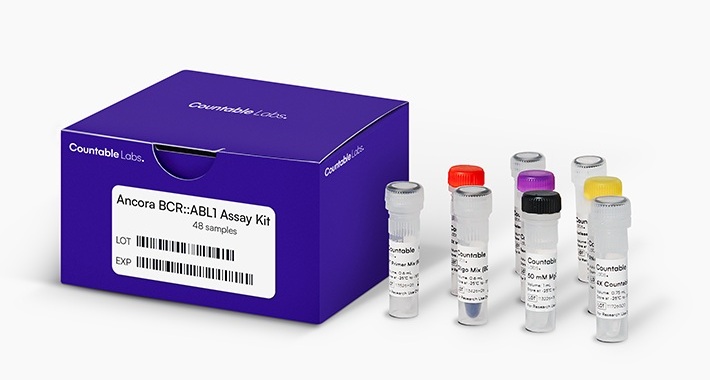
New Oncology Assays Deliver Precise Molecular Counts with MRD-Grade Sensitivity
Precise molecular monitoring is central to managing hematologic malignancies, but traditional PCR workflows can limit sensitivity, multiplexing, and result clarity. Limited sample volumes and fragmented... Read more

Hematology
view channel
New Donor Genetic Marker May Help Predict Stem Cell Transplant Success
Donor selection for hematopoietic stem cell transplantation plays a major role in relapse risk and survival for patients with blood cancers and other blood disorders. Despite advances in genotyping, uncertainty... Read more
Updated Ferritin Thresholds Improve Detection of Iron Deficiency
Iron deficiency is one of the most common health conditions worldwide, yet its nonspecific symptoms can delay diagnosis for months. Variation in testing practices and ferritin thresholds may contribute... Read more
Immunology
view channel
Blood Test Differentiates Bacterial and Viral Infections in Febrile Infants
Fever in infants younger than 3 months is treated as a medical emergency because infections can become life-threatening while the immune system is still developing. Emergency department teams must quickly... Read more
New Autoantibody Test Targets Pre-Symptomatic Type 1 Diabetes Screening
Type 1 diabetes is often first recognized only after substantial beta-cell destruction, sometimes presenting as diabetic ketoacidosis. Population-scale screening could identify children at elevated risk... Read more
Microbiology
view channel
One-Hour Molecular Panel Expands Bloodstream Infection Testing for Gram-Negative Pathogens
Bloodstream infections can progress rapidly and lead to sepsis, organ failure, and death. In the United States, about 1.7 million adults develop sepsis each year, and at least 350,000 die during hospitalization... Read more
FDA Clears Rapid Phenotypic Antimicrobial Susceptibility System for Positive Blood Cultures
Bloodstream infections require prompt treatment, but antimicrobial susceptibility results often lag behind a positive blood culture. Conventional testing can take another 24 to 48 hours after a culture... Read more
New Urine Test Expands Mycotoxin Analysis to 31 Markers for Broader Exposure Assessment
Clinical evaluation of mold exposure increasingly relies on urinary mycotoxin testing, but limited marker coverage and metabolite masking can make results more difficult to interpret. Broader analysis... Read more
Pathology
view channel
New AI Model Maps Where Glioblastoma Could Return After Surgery
Glioblastoma is the most common malignant brain tumor in adults and the most lethal, with median survival of about 17 months after diagnosis. Even after surgeons remove all visible tumor and patients receive... Read more
Multimodal AI Supports Prostate Cancer Risk Assessment Across Diverse Cohorts
Artera’s (Los Altos, CA, USA) multimodal artificial intelligence (MMAI) platform is being featured in five abstracts at the American Society for Radiation Oncology (ASTRO) 2026 Annual Meeting.... Read more
Technology
view channel
New Automation Workflow Streamlines NGS Library Preparation for High-Volume Labs
Demand for next-generation sequencing (NGS) continues to rise as laboratories process growing sample volumes, yet library preparation remains labor-intensive and a frequent source of variability.... Read more
ADLM Calls for CLIA Updates to Support Safe AI Use in Laboratory Medicine
Clinical laboratories increasingly use artificial intelligence to verify, interpret, and report results, but safeguards under the Clinical Laboratory Improvement Amendments (CLIA) were designed in 1992.... Read more
Industry
view channel
Collaboration Combines AI Cognitive Assessment and RNA Blood Testing for Earlier Alzheimer’s Detection
Alzheimer’s disease is often identified only after substantial neurodegeneration, partly because current diagnostic pathways are fragmented and difficult to scale. As treatment shifts toward earlier intervention,... Read more
Mayo Clinic Laboratories and Pathology Asia Expand Genomic Testing Across Asia-Pacific
Mayo Clinic Laboratories and Pathology Asia Holdings (PAH), together with subsidiary LifeStrands Genomics, announced a strategic investment and collaboration focused on expanding access to advanced diagnostics... Read more