Fully Automated HbA1c Analyzer Available for Inspection at AACC Annual Meeting
|
By LabMedica International staff writers Posted on 02 Aug 2016 |


|
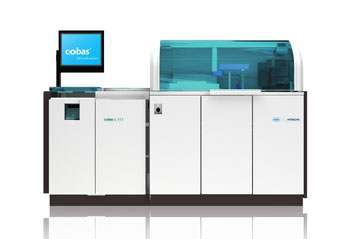
Image: The cobas c 513 high-throughput HbA1c analyzer (Photo courtesy of Roche).
A fully automated, high-throughput system for HbA1c testing will be available for inspection at the 2016 AACC Annual Meeting & Clinical Lab Expo (Philadelphia, PA, USA).
Roche (Basel, Switzerland) will introduce the cobas c 513 analyzer at Booth 1301 of the Philadelphia expo. The c 513 is a fully automated, high-throughput HbA1c testing solution with a module that can reach a throughput of up to 400 determinations per hour. The reagent compartment has 60 reagent positions that can be loaded providing up to 14,000 results.
The instrument features direct results reporting, which minimizes the risk of result misinterpretation and eliminates the need for performing time-consuming, manual result interpretation. This new analyzer also offers closed tube sampling, which reduces hands-on time, prevents sample contamination, and ensures operator safety.
As the instrument is still awaiting FDA 510(k) approval, the c 513 is not currently available in the USA.
Related Links:
AACC Annual Meeting & Clinical Lab Expo
Roche







Roche (Basel, Switzerland) will introduce the cobas c 513 analyzer at Booth 1301 of the Philadelphia expo. The c 513 is a fully automated, high-throughput HbA1c testing solution with a module that can reach a throughput of up to 400 determinations per hour. The reagent compartment has 60 reagent positions that can be loaded providing up to 14,000 results.
The instrument features direct results reporting, which minimizes the risk of result misinterpretation and eliminates the need for performing time-consuming, manual result interpretation. This new analyzer also offers closed tube sampling, which reduces hands-on time, prevents sample contamination, and ensures operator safety.
As the instrument is still awaiting FDA 510(k) approval, the c 513 is not currently available in the USA.
Related Links:
AACC Annual Meeting & Clinical Lab Expo
Roche

Platinum Member
Automated Coagulation Analyzer
Hemolumi H6
Gold Member
Flocked Fiber Swabs
Puritan® Patented HydraFlock®
Gold Member
Platelet Function Analyzer
PL-12
Urine Analyzer
respons® UDS100
Latest AACC 2016 News
- Molecular Test Detects Three Arboviruses in Plasma Samples
- Derived Exosomal Protein Biomarkers in Alzheimer’s Disease Diagnosis
- New Biochip Array Developed for ApoE4 Classification
- Cell-Free DNA Identifies Liver Transplant Patients with Acute Rejection
- New Method Tested for Early Diagnosis Pediatric Diabetic Nephropathy
- FDA-Cleared Automated Cell Counter for CSF Launched at AACC 2016
- Semen Analysis Portfolio with Two New Products Featured at AACC 2016
- Automation Solutions for Clinical Diagnostic Equipment Showcased at AACC 2016
- New Tubes Designed for Medium Sample Volumes
- Multi Sample Osmometer Improves Testing Efficiency
- Innovative Information System Optimizes Laboratory Processes
- Innovative eLearning Interface Seamlessly Connects Competency Data
- Cloud-Based Connectivity Platform Advances Decentralized Healthcare
- Adhesives Research to Present Hydrophilic Adhesive Technologies
- Point-of-Care Immunoassay Analyzer on Display at AACC Annual Meeting
- Assay for Determination of 17-OH Progesterone to Be Featured at AACC Annual Meeting
Channels
Clinical Chemistry
view channel
Multimodal Clinical Data Models Predict Cachexia Risk Across Cancers
Cancer cachexia is a severe wasting syndrome that affects roughly half of patients with cancer and cannot be reversed simply by increasing food intake. It can reduce treatment tolerance, impair quality... Read more
Study Evaluates Alzheimer’s Blood Biomarker Across Racial and Ethnic Groups
Alzheimer’s disease trials increasingly depend on identifying cognitively unimpaired people who already have elevated brain amyloid. Blood biomarkers may help reduce reliance on positron emission tomography... Read more
Molecular Diagnostics
view channel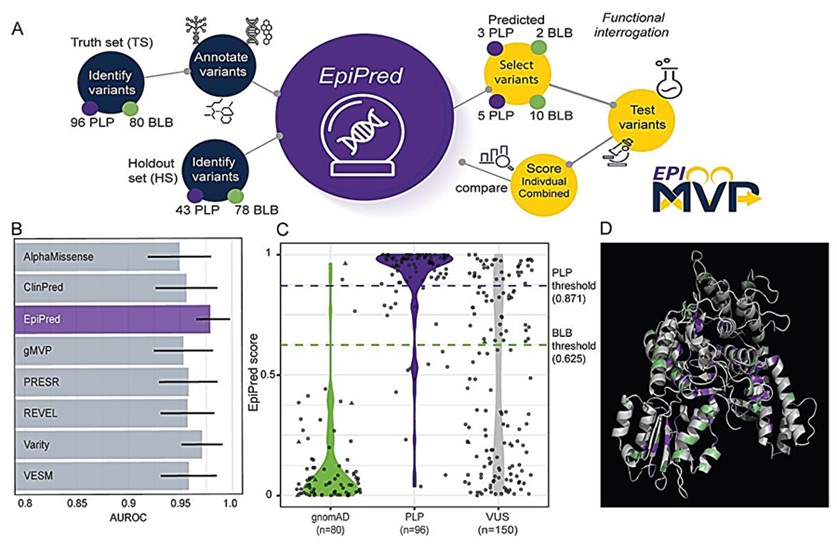
AI Tool Classifies Pathogenic Variants in Severe Childhood Epilepsy
Developmental and epileptic encephalopathies are rare neurodevelopmental disorders characterized by early-life seizures and significant developmental delays. Genetic testing can identify variants associated... Read more
Noninvasive Cervical Test Detects Endometrial Cancer for Triage
Endometrial cancer is rising in incidence and mortality in the United States. The disease has no population screening program or FDA-cleared noninvasive test for early identification, and evaluation can... Read more

Hematology
view channel
New Myelofibrosis Guidelines Recommend Expanded Genetic Testing at Diagnosis
Myelofibrosis is a rare, life-threatening blood cancer affecting up to six per 100,000 people. The disease causes scarring in the bone marrow, limiting the production of healthy blood cells and potentially... Read more
Handheld Point-of-Care Test Aims to Enable Rapid Coagulation Assessment in Trauma
Severe blood loss and inadequate tissue oxygenation are leading causes of preventable death after traumatic injury. Blood products are essential in trauma care, but cold-chain storage, short shelf life,... Read more

Immunology
view channel
FDA Approval Adds Automated Testing Option for Parvovirus B19 Serology
Human Parvovirus B19 is a highly contagious erythrovirus transmitted mainly through respiratory droplets and close contact. Diagnosis relies on IgM antibodies to detect active infection and IgG antibodies... Read more
Blood-Based Immune Aging Map Could Help Spot Disease Risk Earlier
Chronological age does not always reflect immune health or future disease risk. Two adults of the same age can have immune systems that age very differently, with some remaining resilient while others... Read more
Microbiology
view channel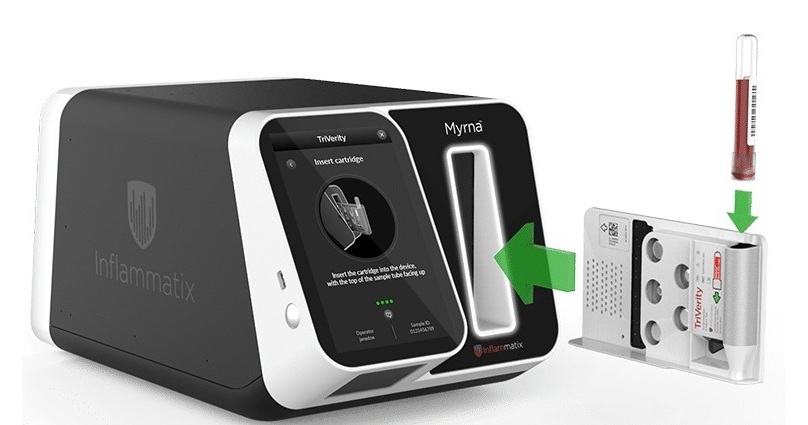
Rapid Host-Response Test Aims to Predict Corticosteroid Benefit in Sepsis
Sepsis and severe infections are difficult to treat because patients with similar clinical presentations may have very different underlying immune responses. Corticosteroids are commonly used in severe... Read more
Oral and Lung Microbiome Changes Linked to Severe Long Covid Symptoms
Long Covid can involve persistent respiratory, cognitive, and gastrointestinal symptoms after acute infection, creating a difficult diagnostic and management challenge. Because COVID-19 initially affects... Read more

Pathology
view channel
Molecular Testing Refines Barrett’s Esophagus Progression Risk Beyond Biopsy Findings
Barrett’s esophagus is a precancerous condition associated with increased risk of esophageal adenocarcinoma. Routine endoscopic biopsy findings guide surveillance and therapy, but histopathology may not... Read more
Updated Digital Pathology Platform Expands AI Integration for Cancer Diagnosis
Digital pathology is reshaping how laboratories manage case review, image analysis, and collaboration. As diagnostic workflows become more complex, pathology teams need platforms that can support digital... Read more
Technology
view channel
Laser-Based Swab Analysis Shows Promise for Detecting Disease-Linked Odor Patterns
Disease-related changes in volatile organic compounds can alter body odor, producing measurable patterns in exhaled breath and bodily fluids. Current analytical methods can be complex, time-consuming,... Read more
Laser-Enhanced Assay Boosts Sensitivity for Colorectal Cancer Biomarker Detection
Colorectal cancer is the third most commonly diagnosed cancer and the second leading cause of cancer-related death worldwide. Early detection remains critical, but cancer biomarkers can produce only faint... Read more

Industry
view channel
Global TB Summit Connects Diagnostic Testing With Prevention and Clinical Care
Tuberculosis remains a major global infectious disease challenge despite declining deaths. In 2024, an estimated 10.7 million people worldwide developed the disease and nearly 1.2 million died from it.... Read more