New Coagulation Analyzer Designed for Low-Volume Routine Testing
|
By LabMedica International staff writers Posted on 07 Dec 2015 |
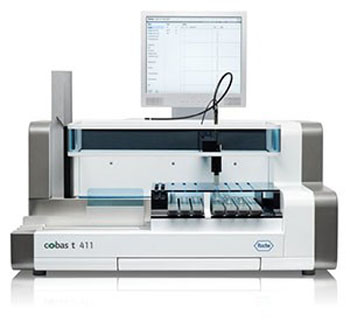
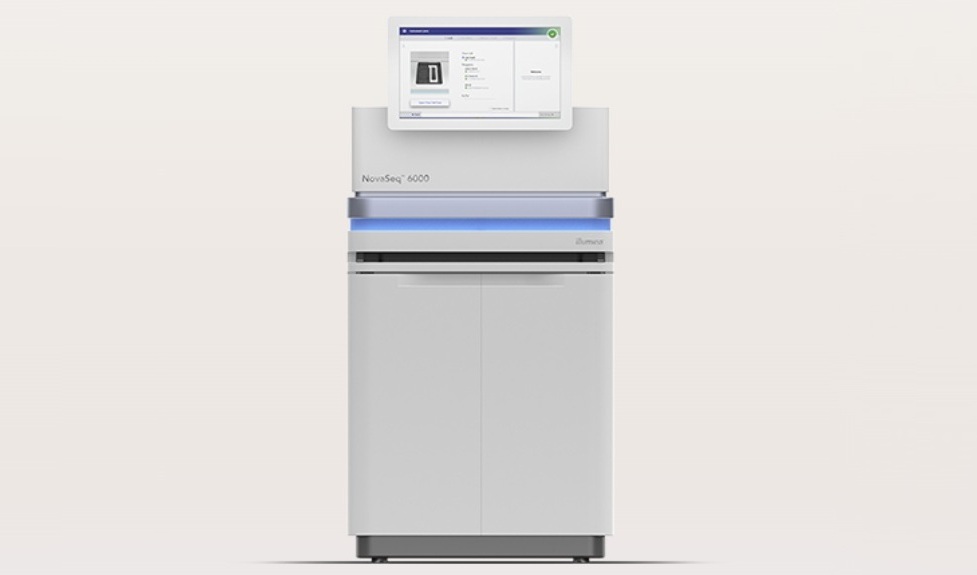
A new stand-alone, dedicated coagulation system suitable for low-volume routine testing (up to 120 samples per day) is now available.
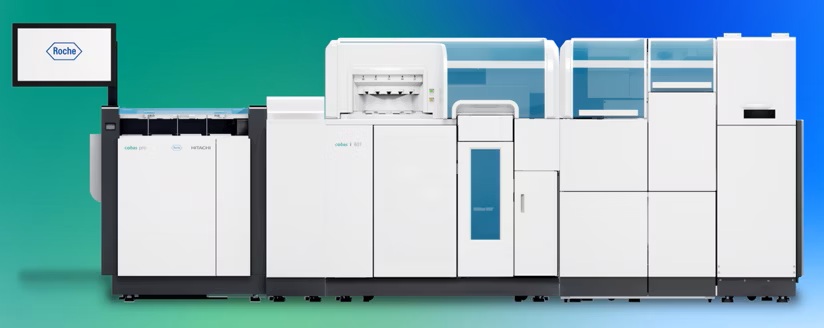
The medical equipment manufacturer Roche (Basel, Switzerland) recently announced that its new lab-coagulation solution, the cobas t 411 analyzer, is now available for countries accepting the CE Marking for diagnostic tools.
The cobas t 411 analyzer was designed for use by low-volume central coagulation laboratories. Among its many innovative features, the instrument offers cap-piercing, which maximizes throughput when combined with five position rack-based sample handling. High on-board capacities for reagents and samples, along with continuous loading of reagents, samples, and consumables result in increased walk-away times. Efficient reagent use is optimized with on-board barcode scanning capability and cooled, tilted reagent racks. Patient safety is prioritized through the unique opto-mechanical detection principle by checking each sample before measurement, as well as the always available STAT port, whereby emergency samples can be immediately processed with test results returned in a timely fashion.
“We are entering into a new era of coagulation testing for Roche, through expansion of our coagulation solution and we will continue to develop systems which support our customer’s lab efficiency and productivity needs” said Jean-Claude Gottraux, head of professional diagnostics at Roche. “The cobas t 411 is the next foundation stone for Roche to become a total solution provider for coagulation testing in both the laboratory and at the point-of-care.”
Related Links:
Roche
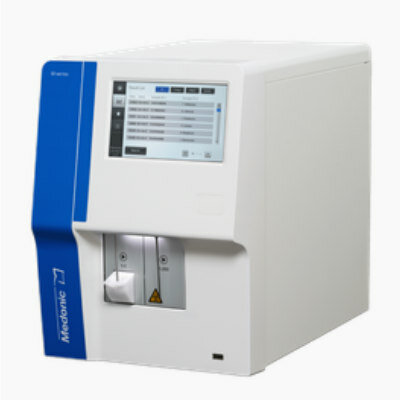
The medical equipment manufacturer Roche (Basel, Switzerland) recently announced that its new lab-coagulation solution, the cobas t 411 analyzer, is now available for countries accepting the CE Marking for diagnostic tools.
The cobas t 411 analyzer was designed for use by low-volume central coagulation laboratories. Among its many innovative features, the instrument offers cap-piercing, which maximizes throughput when combined with five position rack-based sample handling. High on-board capacities for reagents and samples, along with continuous loading of reagents, samples, and consumables result in increased walk-away times. Efficient reagent use is optimized with on-board barcode scanning capability and cooled, tilted reagent racks. Patient safety is prioritized through the unique opto-mechanical detection principle by checking each sample before measurement, as well as the always available STAT port, whereby emergency samples can be immediately processed with test results returned in a timely fashion.
“We are entering into a new era of coagulation testing for Roche, through expansion of our coagulation solution and we will continue to develop systems which support our customer’s lab efficiency and productivity needs” said Jean-Claude Gottraux, head of professional diagnostics at Roche. “The cobas t 411 is the next foundation stone for Roche to become a total solution provider for coagulation testing in both the laboratory and at the point-of-care.”

Related Links:
Roche
Read the full article by registering today, it's FREE!
Register now for FREE to LabMedica.com and get access to news and events that shape the world of Clinical Laboratory Medicine.
- Free digital version edition of LabMedica International sent by email on regular basis
- Free print version of LabMedica International magazine (available only outside USA and Canada).
- Free and unlimited access to back issues of LabMedica International in digital format
- Free LabMedica International Newsletter sent every week containing the latest news
- Free breaking news sent via email
- Free access to Events Calendar
- Free access to LinkXpress new product services
- REGISTRATION IS FREE AND EASY!
Sign in: Registered website members
Sign in: Registered magazine subscribers
Latest Technology News
- Artificial Intelligence Model Could Accelerate Rare Disease Diagnosis

- AI Saliva Sensor Enables Early Detection of Head and Neck Cancer
- AI-Powered Biosensor Technology to Enable Breath Test for Lung Cancer Detection
- AI Model Achieves Breakthrough Accuracy in Ovarian Cancer Detection
- Portable Biosensor Diagnoses Psychiatric Disorders Using Saliva Samples
- Cell-Sorting Device Uses Electromagnetic Levitation to Precisely Direct Cell Movement

- Embedded GPU Platform Enables Rapid Blood Profiling for POC Diagnostics
- Viral Biosensor Test Simultaneously Detects Hepatitis and HIV
- Acoustofluidic Device to Transform Point-Of-Care sEV-Based Diagnostics
- AI Algorithm Assesses Progressive Decline in Kidney Function
Channels
Clinical Chemistry
view channel
Chemical Imaging Probe Could Track and Treat Prostate Cancer
Prostate cancer remains a leading cause of illness and death among men, with many patients eventually developing resistance to standard hormone-blocking therapies. These drugs often lose effectiveness... Read more
Mismatch Between Two Common Kidney Function Tests Indicates Serious Health Problems
Creatinine has long been the standard for measuring kidney filtration, while cystatin C — a protein produced by all human cells — has been recommended as a complementary marker because it is influenced... Read moreMolecular Diagnostics
view channel
Simple Urine Test to Revolutionize Bladder Cancer Diagnosis and Treatment
Bladder cancer is one of the most common and deadly urological cancers and is marked by a high rate of recurrence. Diagnosis and follow-up still rely heavily on invasive cystoscopy or urine cytology, which... Read more
Blood Test to Enable Earlier and Simpler Detection of Liver Fibrosis
Persistent liver damage caused by alcohol misuse or viral infections can trigger liver fibrosis, a condition in which healthy tissue is gradually replaced by collagen fibers. Even after successful treatment... Read moreHematology
view channel
Platelet Activity Blood Test in Middle Age Could Identify Early Alzheimer’s Risk
Early detection of Alzheimer’s disease remains one of the biggest unmet needs in neurology, particularly because the biological changes underlying the disorder begin decades before memory symptoms appear.... Read more
Microvesicles Measurement Could Detect Vascular Injury in Sickle Cell Disease Patients
Assessing disease severity in sickle cell disease (SCD) remains challenging, especially when trying to predict hemolysis, vascular injury, and risk of complications such as vaso-occlusive crises.... Read more
ADLM’s New Coagulation Testing Guidance to Improve Care for Patients on Blood Thinners
Direct oral anticoagulants (DOACs) are one of the most common types of blood thinners. Patients take them to prevent a host of complications that could arise from blood clotting, including stroke, deep... Read moreImmunology
view channel
New Test Distinguishes Vaccine-Induced False Positives from Active HIV Infection
Since HIV was identified in 1983, more than 91 million people have contracted the virus, and over 44 million have died from related causes. Today, nearly 40 million individuals worldwide live with HIV-1,... Read more
Gene Signature Test Predicts Response to Key Breast Cancer Treatment
DK4/6 inhibitors paired with hormone therapy have become a cornerstone treatment for advanced HR+/HER2– breast cancer, slowing tumor growth by blocking key proteins that drive cell division.... Read more
Chip Captures Cancer Cells from Blood to Help Select Right Breast Cancer Treatment
Ductal carcinoma in situ (DCIS) accounts for about a quarter of all breast cancer cases and generally carries a good prognosis. This non-invasive form of the disease may or may not become life-threatening.... Read moreMicrobiology
view channel
Rapid Diagnostic Test Matches Gold Standard for Sepsis Detection
Sepsis kills 11 million people worldwide every year and generates massive healthcare costs. In the USA and Europe alone, sepsis accounts for USD 100 billion in annual hospitalization expenses.... Read moreRapid POC Tuberculosis Test Provides Results Within 15 Minutes
Tuberculosis remains one of the world’s deadliest infectious diseases, and reducing new cases depends on identifying individuals with latent infection before it progresses. Current diagnostic tools often... Read more
Rapid Assay Identifies Bloodstream Infection Pathogens Directly from Patient Samples
Bloodstream infections in sepsis progress quickly and demand rapid, precise diagnosis. Current blood-culture methods often take one to five days to identify the pathogen, leaving clinicians to treat blindly... Read morePathology
view channel
Tunable Cell-Sorting Device Holds Potential for Multiple Biomedical Applications
Isolating rare cancer cells from blood is essential for diagnosing metastasis and guiding treatment decisions, but remains technically challenging. Many existing techniques struggle to balance accuracy,... Read moreAI Tool Outperforms Doctors in Spotting Blood Cell Abnormalities
Diagnosing blood disorders depends on recognizing subtle abnormalities in cell size, shape, and structure, yet this process is slow, subjective, and requires years of expert training. Even specialists... Read moreIndustry
view channel
Abbott Acquires Cancer-Screening Company Exact Sciences
Abbott (Abbott Park, IL, USA) has entered into a definitive agreement to acquire Exact Sciences (Madison, WI, USA), enabling it to enter and lead in fast-growing cancer diagnostics segments.... Read more


 assay.jpg)