Pioneering Blood Test Detects Lung Cancer Using Infrared Imaging
Posted on 02 Jan 2026
Detecting cancer early and tracking how it responds to treatment remains a major challenge, particularly when cancer cells are present in extremely low numbers in the bloodstream. Circulating tumor cells can signal disease progression and the risk of metastasis, but current detection methods are often complex, costly, slow, and may miss cells that change their characteristics. These limitations reduce the ability to monitor cancer accurately in real time. Researchers have now demonstrated a blood-based approach capable of identifying even a single cancer cell among thousands of healthy cells.
Researchers at University Hospitals of North Midlands NHS Trust (UHNM, Stoke-on-Trent, UK) have developed a diagnostic approach based on Fourier Transform Infrared (FT-IR) microspectroscopy, a technique that analyzes the chemical composition of cells using infrared light. The method is designed to work on standard glass slides already used in pathology laboratories, reducing the need for specialized equipment.
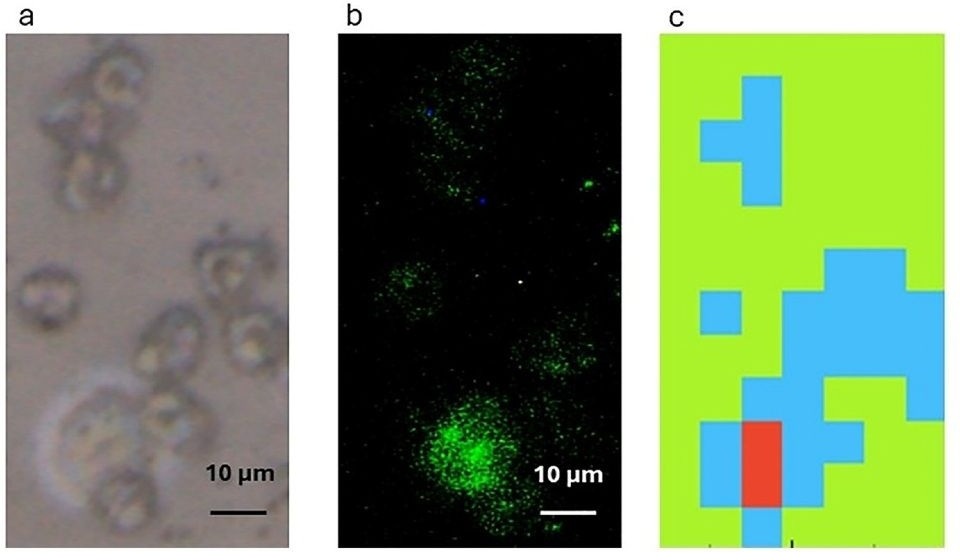
FT-IR microspectroscopy works by shining an infrared beam through blood samples and measuring how different cellular molecules absorb the light. Cancer cells have a distinct chemical fingerprint compared to normal blood cells, allowing them to be distinguished through advanced computer-based spectral analysis. By combining high-resolution infrared scanning with computational pattern recognition, the method can isolate cancer-specific signatures without relying on surface markers that may change over time.
The technique was evaluated using a blood sample from a 77-year-old lung cancer patient treated at UHNM. Researchers successfully identified a single circulating tumor cell among thousands of normal blood cells, with the result independently confirmed using specialist reference testing. The findings were published in Applied Spectroscopy, marking the first demonstration that FT-IR microspectroscopy can detect individual cancer cells directly in patient blood samples.
The results suggest that this approach could enable simpler, cheaper, and faster blood-based cancer monitoring compared with existing technologies. Because circulating tumor cells provide insight into treatment response and disease spread, the method could support real-time monitoring, earlier diagnosis, and more personalized treatment decisions. The team plans to validate the technology in larger patient cohorts and develop a rapid, automated test suitable for integration into NHS cancer care pathways.
“This breakthrough could allow doctors to monitor cancer in real time using a simple blood test,” said Professor Josep Sulé-Suso, lead author of the study. “This approach has the potential to help patients receive earlier diagnoses, personalized treatments, and fewer invasive procedures, and it could eventually be applied to many types of cancer beyond lung cancer.”
Related Links:
UHNM