LabMedica

Download Mobile App
Recent News Expo Clinical Chem. Molecular Diagnostics Hematology Immunology Microbiology Pathology Technology Industry Focus

New Test Significantly Improves Prostate Cancer Screening

By LabMedica International staff writers
Posted on 24 Nov 2015
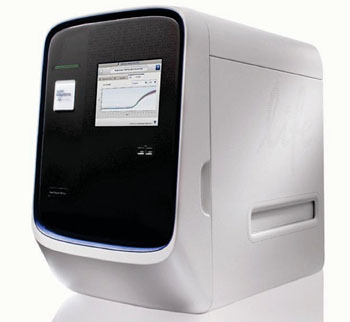
The QuantStudio 12K Flex Real-Time polymerase chain reaction (PCR) System
The QuantStudio 12K Flex Real-Time polymerase chain reaction (PCR) System (Photo courtesy of THERMO FISHER SCIENTIFIC)
The prostate-specific antigen (PSA) test is used to screen for prostate cancer but has a high false-positive rate that translates into unnecessary prostate biopsies and overdiagnosis of low-risk prostate cancers.

Prostate cancer is the second most common cancer among men worldwide, with over 1.2 million diagnosed in 2012. In number of men diagnosed with prostate cancer increases and within 20 years over 2 million men are estimated to be diagnosed yearly and currently, PSA is used to diagnose prostate cancer, but the procedure has long been controversial.

A team of scientists at the Karolinska Institutet (Stockholm, Sweden) performed a prospective diagnostic study that included 58,818 men from Stockholm aged 50 to 69 and was conducted between 2012 and 2014. The two screening methods, PSA and the Stockholm 3 (STHLM3) model, were both tested in each study participant. PSA is the only biomarker prospectively assessed in population-based screening trials with a positive effect on prostate cancer mortality and the clinical usefulness of other biomarkers in this context is limited. They chose to use a PSA concentration of at least 3 ng/mL as the reference to infer the same mortality effect as seen in these trials.

The STHLM3 model is a test consisting of a combination of plasma protein biomarkers including PSA, free PSA, intact PSA, hexokinase 2 (hK2), Beta-microseminoprotein (MSMB), and macrophage inhibitory cytokine 1(MIC1), genetic markers, clinical variables (age, family history, previous prostate biopsy), and a prostate exam (digital rectal exam and prostate volume).

According to a standardized biopsy protocol, 10 core biopsies were taken if the prostate volume was less than 35 cm3 and 12 core biopsies were taken if the volume was greater or equal to 35 cm3. Plasma protein biomarkers were analyzed using an ISAC multiplex platform (Phadia; Uppsala, Sweden). Genotyping was done using the QuantStudio 12K Flex Real-Time polymerase chain reaction (PCR) System (Waltham, MA, USA).

The results of the study showed that the STHLM3 test reduced the number of biopsies by 32% without compromising patient safety. In addition, the STHLM3 test found aggressive cancers in men with low PSA values 1 ng/mL to 3 ng/mL, cancers that are currently going undetected. Comparing the STHLM3 model to PSA alone excluding the prostate exam (digital rectal exam and prostate volume) maintained the robustness of the STHLM3 model. The STHLM3 model includes two novel biomarkers for prostate cancer. MSMB is one of the most common proteins in human semen and is highly expressed in normal prostate. MIC1, also known as GDF15, is involved in inflammation regulation and apoptotic pathways in injured tissues.

The authors concluded that the STHLM3 model can be used as an aid to identify high risk prostate cancers in men aged 50 to 69 years, with a PSA concentration of at least 1 ng/mL, reducing the number of prostate biopsies and the detection of clinically insignificant disease, while maintaining the sensitivity to clinically significant prostate cancer. The study was published on November 9, 2015, in the journal the Lancet Oncology.

Related Links:

Karolinska Institutet 
Phadia 
QuantStudio 

Gold Member
Hybrid Pipette
SWITCH
POC Helicobacter Pylori Test Kit
Hepy Urease Test
New
Gold Member
Clinical Drug Testing Panel
DOA Urine MultiPlex
CBM Analyzer
Complete Blood Morphology (CBM) Analyzer
Read the full article by registering today, it's FREE! It's Free!
Register now for FREE to LabMedica.com and get access to news and events that shape the world of Clinical Laboratory Medicine.
  • Free digital version edition of LabMedica International sent by email on regular basis
  • Free print version of LabMedica International magazine (available only outside USA and Canada).
  • Free and unlimited access to back issues of LabMedica International in digital format
  • Free LabMedica International Newsletter sent every week containing the latest news
  • Free breaking news sent via email
  • Free access to Events Calendar
  • Free access to LinkXpress new product services
  • REGISTRATION IS FREE AND EASY!
Click here to Register


Channels

Molecular Diagnostics

view channel
Image: The diagnostic device can tell how deadly brain tumors respond to treatment from a simple blood test (Photo courtesy of UQ)

Diagnostic Device Predicts Treatment Response for Brain Tumors Via Blood Test

Glioblastoma is one of the deadliest forms of brain cancer, largely because doctors have no reliable way to determine whether treatments are working in real time. Assessing therapeutic response currently... Read more

Immunology

view channel
Image: Circulating tumor cells isolated from blood samples could help guide immunotherapy decisions (Photo courtesy of Shutterstock)

Blood Test Identifies Lung Cancer Patients Who Can Benefit from Immunotherapy Drug

Small cell lung cancer (SCLC) is an aggressive disease with limited treatment options, and even newly approved immunotherapies do not benefit all patients. While immunotherapy can extend survival for some,... Read more

Microbiology

view channel
Image: New evidence suggests that imbalances in the gut microbiome may contribute to the onset and progression of MCI and Alzheimer’s disease (Photo courtesy of Adobe Stock)

Comprehensive Review Identifies Gut Microbiome Signatures Associated With Alzheimer’s Disease

Alzheimer’s disease affects approximately 6.7 million people in the United States and nearly 50 million worldwide, yet early cognitive decline remains difficult to characterize. Increasing evidence suggests... Read more

Technology

view channel
Image: Vitestro has shared a detailed visual explanation of its Autonomous Robotic Phlebotomy Device (photo courtesy of Vitestro)

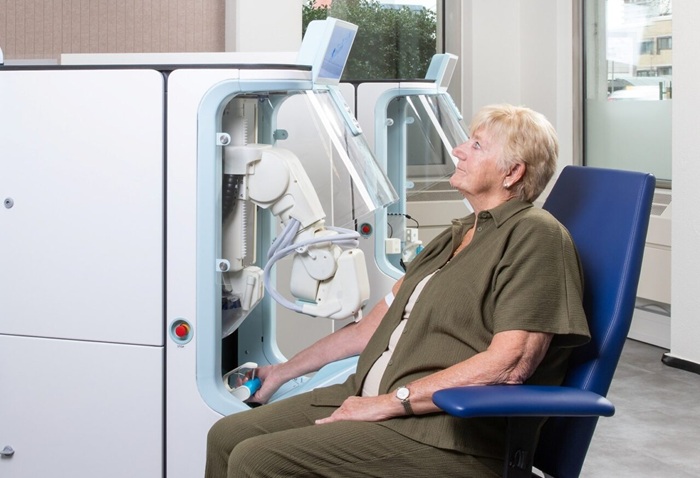
Robotic Technology Unveiled for Automated Diagnostic Blood Draws

Routine diagnostic blood collection is a high‑volume task that can strain staffing and introduce human‑dependent variability, with downstream implications for sample quality and patient experience.... Read more

Industry

view channel
Image: Roche’s cobas® Mass Spec solution enables fully automated mass spectrometry in routine clinical laboratories (Photo courtesy of Roche)

New Collaboration Brings Automated Mass Spectrometry to Routine Laboratory Testing

Mass spectrometry is a powerful analytical technique that identifies and quantifies molecules based on their mass and electrical charge. Its high selectivity, sensitivity, and accuracy make it indispensable... Read more