Digital Morphology: What Advances Mean for Modern Laboratories, and Why Continued Innovation Is Imperative
|
By LabMedica International staff writers Posted on 26 Oct 2023 |


|
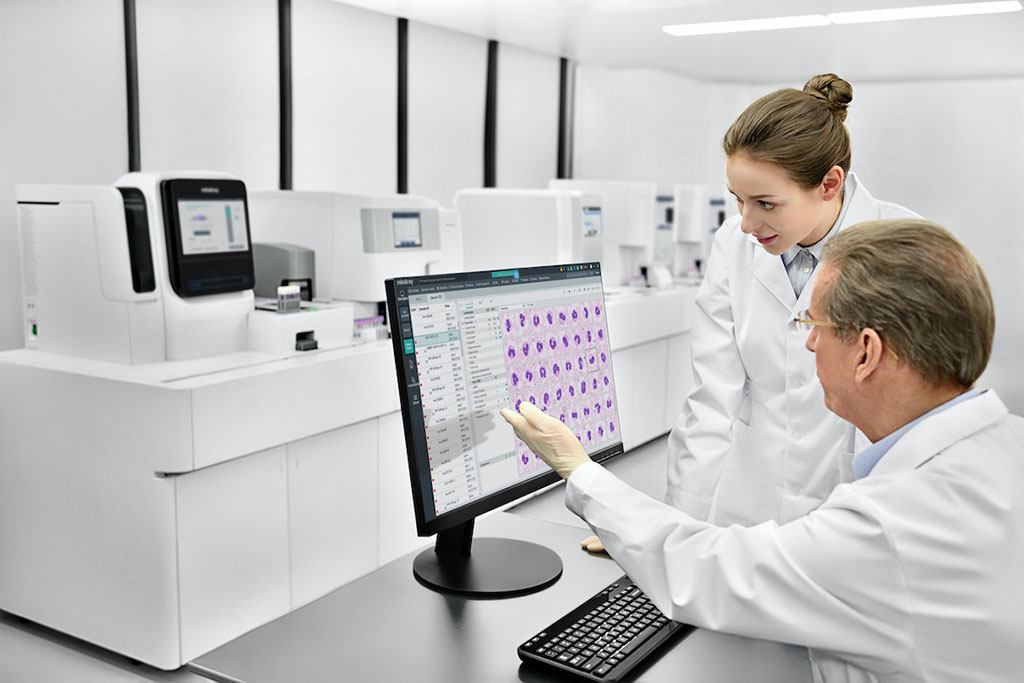
Advances in technology mean that moving from microscopes to digital alternatives can now be achieved without sacrificing image quality. But this isn’t about the technology. Professor Gina Zini, Associate Hematology Professor at Università Cattolica del Sacro Cuore (Rome, Italy) and Fondazione Policlinico Universitario A. Gemelli IRCCS (Rome, Italy) reflects on the key benefits of digital developments, including better quality screening, saved time for busy morphologists, better clinical collaboration, improved training, and sharing expertise with developing countries. Professor Gina Zini is also a board member and past scientific secretary (2012-2022) at the International Council for Standardization in Hematology (ICSH).
When I started my career as a hematologist, examining a blood smear meant looking through a microscope. This was the standard throughout the world.
Advances in technology have since led to the development and deployment of new approaches in many countries. In particular, digital tools have played increasingly supportive roles, often replacing or reducing the need for many manually intensive tasks in laboratories.
The potential for digital, particularly in areas such as hematology and morphology where I specialize, is now expanding further as more sophisticated technologies continue to be introduced. The aims: to improve efficiency, quality and collaboration in an environment where scarce professionals are in high demand.
What have laboratories been achieving in digital morphology?
Digital morphology analyzers have been adopted in many parts of the world as one means to improve efficiency in the laboratory, as well as the quality of reporting in screening programs. Such devices have helped to automate parts of the screening process, analyzing large quantities of blood smears to help to identify abnormalities.
Technology certainly hasn’t replaced the role of hematologists. Human interaction still plays a very substantial role in screening programs, with hematologists intervening when cases are flagged, and validating significant samples in an ongoing process to help to ensure accuracy and reliability.
Modern digital morphology analyzers have allowed professionals in the laboratory to view, validate and report from images on-screen, enabling them to more easily find cells and areas of concern than if they were looking through a microscope.
Recalling images on the screen, compared to searching for the cells on a slide under the microscope also represents a great advantage in terms of both the necessary time and effort, for busy laboratory teams.
The on-screen availability of digital cellular images has facilitated intra-laboratory, and sometimes inter-laboratory, consensus and harmonization, with images easily accessible and searchable for teams who are onsite and those working remotely.
Access to digital images can, for example, allows staff to share images with other colleagues for expert opinion, often even if that colleague is working at home.
Additional gains have also been presented by digital technologies. A blood smear can sometimes provide the primary, or the only evidence of a specific diagnosis, such as myelodysplastic syndrome, leukemia, lymphoma, or hemolytic anemia. Such blood smears may need to be stored over the long term: which is more easily achievable with digital morphology images.
And for some abnormal parameters provided by the automated analyzers, such as red blood cell abnormal parameters, accuracy can be higher and less subjective than grading using microscopy. This can help staff to deliver important reports after conducting only a rapid qualitative assessment of the smear.
In short – digital morphology has been delivering significant advantages in laboratories seeking to improve turnaround times, quality and costs – helping to alleviate some of the fatigue and workload challenges associated with optical morphology, and improving the opportunity for repeatability and the easier management of cell images.
Why continued innovation is urgent and imperative, and where it is already happening
The need for highly capable digital tools has now intensified. Their role is transforming from supporting for the efficient business of the laboratory, to one of an urgent necessity for screening services under pressure.
There is now a crisis of human resources in fields like haematology and morphological analysis, fuelled by the availability of fewer experts each year, who continue to manage an ever-increasing workload to support preventative healthcare. The situation now requires even better technologies to augment capacity.
Digital morphology analyzers are an important example of technology that has evolved to support this, and where innovation continues.
Historically, though helpful, older devices have presented some limitations. Many of these devices have worked by rebuilding an image, rather than displaying a true image of the smear. This means that images appear differently to those seen on glass slides through optical microscopy.
Consequently, laboratory teams reviewing an image have needed additional training to be taught how to interpret images and recognize areas of concern from images produced by specific devices, in order to be able to report in an effective and consistent manner.
This is now changing, with new digital technologies able to reproduce precisely what is seen under a microscope.
This was proven to be the case in a performance analysis I recently contributed to around the MC-80 automated digital cell morphology analyzer, launched by medical device provider Mindray (Shenzhen, China).
Blood samples examined in the analysis demonstrated excellent reproducibility of cell images, which were a perfect match to those seen under a microscope.
I knew nothing of the cases prior to the study, but could immediately check and validate images on the screen.
And this is made possible by the fact that for each sample evaluated, within the time of a click of the mouse, two hundred pre-classified images of nucleated cells appear on the screen with morphological details identical to those observed under an optical microscope.
There is therefore no need for any additional time to locate the slide, position it on the microscope table, search for the observation and counting area, focus with objectives at different magnifications including the addition of oil, as occurs when working with an optical microscope.
Time spent is dedicated to observing the cells and confirming their pre-classification or moving to a different subclass, when necessary: however, after the movement, the system will automatically regenerate the percentages of the differential.
To evaluate this series of samples, which were all pathological due to quantitative and/or qualitative anomalies, I spent an average of one to two minutes per sample for screen validation. This took an average of six to eight minutes to produce the reference differential under an optical microscope, evaluating in both cases at least 200 nucleated elements.
This ability to create images that are indistinguishable from the microscopy view is state-of-the-art. Efficiency gains and support for better quality reporting are benefits that speak for themselves in the context of stretched resources.
But it also opens up new possibilities around training and collaboration. Digital morphology can in general reduce the time it takes to train a good morphologist. But it is also worth bearing in mind that despite growing adoption, only around 37 percent of the world uses digital morphology. Many developing countries, for example, still rely on microscopy as their primary tool.
Having access to technologies that can reproduce an image as seen under a microscope, opens immediate opportunities for laboratories using digital morphology to share recognisable images for training purposes with professionals and trainees in countries where the technology is not yet widely used.
And if we can increase the adoption of digital morphology that produces images familiar to those who use microscopy, opportunities to improve screening, reduce false negatives, and extend the many other benefits that digital morphology can bring, could be realized.
Related Links:
Mindray





 (3) (1).png)
Latest Industry News
- AI-Powered Cervical Cancer Test Set for Major Rollout in Latin America
- New Collaboration Brings Automated Mass Spectrometry to Routine Laboratory Testing
- Diasorin and Fisher Scientific Enter into US Distribution Agreement for Molecular POC Platform
- WHX Labs Dubai to Gather Global Experts in Antimicrobial Resistance at Inaugural AMR Leaders’ Summit
- BD and Penn Institute Collaborate to Advance Immunotherapy through Flow Cytometry
- Abbott Acquires Cancer-Screening Company Exact Sciences
- Roche and Freenome Collaborate to Develop Cancer Screening Tests
- Co-Diagnostics Forms New Business Unit to Develop AI-Powered Diagnostics
- Qiagen Acquires Single-Cell Omics Firm Parse Biosciences
- Puritan Medical Products Showcasing Innovation at AMP2025 in Boston
- Advanced Instruments Merged Under Nova Biomedical Name
- Bio-Rad and Biodesix Partner to Develop Droplet Digital PCR High Complexity Assays
- Hologic to be Acquired by Blackstone and TPG
- Bio-Techne and Oxford Nanopore to Accelerate Development of Genetics Portfolio
- Terumo BCT and Hemex Health Collaborate to Improve Access to Testing for Hemoglobin Disorders
- Revvity and Sanofi Collaborate on Program to Revolutionize Early Detection of Type 1 Diabetes
Channels
Clinical Chemistry
view channel
New PSA-Based Prognostic Model Improves Prostate Cancer Risk Assessment
Prostate cancer is the second-leading cause of cancer death among American men, and about one in eight will be diagnosed in their lifetime. Screening relies on blood levels of prostate-specific antigen... Read more
Extracellular Vesicles Linked to Heart Failure Risk in CKD Patients
Chronic kidney disease (CKD) affects more than 1 in 7 Americans and is strongly associated with cardiovascular complications, which account for more than half of deaths among people with CKD.... Read more
Molecular Diagnostics
view channel
Diagnostic Device Predicts Treatment Response for Brain Tumors Via Blood Test
Glioblastoma is one of the deadliest forms of brain cancer, largely because doctors have no reliable way to determine whether treatments are working in real time. Assessing therapeutic response currently... Read more
Blood Test Detects Early-Stage Cancers by Measuring Epigenetic Instability
Early-stage cancers are notoriously difficult to detect because molecular changes are subtle and often missed by existing screening tools. Many liquid biopsies rely on measuring absolute DNA methylation... Read more
“Lab-On-A-Disc” Device Paves Way for More Automated Liquid Biopsies
Extracellular vesicles (EVs) are tiny particles released by cells into the bloodstream that carry molecular information about a cell’s condition, including whether it is cancerous. However, EVs are highly... Read more
Blood Test Identifies Inflammatory Breast Cancer Patients at Increased Risk of Brain Metastasis
Brain metastasis is a frequent and devastating complication in patients with inflammatory breast cancer, an aggressive subtype with limited treatment options. Despite its high incidence, the biological... Read moreHematology
view channel
New Guidelines Aim to Improve AL Amyloidosis Diagnosis
Light chain (AL) amyloidosis is a rare, life-threatening bone marrow disorder in which abnormal amyloid proteins accumulate in organs. Approximately 3,260 people in the United States are diagnosed... Read more
Fast and Easy Test Could Revolutionize Blood Transfusions
Blood transfusions are a cornerstone of modern medicine, yet red blood cells can deteriorate quietly while sitting in cold storage for weeks. Although blood units have a fixed expiration date, cells from... Read more
Automated Hemostasis System Helps Labs of All Sizes Optimize Workflow
High-volume hemostasis sections must sustain rapid turnaround while managing reruns and reflex testing. Manual tube handling and preanalytical checks can strain staff time and increase opportunities for error.... Read more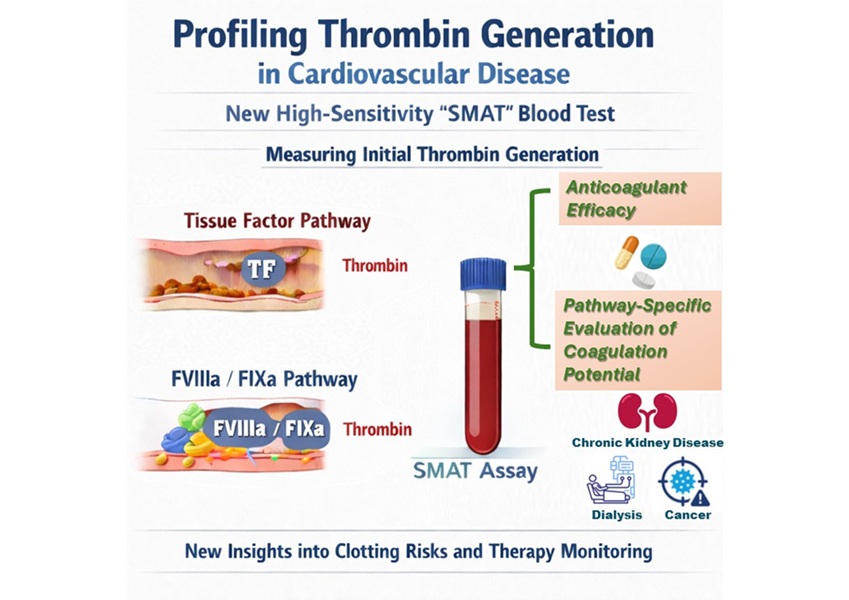
High-Sensitivity Blood Test Improves Assessment of Clotting Risk in Heart Disease Patients
Blood clotting is essential for preventing bleeding, but even small imbalances can lead to serious conditions such as thrombosis or dangerous hemorrhage. In cardiovascular disease, clinicians often struggle... Read moreImmunology
view channel
Blood Test Identifies Lung Cancer Patients Who Can Benefit from Immunotherapy Drug
Small cell lung cancer (SCLC) is an aggressive disease with limited treatment options, and even newly approved immunotherapies do not benefit all patients. While immunotherapy can extend survival for some,... Read more
Whole-Genome Sequencing Approach Identifies Cancer Patients Benefitting From PARP-Inhibitor Treatment
Targeted cancer therapies such as PARP inhibitors can be highly effective, but only for patients whose tumors carry specific DNA repair defects. Identifying these patients accurately remains challenging,... Read more
Ultrasensitive Liquid Biopsy Demonstrates Efficacy in Predicting Immunotherapy Response
Immunotherapy has transformed cancer treatment, but only a small proportion of patients experience lasting benefit, with response rates often remaining between 10% and 20%. Clinicians currently lack reliable... Read more
Microbiology
view channel
Comprehensive Review Identifies Gut Microbiome Signatures Associated With Alzheimer’s Disease
Alzheimer’s disease affects approximately 6.7 million people in the United States and nearly 50 million worldwide, yet early cognitive decline remains difficult to characterize. Increasing evidence suggests... Read more
AI-Powered Platform Enables Rapid Detection of Drug-Resistant C. Auris Pathogens
Infections caused by the pathogenic yeast Candida auris pose a significant threat to hospitalized patients, particularly those with weakened immune systems or those who have invasive medical devices.... Read more

Pathology
view channel
Engineered Yeast Cells Enable Rapid Testing of Cancer Immunotherapy
Developing new cancer immunotherapies is a slow, costly, and high-risk process, particularly for CAR T cell treatments that must precisely recognize cancer-specific antigens. Small differences in tumor... Read more
First-Of-Its-Kind Test Identifies Autism Risk at Birth
Autism spectrum disorder is treatable, and extensive research shows that early intervention can significantly improve cognitive, social, and behavioral outcomes. Yet in the United States, the average age... Read more
Technology
view channel
Robotic Technology Unveiled for Automated Diagnostic Blood Draws
Routine diagnostic blood collection is a high‑volume task that can strain staffing and introduce human‑dependent variability, with downstream implications for sample quality and patient experience.... Read more
ADLM Launches First-of-Its-Kind Data Science Program for Laboratory Medicine Professionals
Clinical laboratories generate billions of test results each year, creating a treasure trove of data with the potential to support more personalized testing, improve operational efficiency, and enhance patient care.... Read more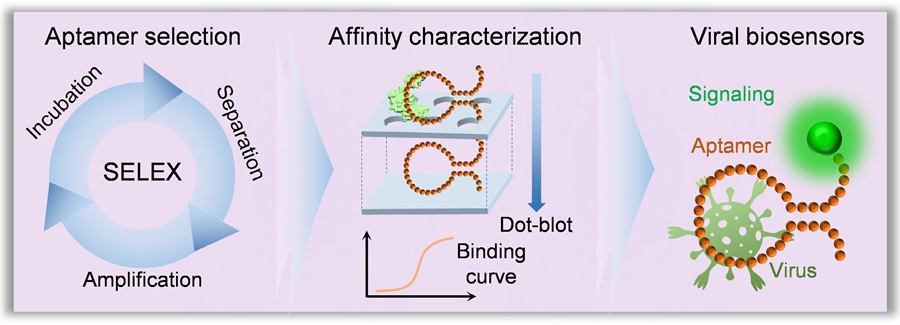
Aptamer Biosensor Technology to Transform Virus Detection
Rapid and reliable virus detection is essential for controlling outbreaks, from seasonal influenza to global pandemics such as COVID-19. Conventional diagnostic methods, including cell culture, antigen... Read more