Hemophilia B Gene Increases Risk for Postpartum Bleeding
|
By LabMedica International staff writers Posted on 09 Dec 2019 |


|
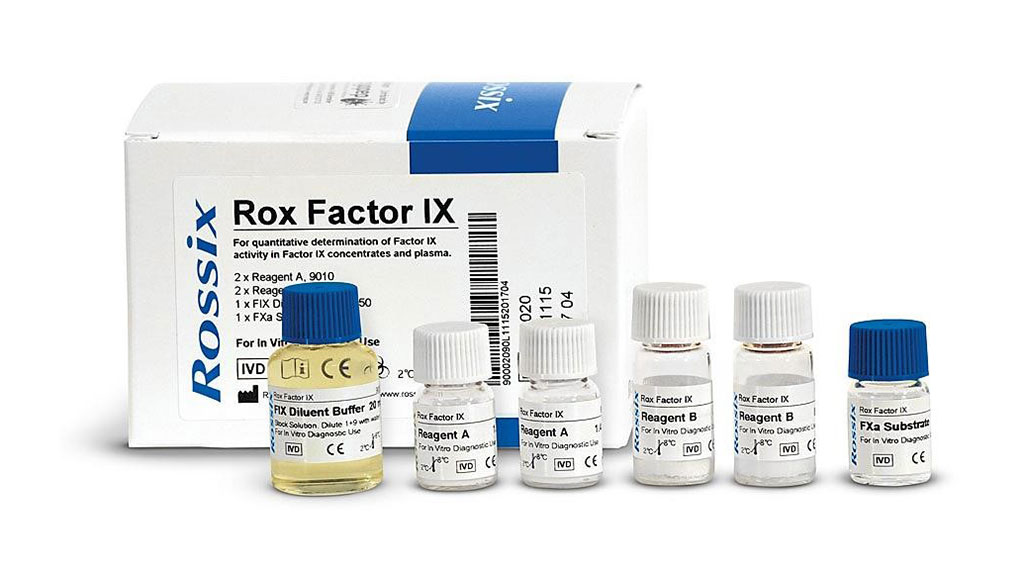
Image: An assay kit for the determination of Factor IX activity in plasma and Factor IX preparations, including potency assignment of FIX concentrates. The lack of increase in FIX activity, in contrast to FVIII activity, during pregnancy is likely to have contributed postpartum hemorrhage (Photo courtesy of Cryopep)
Pregnancy influences the levels of blood clotting factors. In healthy women, the activity of factor VIII (FVIII), the missing coagulation factor in hemophilia A, more than doubles in the third trimester and drops back to normal levels within days following delivery. Conversely, factor IX (FIX) activity, the clotting factor defective in hemophilia B, increases slightly or remains the same during normal pregnancy.
In female carriers of hemophilia A, who have a deficiency in FVIII, the activity of this clotting factor can also increase significantly during pregnancy and reach normal levels in most cases. For hemophilia B carriers, however, FIX levels do not rise significantly and remain low during pregnancy. Although most carriers have normal pregnancies without any bleeding complications, factor levels should be tested in the third trimester of pregnancy when they are at their highest.
Hematologists at Sahlgrenska University Hospital (Gothenburg, Sweden) and their colleagues wanted to determine the risk of bleeding among pregnant hemophilia A and B carriers under routine clinical practice in Sweden. They also wanted to evaluate the rate of maternal and neonatal complications. They retrospectively analyzed data from 298 pregnancies in 153 hemophilia A carriers, and 51 pregnancies in 27 hemophilia B carriers, between 1987 and 2013, collected from the Swedish Medical Birth Register and the country’s National Patient Register. The control group consisted of 3,494 pregnancies.
The scientists looked at several maternal and neonatal characteristics, including the risk of bleeding after delivery or postpartum hemorrhage (PPH). In Sweden, the more recent definition of PPH is blood loss of more than 1,000 mL following vaginal delivery or cesarean delivery. A previous guideline defined PPH as blood loss of more than 600 mL for vaginal births. The team found that the risk of bleeding was more than three times higher in hemophilia B carriers than in non-carriers, but the risk for having other pregnancy complications, such as preeclampsia, was similar in all groups. PPH occurred in 7.4% of the hemophilia A carriers, 21.6% of the hemophilia B carriers, and 6.6% of the control group.
Additional results indicated that the incidence of pregnancy or neonatal complications was similar in carriers of hemophilia A or B compared with non-carriers. These complications included preeclampsia (3.0% in the hemophilia A group, 2.0% in the hemophilia B group, and 2.5% in the non-carrier group), preterm birth (gestational age of 32 to 37 weeks; 6.0%, 2.0%, and 5.4%), low birth weight (1,500 to 2,500 grams; 3.7%, 2.0%, and 3.2%) or low Apgar score (a measure of a newborn’s state of health; 1.0%, 0.0%, and 0.9%).
The authors concluded that the lack of increase in FIX activity, in contrast to FVIII activity, during pregnancy is likely to have contributed to this main finding, since hemophilia carriers typically have prepregnancy FVIII and FIX activities at about 50% of those in non-carrier women. There is an increased risk of PPH in unselected hemophilia B-carrier deliveries. The absence of increased FIX activity, but not FVIII activity, during pregnancy is likely to have influenced the results. The study was published on November 19, 2019 in the journal Haemophilia.
Related Links:
Sahlgrenska University Hospital





In female carriers of hemophilia A, who have a deficiency in FVIII, the activity of this clotting factor can also increase significantly during pregnancy and reach normal levels in most cases. For hemophilia B carriers, however, FIX levels do not rise significantly and remain low during pregnancy. Although most carriers have normal pregnancies without any bleeding complications, factor levels should be tested in the third trimester of pregnancy when they are at their highest.
Hematologists at Sahlgrenska University Hospital (Gothenburg, Sweden) and their colleagues wanted to determine the risk of bleeding among pregnant hemophilia A and B carriers under routine clinical practice in Sweden. They also wanted to evaluate the rate of maternal and neonatal complications. They retrospectively analyzed data from 298 pregnancies in 153 hemophilia A carriers, and 51 pregnancies in 27 hemophilia B carriers, between 1987 and 2013, collected from the Swedish Medical Birth Register and the country’s National Patient Register. The control group consisted of 3,494 pregnancies.
The scientists looked at several maternal and neonatal characteristics, including the risk of bleeding after delivery or postpartum hemorrhage (PPH). In Sweden, the more recent definition of PPH is blood loss of more than 1,000 mL following vaginal delivery or cesarean delivery. A previous guideline defined PPH as blood loss of more than 600 mL for vaginal births. The team found that the risk of bleeding was more than three times higher in hemophilia B carriers than in non-carriers, but the risk for having other pregnancy complications, such as preeclampsia, was similar in all groups. PPH occurred in 7.4% of the hemophilia A carriers, 21.6% of the hemophilia B carriers, and 6.6% of the control group.
Additional results indicated that the incidence of pregnancy or neonatal complications was similar in carriers of hemophilia A or B compared with non-carriers. These complications included preeclampsia (3.0% in the hemophilia A group, 2.0% in the hemophilia B group, and 2.5% in the non-carrier group), preterm birth (gestational age of 32 to 37 weeks; 6.0%, 2.0%, and 5.4%), low birth weight (1,500 to 2,500 grams; 3.7%, 2.0%, and 3.2%) or low Apgar score (a measure of a newborn’s state of health; 1.0%, 0.0%, and 0.9%).
The authors concluded that the lack of increase in FIX activity, in contrast to FVIII activity, during pregnancy is likely to have contributed to this main finding, since hemophilia carriers typically have prepregnancy FVIII and FIX activities at about 50% of those in non-carrier women. There is an increased risk of PPH in unselected hemophilia B-carrier deliveries. The absence of increased FIX activity, but not FVIII activity, during pregnancy is likely to have influenced the results. The study was published on November 19, 2019 in the journal Haemophilia.
Related Links:
Sahlgrenska University Hospital

New
Gold Member
Clinical Drug Testing Panel
DOA Urine MultiPlex
Laboratory Software
ArtelWare
Autoimmune Liver Diseases Assay
Microblot-Array Liver Profile Kit
Latest Hematology News
- New Guidelines Aim to Improve AL Amyloidosis Diagnosis
- Automated Hemostasis System Helps Labs of All Sizes Optimize Workflow
- Fast and Easy Test Could Revolutionize Blood Transfusions
- High-Sensitivity Blood Test Improves Assessment of Clotting Risk in Heart Disease Patients
- AI Algorithm Effectively Distinguishes Alpha Thalassemia Subtypes
- MRD Tests Could Predict Survival in Leukemia Patients
- Platelet Activity Blood Test in Middle Age Could Identify Early Alzheimer’s Risk
- Microvesicles Measurement Could Detect Vascular Injury in Sickle Cell Disease Patients
- ADLM’s New Coagulation Testing Guidance to Improve Care for Patients on Blood Thinners
- Viscoelastic Testing Could Improve Treatment of Maternal Hemorrhage
- Pioneering Model Measures Radiation Exposure in Blood for Precise Cancer Treatments
- Platelets Could Improve Early and Minimally Invasive Detection of Cancer
- Portable and Disposable Device Obtains Platelet-Rich Plasma Without Complex Equipment
- Disposable Cartridge-Based Test Delivers Rapid and Accurate CBC Results
- First Point-of-Care Heparin Monitoring Test Provides Results in Under 15 Minutes

- New Scoring System Predicts Risk of Developing Cancer from Common Blood Disorder
Channels
Clinical Chemistry
view channel
New PSA-Based Prognostic Model Improves Prostate Cancer Risk Assessment
Prostate cancer is the second-leading cause of cancer death among American men, and about one in eight will be diagnosed in their lifetime. Screening relies on blood levels of prostate-specific antigen... Read more
Extracellular Vesicles Linked to Heart Failure Risk in CKD Patients
Chronic kidney disease (CKD) affects more than 1 in 7 Americans and is strongly associated with cardiovascular complications, which account for more than half of deaths among people with CKD.... Read more

Molecular Diagnostics
view channel
Diagnostic Device Predicts Treatment Response for Brain Tumors Via Blood Test
Glioblastoma is one of the deadliest forms of brain cancer, largely because doctors have no reliable way to determine whether treatments are working in real time. Assessing therapeutic response currently... Read more
Blood Test Detects Early-Stage Cancers by Measuring Epigenetic Instability
Early-stage cancers are notoriously difficult to detect because molecular changes are subtle and often missed by existing screening tools. Many liquid biopsies rely on measuring absolute DNA methylation... Read more
“Lab-On-A-Disc” Device Paves Way for More Automated Liquid Biopsies
Extracellular vesicles (EVs) are tiny particles released by cells into the bloodstream that carry molecular information about a cell’s condition, including whether it is cancerous. However, EVs are highly... Read more
Blood Test Identifies Inflammatory Breast Cancer Patients at Increased Risk of Brain Metastasis
Brain metastasis is a frequent and devastating complication in patients with inflammatory breast cancer, an aggressive subtype with limited treatment options. Despite its high incidence, the biological... Read moreImmunology
view channel
Blood Test Identifies Lung Cancer Patients Who Can Benefit from Immunotherapy Drug
Small cell lung cancer (SCLC) is an aggressive disease with limited treatment options, and even newly approved immunotherapies do not benefit all patients. While immunotherapy can extend survival for some,... Read more
Whole-Genome Sequencing Approach Identifies Cancer Patients Benefitting From PARP-Inhibitor Treatment
Targeted cancer therapies such as PARP inhibitors can be highly effective, but only for patients whose tumors carry specific DNA repair defects. Identifying these patients accurately remains challenging,... Read more
Ultrasensitive Liquid Biopsy Demonstrates Efficacy in Predicting Immunotherapy Response
Immunotherapy has transformed cancer treatment, but only a small proportion of patients experience lasting benefit, with response rates often remaining between 10% and 20%. Clinicians currently lack reliable... Read more
Microbiology
view channel
Comprehensive Review Identifies Gut Microbiome Signatures Associated With Alzheimer’s Disease
Alzheimer’s disease affects approximately 6.7 million people in the United States and nearly 50 million worldwide, yet early cognitive decline remains difficult to characterize. Increasing evidence suggests... Read more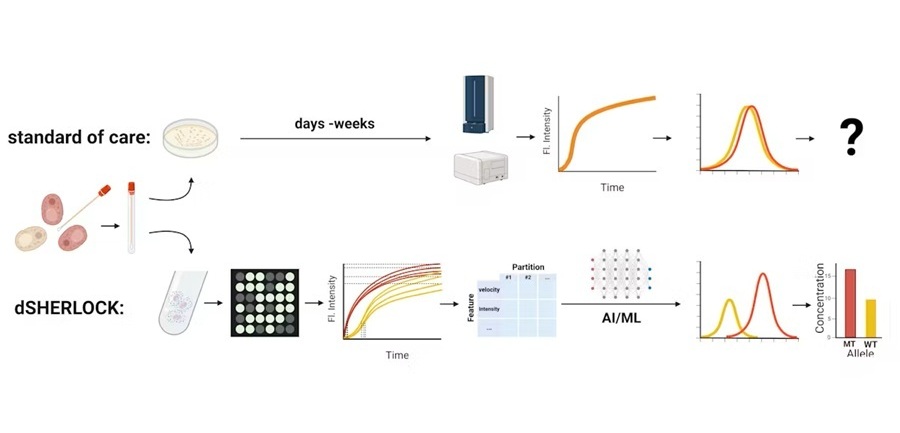
AI-Powered Platform Enables Rapid Detection of Drug-Resistant C. Auris Pathogens
Infections caused by the pathogenic yeast Candida auris pose a significant threat to hospitalized patients, particularly those with weakened immune systems or those who have invasive medical devices.... Read more

Pathology
view channel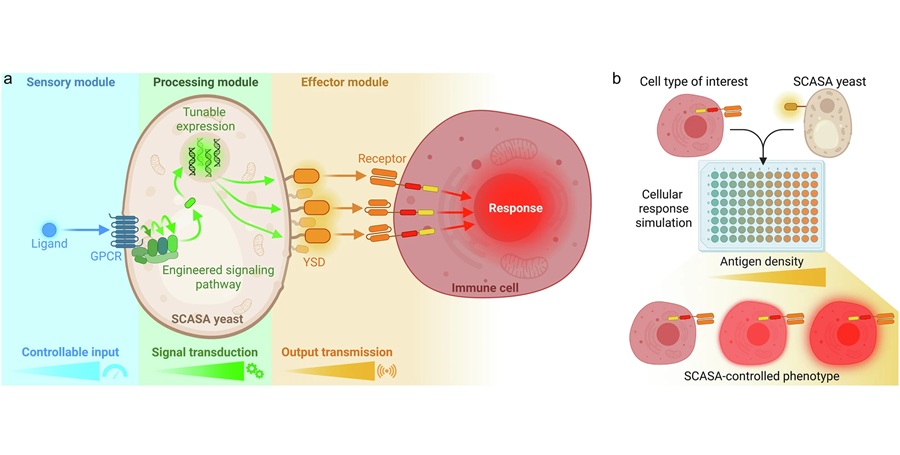
Engineered Yeast Cells Enable Rapid Testing of Cancer Immunotherapy
Developing new cancer immunotherapies is a slow, costly, and high-risk process, particularly for CAR T cell treatments that must precisely recognize cancer-specific antigens. Small differences in tumor... Read more
First-Of-Its-Kind Test Identifies Autism Risk at Birth
Autism spectrum disorder is treatable, and extensive research shows that early intervention can significantly improve cognitive, social, and behavioral outcomes. Yet in the United States, the average age... Read more

Technology
view channel
Robotic Technology Unveiled for Automated Diagnostic Blood Draws
Routine diagnostic blood collection is a high‑volume task that can strain staffing and introduce human‑dependent variability, with downstream implications for sample quality and patient experience.... Read more
ADLM Launches First-of-Its-Kind Data Science Program for Laboratory Medicine Professionals
Clinical laboratories generate billions of test results each year, creating a treasure trove of data with the potential to support more personalized testing, improve operational efficiency, and enhance patient care.... Read more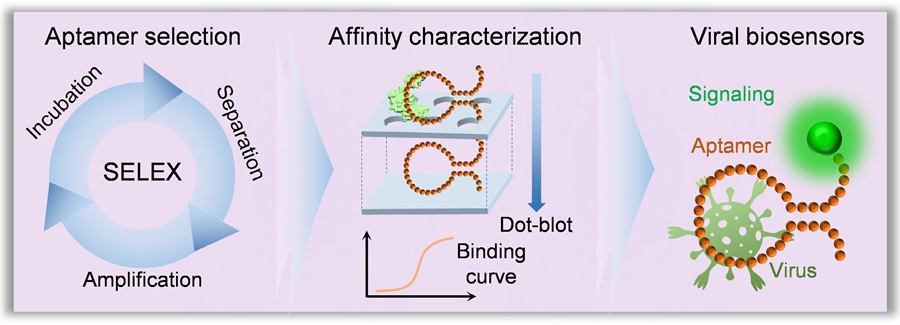
Aptamer Biosensor Technology to Transform Virus Detection
Rapid and reliable virus detection is essential for controlling outbreaks, from seasonal influenza to global pandemics such as COVID-19. Conventional diagnostic methods, including cell culture, antigen... Read more
AI Models Could Predict Pre-Eclampsia and Anemia Earlier Using Routine Blood Tests
Pre-eclampsia and anemia are major contributors to maternal and child mortality worldwide, together accounting for more than half a million deaths each year and leaving millions with long-term health complications.... Read moreIndustry
view channel
New Collaboration Brings Automated Mass Spectrometry to Routine Laboratory Testing
Mass spectrometry is a powerful analytical technique that identifies and quantifies molecules based on their mass and electrical charge. Its high selectivity, sensitivity, and accuracy make it indispensable... Read more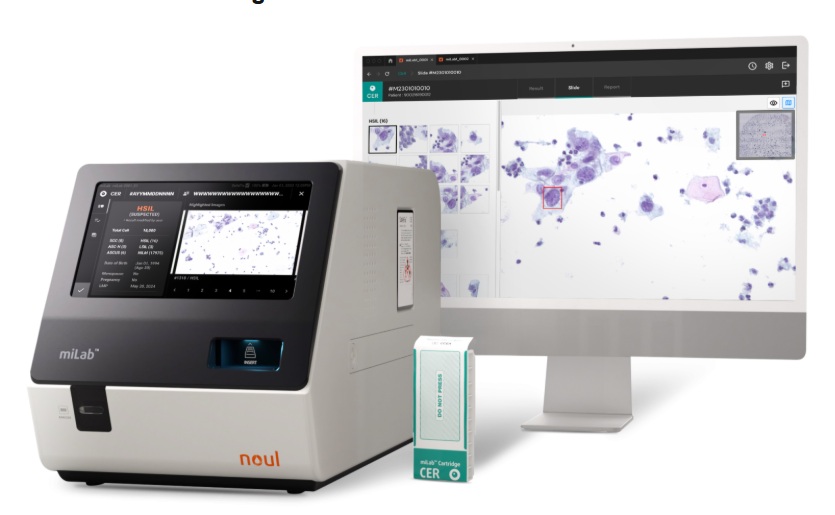
AI-Powered Cervical Cancer Test Set for Major Rollout in Latin America
Noul Co., a Korean company specializing in AI-based blood and cancer diagnostics, announced it will supply its intelligence (AI)-based miLab CER cervical cancer diagnostic solution to Mexico under a multi‑year... Read more
Diasorin and Fisher Scientific Enter into US Distribution Agreement for Molecular POC Platform
Diasorin (Saluggia, Italy) has entered into an exclusive distribution agreement with Fisher Scientific, part of Thermo Fisher Scientific (Waltham, MA, USA), for the LIAISON NES molecular point-of-care... Read more