LabMedica

Download Mobile App
Recent News Expo Clinical Chem. Molecular Diagnostics Hematology Immunology Microbiology Pathology Technology Industry Focus

Surface Marker Allows New Diagnostic Approaches for Sarcoidosis

By LabMedica International staff writers
Posted on 08 Nov 2015
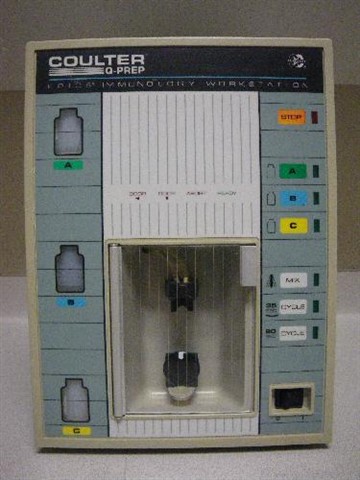
The Q-Prep/ImmunoPrep lysing system workstation
The Q-Prep/ImmunoPrep lysing system workstation (Photo courtesy of BECKMAN COULTER, INC - Danaher)
A new strategy has been developed to determine monocyte subsets involved in diseases that could help facilitate the diagnosis of sarcoidosis and may improve respective patient management.

Monocytes are white blood cells that are crucial to human immune defense and are precursor cells of macrophages and dendritic cells that circulate in the blood until they invade their respective target tissue where they defend the body against exogenous structures.

Scientists at Helmholtz-Zentrum (Munich, Germany) and their colleagues analyzed blood samples of patients suffering from sarcoidosis. This disease, which often leads to damage of the patients' lungs, is caused by a strong immune reaction and a concomitant formation of nodules in the tissue. The underlying mechanisms are still unclear but scientists are convinced that monocytes play a critical role.

The investigators mixed blood with directly conjugated monoclonal antibodies for 20 minutes on ice in the dark. Samples were lysed in a Q-prep workstation (Beckman Coulter, Brea CA, USA) including 0.1% formaldehyde fixation. Equal volumes of counting beads were added and samples were run on a FACSCalibur (Becton-Dickinson; Franklin Lakes, NJ, USA) for 4-color-analysis. A total of 5,000 classical monocytes were acquired per sample.

The team showed that the cell surface marker 6-sulfo LacNAc (slan) can define slan-positive CD14+CD16++ non-classical monocytes and slan-negative CD14++CD16+ intermediate monocytes. Gene expression profiling confirms that slan-negative intermediate monocytes show highest expression levels of major histocompatibility complex (MHC) class II genes, while a differential ubiquitin signature is a novel feature of the slan approach. Using the slan approach they showed that slan-negative intermediate monocytes are increased in sarcoidosis and slan-positive non-classical monocytes are depleted in hereditary diffuse leukoencephalopathy with spheroids (HDLS). The study was published on October 6, 2015, in the journal Blood.

Related Links:

Helmholtz-Zentrum
Beckman Coulter 
Becton-Dickinson 

Gold Member
Quantitative POC Immunoassay Analyzer
EASY READER+
POC Helicobacter Pylori Test Kit
Hepy Urease Test
Human Estradiol Assay

Human Estradiol CLIA Kit
Sperm Quality Analyis Kit
QwikCheck Beads Precision and Linearity Kit
Read the full article by registering today, it's FREE! It's Free!
Register now for FREE to LabMedica.com and get access to news and events that shape the world of Clinical Laboratory Medicine.
  • Free digital version edition of LabMedica International sent by email on regular basis
  • Free print version of LabMedica International magazine (available only outside USA and Canada).
  • Free and unlimited access to back issues of LabMedica International in digital format
  • Free LabMedica International Newsletter sent every week containing the latest news
  • Free breaking news sent via email
  • Free access to Events Calendar
  • Free access to LinkXpress new product services
  • REGISTRATION IS FREE AND EASY!
Click here to Register


Channels

Molecular Diagnostics

view channel
Image: The diagnostic device can tell how deadly brain tumors respond to treatment from a simple blood test (Photo courtesy of UQ)

Diagnostic Device Predicts Treatment Response for Brain Tumors Via Blood Test

Glioblastoma is one of the deadliest forms of brain cancer, largely because doctors have no reliable way to determine whether treatments are working in real time. Assessing therapeutic response currently... Read more

Microbiology

view channel
Image: New evidence suggests that imbalances in the gut microbiome may contribute to the onset and progression of MCI and Alzheimer’s disease (Photo courtesy of Adobe Stock)

Comprehensive Review Identifies Gut Microbiome Signatures Associated With Alzheimer’s Disease

Alzheimer’s disease affects approximately 6.7 million people in the United States and nearly 50 million worldwide, yet early cognitive decline remains difficult to characterize. Increasing evidence suggests... Read more

Technology

view channel
Image: Vitestro has shared a detailed visual explanation of its Autonomous Robotic Phlebotomy Device (photo courtesy of Vitestro)

Robotic Technology Unveiled for Automated Diagnostic Blood Draws

Routine diagnostic blood collection is a high‑volume task that can strain staffing and introduce human‑dependent variability, with downstream implications for sample quality and patient experience.... Read more

Industry

view channel
Image: Roche’s cobas® Mass Spec solution enables fully automated mass spectrometry in routine clinical laboratories (Photo courtesy of Roche)

New Collaboration Brings Automated Mass Spectrometry to Routine Laboratory Testing

Mass spectrometry is a powerful analytical technique that identifies and quantifies molecules based on their mass and electrical charge. Its high selectivity, sensitivity, and accuracy make it indispensable... Read more