LabMedica

Download Mobile App
Recent News Expo Clinical Chem. Molecular Diagnostics Hematology Immunology Microbiology Pathology Technology Industry Focus

New DNA-Based Assay Rapidly Detects E. coli O157:H7 During Food Manufacture

By LabMedica International staff writers
Posted on 18 Nov 2015
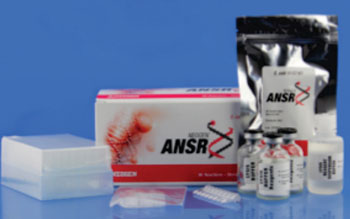
The ANSR (Amplified Nucleic Single Temperature Reaction) system
The ANSR (Amplified Nucleic Single Temperature Reaction) system (Photo courtesy of NEOGEN)
A rapid DNA-based test for the detection of the serious food borne pathogen E. coli O157:H7 joins a line of innovative assays designed for use by the food industry.

The ANSR E. coli O157:H7 kit is a welcome addition to Neogen Corporation’s (Lansing, MI, USA) ANSR tests for Salmonella, Listeria, and Listeria monocytogenes.

Neogen's ANSR (Amplified Nucleic Single Temperature Reaction) platform incorporates advances in DNA detection technology resulting in a method that is easy to use and provides much faster results than PCR systems. ANSR was designed to address in-plant testing needs and offers the freedom to economically process samples to meet regulatory requirements and ensure food safety.

ANSR uses isothermal amplification to create a level of molecular target material that can be detected using fluorescence. The system's DNA amplification methodology exponentially amplifies the DNA of any target bacteria present in an enriched food sample to detectable levels in only minutes. Target nucleic acid is amplified through a mechanism of polymerization from the ends of nicks created in double-stranded DNA by the action of a specific endonuclease. Amplified target sequences are detected in real time using fluorescent molecular beacon probes.

To date, the assay has been validated for testing raw ground beef, raw beef trim, leafy greens, and sprout irrigation water. The system has exhibited low matrix effects with high sensitivity and provides both positive and negative results in minutes.

"The well-received and validated ANSR system provides the food industry definitive test results, and much easier and quicker methodology," said Ed Bradley, vice president of food safety at Neogen. "This introduction of ANSR for E. coli O157:H7 extends our ANSR product offering for the bacterial pathogens of greatest concern to the food industry, and will be very easy for laboratories to adopt, as it follows the same procedure of all our other ANSR kits."

Related Links:

Neogen Corporation 

Gold Member
Respiratory Syncytial Virus Test
OSOM® RSV Test
POC Helicobacter Pylori Test Kit
Hepy Urease Test
Automatic Hematology Analyzer
DH-800 Series
Gold Member
Hybrid Pipette
SWITCH
Read the full article by registering today, it's FREE! It's Free!
Register now for FREE to LabMedica.com and get access to news and events that shape the world of Clinical Laboratory Medicine.
  • Free digital version edition of LabMedica International sent by email on regular basis
  • Free print version of LabMedica International magazine (available only outside USA and Canada).
  • Free and unlimited access to back issues of LabMedica International in digital format
  • Free LabMedica International Newsletter sent every week containing the latest news
  • Free breaking news sent via email
  • Free access to Events Calendar
  • Free access to LinkXpress new product services
  • REGISTRATION IS FREE AND EASY!
Click here to Register


Channels

Molecular Diagnostics

view channel
Image: The diagnostic device can tell how deadly brain tumors respond to treatment from a simple blood test (Photo courtesy of UQ)

Diagnostic Device Predicts Treatment Response for Brain Tumors Via Blood Test

Glioblastoma is one of the deadliest forms of brain cancer, largely because doctors have no reliable way to determine whether treatments are working in real time. Assessing therapeutic response currently... Read more

Immunology

view channel
Image: Circulating tumor cells isolated from blood samples could help guide immunotherapy decisions (Photo courtesy of Shutterstock)

Blood Test Identifies Lung Cancer Patients Who Can Benefit from Immunotherapy Drug

Small cell lung cancer (SCLC) is an aggressive disease with limited treatment options, and even newly approved immunotherapies do not benefit all patients. While immunotherapy can extend survival for some,... Read more

Microbiology

view channel
Image: New evidence suggests that imbalances in the gut microbiome may contribute to the onset and progression of MCI and Alzheimer’s disease (Photo courtesy of Adobe Stock)

Comprehensive Review Identifies Gut Microbiome Signatures Associated With Alzheimer’s Disease

Alzheimer’s disease affects approximately 6.7 million people in the United States and nearly 50 million worldwide, yet early cognitive decline remains difficult to characterize. Increasing evidence suggests... Read more

Technology

view channel
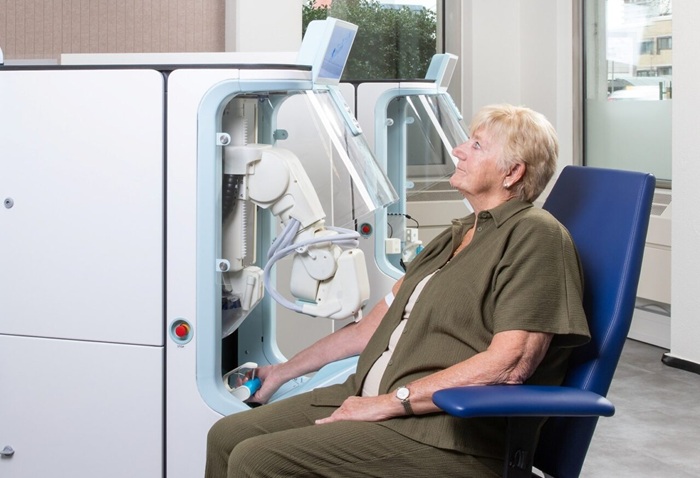
Image: Vitestro has shared a detailed visual explanation of its Autonomous Robotic Phlebotomy Device (photo courtesy of Vitestro)

Robotic Technology Unveiled for Automated Diagnostic Blood Draws

Routine diagnostic blood collection is a high‑volume task that can strain staffing and introduce human‑dependent variability, with downstream implications for sample quality and patient experience.... Read more

Industry

view channel
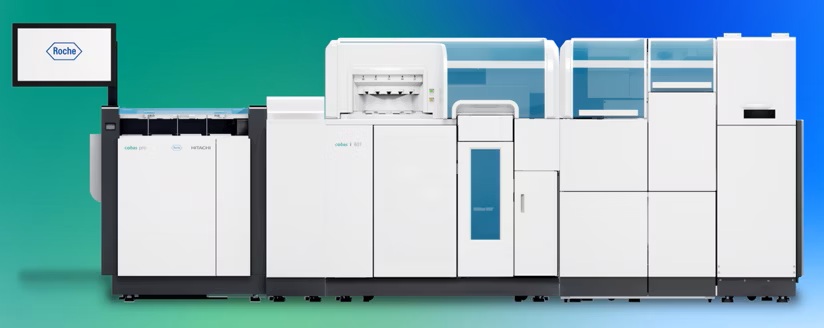
Image: Roche’s cobas® Mass Spec solution enables fully automated mass spectrometry in routine clinical laboratories (Photo courtesy of Roche)

New Collaboration Brings Automated Mass Spectrometry to Routine Laboratory Testing

Mass spectrometry is a powerful analytical technique that identifies and quantifies molecules based on their mass and electrical charge. Its high selectivity, sensitivity, and accuracy make it indispensable... Read more