Beckman Coulter Acquires AI-Based Clinical Decision Support Company StoCastic
|
By LabMedica International staff writers Posted on 12 Oct 2022 |


|

Beckman Coulter, Inc. (Brea, CA, USA) has acquired StoCastic, LLC (Towson, MD, USA), an artificial intelligence (AI) company that provides evidence-based decision support for hospital emergency departments (EDs). StoCastic's TriageGo will be a cornerstone of Beckman Coulter's AI enabled Clinical Decision Support (CDS) portfolio, a growing field that aims to further improve patient care by leveraging data-driven insights for clinicians and optimize clinical decision making.
StoCastic's TriageGo decision support tool seamlessly integrates Electronic Health Record systems and routine ED workflow. The purpose of ED triage is to differentiate patients' criticality, yet 60-70% of all patients in the U.S. are triaged to an ambiguous Emergency Severity Index Level 3, meaning the projected course of care is uncertain. TriageGo has been shown to reduce decision making times in the ED, including decreasing door-to-clinical decision time by 20-30 minutes, door-to-ICU times by 40-80 minutes and door-to-ED departure for those having emergency surgery by 30-60 minutes.
"We are thrilled to be joining Beckman Coulter Diagnostics," said Eric Hamrock, Senior Director, CDS Service, Beckman Coulter Diagnostics and former CEO, StoCastic LLC. "Beckman Coulter will bring world-class market understanding and customer experience leadership, in addition to their commitment to supporting and building upon StoCastic's customers' success, making this a perfect fit for our organization."
"With the StoCastic acquisition, we combine Beckman Coulter Diagnostics biomarkers with TriageGo's evidence-based CDS to generate advanced decision support insights. This will enable clinicians to make informed decisions sooner and further improve patient outcomes," said Kelly Sager, Vice President and General Manager, CDS Solutions at Beckman Coulter Diagnostics.
Related Links:
Beckman Coulter, Inc.
StoCastic, LLC







Latest Industry News
- Collaboration to Expand Cervical Cancer Screening Access With At-Home HPV Collection
- Myriad Genetics to Sell Prenatal Testing Portfolio to Labcorp
- Alzheimer’s Progression Blood Test Gains U.S. Patent Ahead of Planned Launch
- Hologic to Broaden Breast Cancer Testing Portfolio Through Reveal Genomics Acquisition
- Labcorp Acquisition to Strengthen Specialty Testing and Prostate Cancer Assessment
- Collaboration Advances Genomic Instability Biomarker for Prostate Cancer
- Managed Care Report Examines Barriers to Breast Cancer Biomarker Testing
- Expanding Screening and Biomarker Testing Drive Cancer Diagnostics Market Growth
- Expanded Partnership Scales AI-Powered Digital Pathology for Oncology
- Hospital Partnership Advances Clinical Validation of Portable Diagnostic Technology
- Diazyme Expands Chemistry Testing Portfolio With Alfa Wassermann Acquisition
- Global TB Summit Connects Diagnostic Testing With Prevention and Clinical Care
- Agilent's Acquisition of Proscia to Advance AI-Enabled Digital Pathology Workflows
- Digital Pathology Collaboration Expands Laboratory Access to AI-Driven Diagnostics
- Multi-Cancer Screening Blood Test Gains FDA Breakthrough Designation
- European Approval Expands Liquid Biopsy Use in Advanced Breast Cancer Testing
Channels
Clinical Chemistry
view channel
Daily Blood Biomarker Testing May Help Guide Earlier Antibiotic Stopping in Sepsis
Sepsis is a life-threatening condition caused by the body’s overwhelming response to infection and accounts for thousands of deaths each year. In intensive care, concern about stopping treatment too early... Read more
Blood Proteins Reveal Signals Linked to Prostate Cancer Risk Years Before Diagnosis
Prostate cancer is the most commonly diagnosed cancer in men worldwide. While many tumors grow slowly, aggressive forms can be life-threatening, underscoring the need for earlier risk identification.... Read more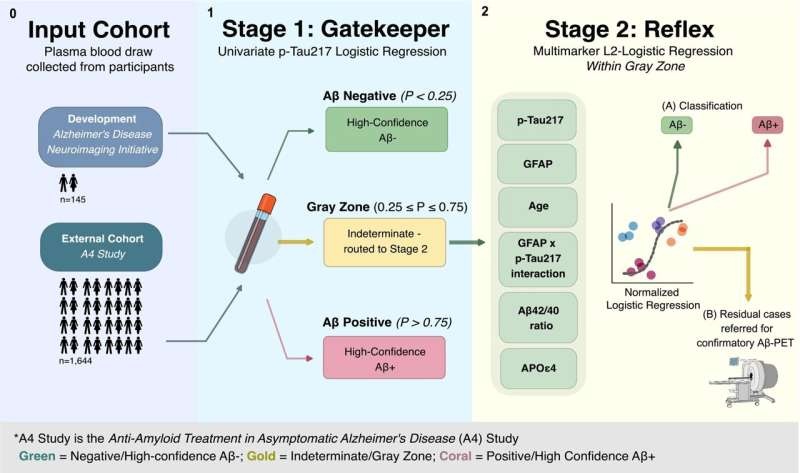
Two-Step Blood Testing Approach Reduces Uncertainty in Amyloid Assessment
Blood-based biomarkers offer a more accessible, less expensive way to detect Alzheimer’s-related brain changes than traditional methods such as amyloid-beta positron emission tomography (Aβ-PET).... Read more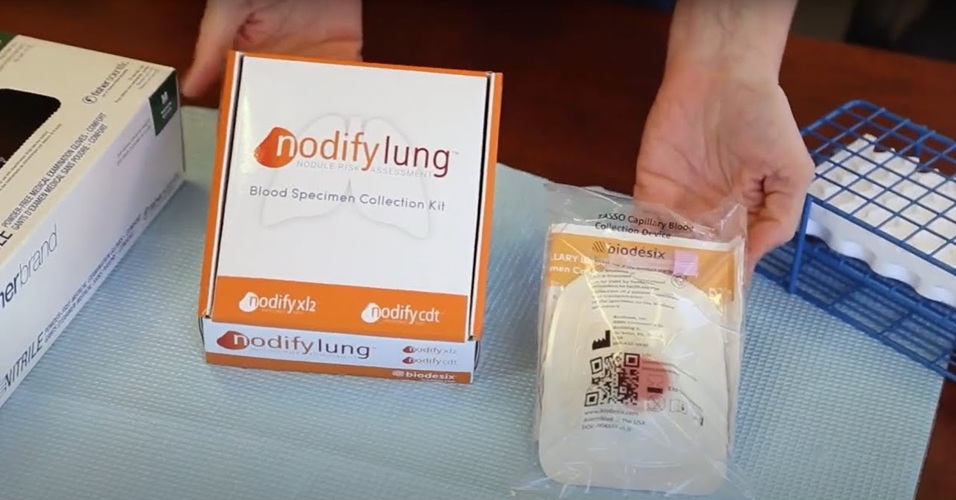
Multimodal Platform to Combine Blood and Imaging Biomarkers for Lung Nodule Assessment
Lung nodules are commonly detected during chest imaging and require careful risk assessment to determine whether follow-up imaging, additional testing, or biopsy is needed. With millions of patients evaluated... Read moreMolecular Diagnostics
view channel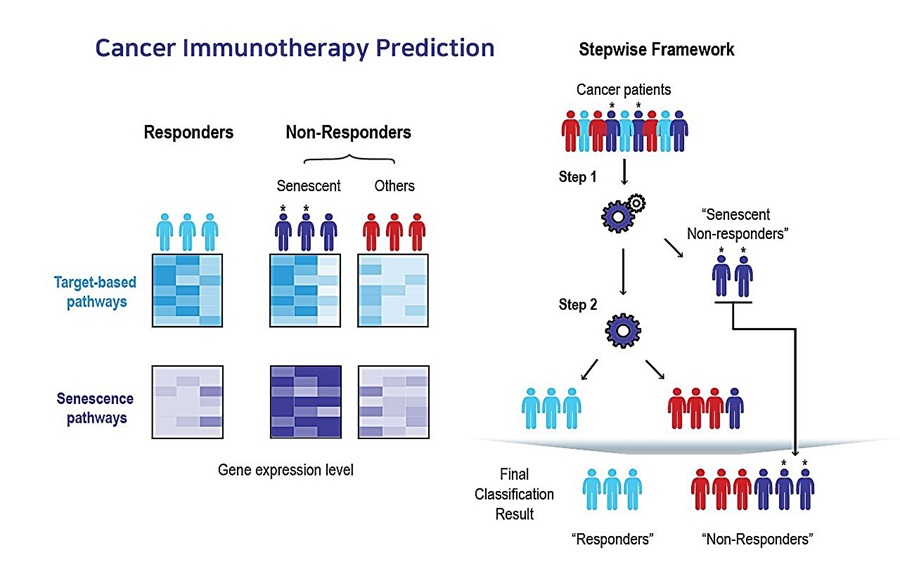
AI Tool Predicts Immunotherapy Response Using Tumor Senescence Signals
Patients receiving the same cancer immunotherapy can have markedly different outcomes, with some showing little or no response. Identifying these patients earlier could reduce the costs of ineffective... Read more
New Variant Tracking Option Expands Molecular Residual Disease Monitoring
Molecular residual disease (MRD) testing can detect traces of cancer that persist after treatment or emerge during recurrence. Because circulating tumor DNA (ctDNA) may be present at very low levels, residual... Read more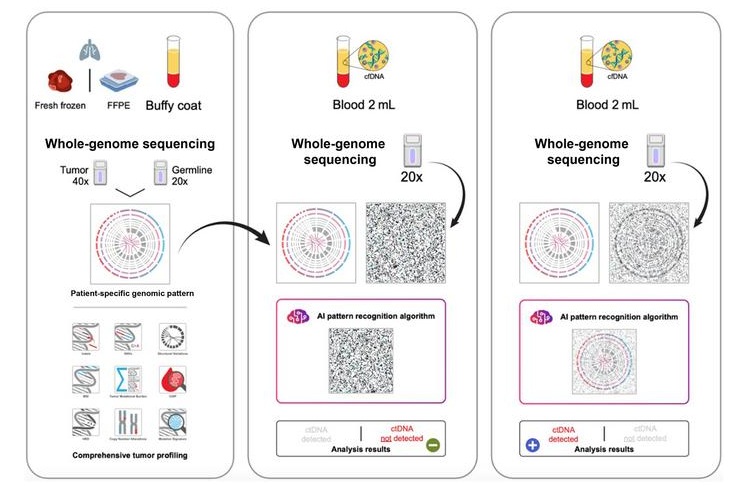

Hematology
view channel
New Myelofibrosis Guidelines Recommend Expanded Genetic Testing at Diagnosis
Myelofibrosis is a rare, life-threatening blood cancer affecting up to six per 100,000 people. The disease causes scarring in the bone marrow, limiting the production of healthy blood cells and potentially... Read more
Handheld Point-of-Care Test Aims to Enable Rapid Coagulation Assessment in Trauma
Severe blood loss and inadequate tissue oxygenation are leading causes of preventable death after traumatic injury. Blood products are essential in trauma care, but cold-chain storage, short shelf life,... Read more

Immunology
view channel
Antibody Profiling Predicts Inflammatory Bowel Disease Years Before Diagnosis
Inflammatory bowel disease (IBD), which includes Crohn’s disease and ulcerative colitis, involves abnormal immune responses that cause persistent inflammation and damage in the digestive system.... Read more
Immune Profiling Initiative Aims to Improve Bone Marrow Analysis in Leukemia
Acute myeloid leukemia (AML) is an aggressive blood cancer in which assessing disease burden after therapy can help guide clinical evaluation. Patients with measurable residual disease (MRD) after treatment... Read more
Immune Profiling Identifies Early Maternal Autoantibodies Linked to Preterm Birth Risk
A typical pregnancy lasts about 40 weeks, but labor begins prematurely in roughly one in 10 pregnancies. Preterm birth is the leading cause of newborn death worldwide, yet its underlying causes and which... Read more
Longitudinal Blood Testing Reveals Changes in Allergen Sensitization During Childhood
Food allergy is a major childhood health concern, and distinguishing persistent risk from transient sensitization can guide clinical decisions. Specific IgE antibodies may be detectable even when a child... Read moreMicrobiology
view channel
Molecular Panel Gains WHO Emergency Use Listing to Support Ebola Outbreak Response
The ongoing Ebola Bundibugyo outbreak in the Democratic Republic of the Congo and neighboring countries has become one of the largest outbreaks of this Ebola virus species recorded to date.... Read more
Rapid Host-Response Test Aims to Predict Corticosteroid Benefit in Sepsis
Sepsis and severe infections are difficult to treat because patients with similar clinical presentations may have very different underlying immune responses. Corticosteroids are commonly used in severe... Read more

Pathology
view channel
AI Tissue Analysis May Help Identify Missed Precancerous Colon Polyps
Colorectal cancer is diagnosed in an estimated 1.9 million people worldwide each year, often without symptoms in its early stages. Timely detection of precancerous lesions is therefore important, yet some... Read more
AI Pre-Screening Helps Identify Lung Cancer Cases for Additional Biomarker Testing
Tempus AI (Chicago, IL, USA) will present findings from a study evaluating an artificial intelligence (AI)-enabled pre-screening panel for advanced non-small cell lung cancer (NSCLC) at the ESMO Congress... Read more
AI Pathology Platform Targets Workflow Delays and Molecular Test Failures
Pathology laboratories often rely on visual review of tissue slides to assess quality, identify tumors, count mitoses, and estimate tumor content. These tasks can be time-consuming and vary between readers,... Read more
Molecular Testing Refines Barrett’s Esophagus Progression Risk Beyond Biopsy Findings
Barrett’s esophagus is a precancerous condition associated with increased risk of esophageal adenocarcinoma. Routine endoscopic biopsy findings guide surveillance and therapy, but histopathology may not... Read moreTechnology
view channel
New AI-Powered System Aims to Streamline Laboratory and Manufacturing Workflows
Scientific laboratories supporting drug development, biotechnology, and materials research increasingly rely on coordinated digital workflows to move data, samples, and activities across teams.... Read more