Priorclave Showcases Energy-Efficient Lab Autoclaves in Dubai
|
By LabMedica International staff writers Posted on 08 Feb 2017 |


|
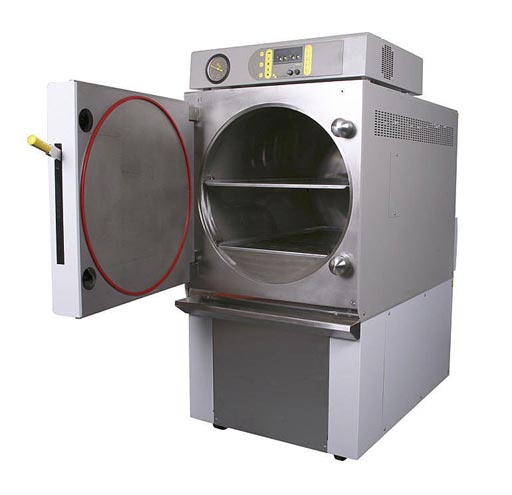
Image: The EH150 lab autoclave (Photo courtesy of Priorclave).
Laboratory autoclave manufacturer, Priorclave Ltd. showcased its energy efficient range of autoclaves at MEDLAB 2017, the world’s largest laboratory exhibition and congress in the Middle East.
Priorclave designs and manufactures laboratory autoclaves with features such as low loading height, compact design, modular construction for easy upgrading, thermal safety locks, media warming, and vacuum assisted cooling. The company offers one of the largest ranges of standard steam sterilizers from compact bench-top front loading to free-standing top-loading and high capacity front-loading autoclaves as well as power door and pass-through double entry machines.
At MEDLAB 2017, Priorclave showcased the EH150, a front-loading 150 liter autoclave where the side panel has been replaced by a clear sided panel to provide visitors a clear view of the clean, structured lines of the autoclave build. The EH150 offers one-touch controls for easy adjustment of sterilizing temperature and time for simple cycles to fully featured multi-program operation. The advanced microprocessor systems stores details of the sterilizing cycle, with data such as temperature, pressure and time being held in an archive file. Built to international standards, the EH150 autoclave incorporates epoxy coated panels and frame members treated with an anti-bacterial agent, which is highly effective against all bacteria and fungi including MRSA, E.coli, Listeria, Legionella, Campylobacter, Salmonella and Pseudomonas, to preventing cross contamination within the laboratory.





Priorclave designs and manufactures laboratory autoclaves with features such as low loading height, compact design, modular construction for easy upgrading, thermal safety locks, media warming, and vacuum assisted cooling. The company offers one of the largest ranges of standard steam sterilizers from compact bench-top front loading to free-standing top-loading and high capacity front-loading autoclaves as well as power door and pass-through double entry machines.
At MEDLAB 2017, Priorclave showcased the EH150, a front-loading 150 liter autoclave where the side panel has been replaced by a clear sided panel to provide visitors a clear view of the clean, structured lines of the autoclave build. The EH150 offers one-touch controls for easy adjustment of sterilizing temperature and time for simple cycles to fully featured multi-program operation. The advanced microprocessor systems stores details of the sterilizing cycle, with data such as temperature, pressure and time being held in an archive file. Built to international standards, the EH150 autoclave incorporates epoxy coated panels and frame members treated with an anti-bacterial agent, which is highly effective against all bacteria and fungi including MRSA, E.coli, Listeria, Legionella, Campylobacter, Salmonella and Pseudomonas, to preventing cross contamination within the laboratory.

Gold Member
Nucleic Acid Extractor System
NEOS-96 XT
HPV Molecular Test
BD Onclarity HPV Assay
Thyroid Test
Anti-Thyroid EIA Test
Latest MEDLAB 2017 News
- AXA Diagnostics Showcases SkyLAB752 ELISA Analyzer
- Norma Diagnostika Showcases Icon Hematology Analyzers at MEDLAB
- AITbiotech Exhibits abTES Molecular Diagnostics Assays at MEDLAB 2017
- Binding Site Unveils Optilite Protein System
- Das SRL Exhibits New Lab Solutions at MEDLAB 2017
- Diatron Exhibits Abacus 5 and Aquila Hematology Analyzers
- DRG Group Presents New Analyzer and ELISAs at Dubai Lab Exhibition
- Beckman Coulter Exhibits New Lab Solutions in Dubai
- Siemens Healthineers Showcases Latest Diagnostic Innovations
Channels
Clinical Chemistry
view channel
Maternal Blood Biomarkers Identify Risk of Preterm and Early-Term Birth
Preterm and early-term births can lead to lasting complications because vital organs continue to mature during the final weeks of pregnancy. Babies born too soon face increased risks of breathing difficulties,... Read more
Blood-Based Alzheimer’s Testing Platform Offers Rapid Results
Accurate identification of Alzheimer’s disease pathology often relies on cerebrospinal fluid analysis or positron emission tomography, which can be invasive, costly, and not widely accessible.... Read more
Simple Oral Swab Monitors Persistent Inflammation in Primary Ciliary Dyskinesia
Primary ciliary dyskinesia is a rare lung disease that affects about one in 7,500 to 10,000 live births worldwide. Symptoms can begin in the newborn period and progress to recurrent respiratory infections... Read more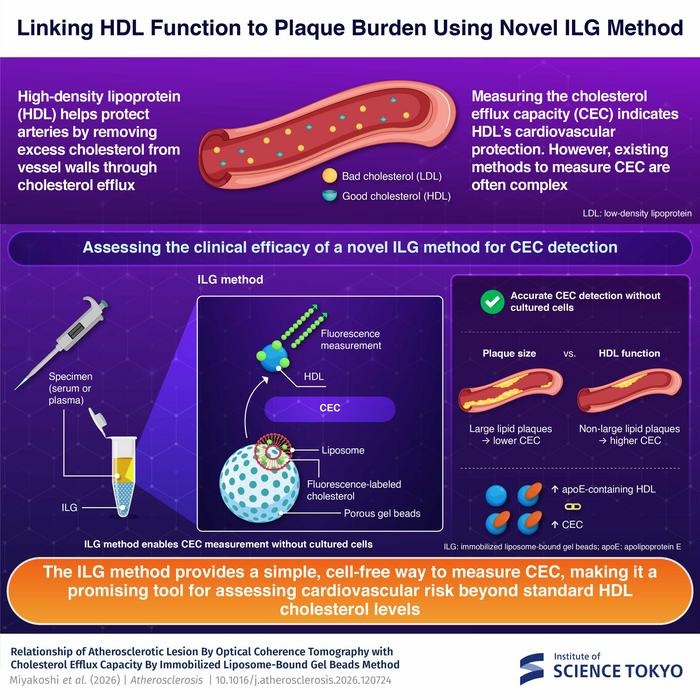
Simple Blood-Based Cholesterol Efflux Assay Identifies High-Risk Coronary Plaque Features
Unstable coronary plaques are difficult to identify before they trigger acute cardiovascular events. Standard high-density lipoprotein (HDL) measurements do not always capture how well HDL particles function... Read moreMolecular Diagnostics
view channel
Genetic Testing Identifies High-Risk Patients with Inflammatory Bowel Disease
Inflammatory bowel disease (IBD), encompassing ulcerative colitis and Crohn’s disease, is a lifelong, unpredictable condition that can require advanced therapies or surgery. More than half a million people in the U.... Read more
Ancestry-Informed Genomics Advances Precision Cancer Prognosis
Predicting survival in common cancers remains imprecise despite widespread use of tumor sequencing to guide care. Outcome disparities among patient populations also persist, and the genomic drivers behind... Read more
New Blood Test Predicts Organ-Specific Disease and Mortality Years in Advance
Quantifying organ-specific aging remains a diagnostic challenge, even as age-related disorders drive morbidity and mortality worldwide. Chronological age poorly reflects the physiologic decline that predisposes... Read more
Hematology
view channel
Next-Generation Hematology Platform Streamlines High-Complexity Lab Workflows
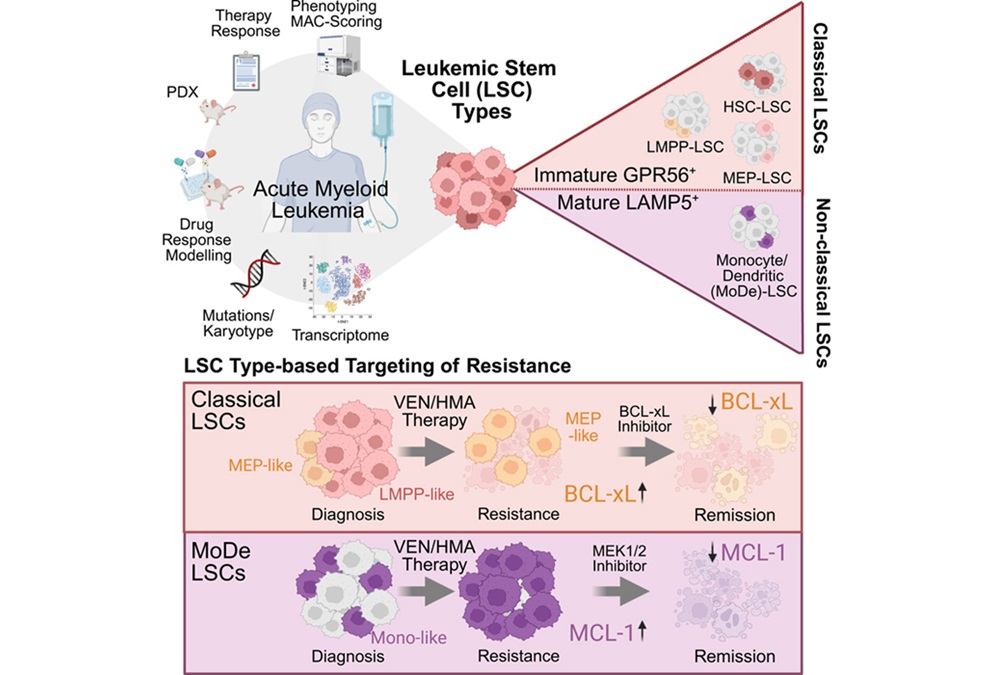
Sysmex America (Chicago, IL, USA) has introduced the next generation XR-Series, centered on the XR-10 Automated Hematology Module for high-complexity laboratories. The platform builds on the widely used... Read more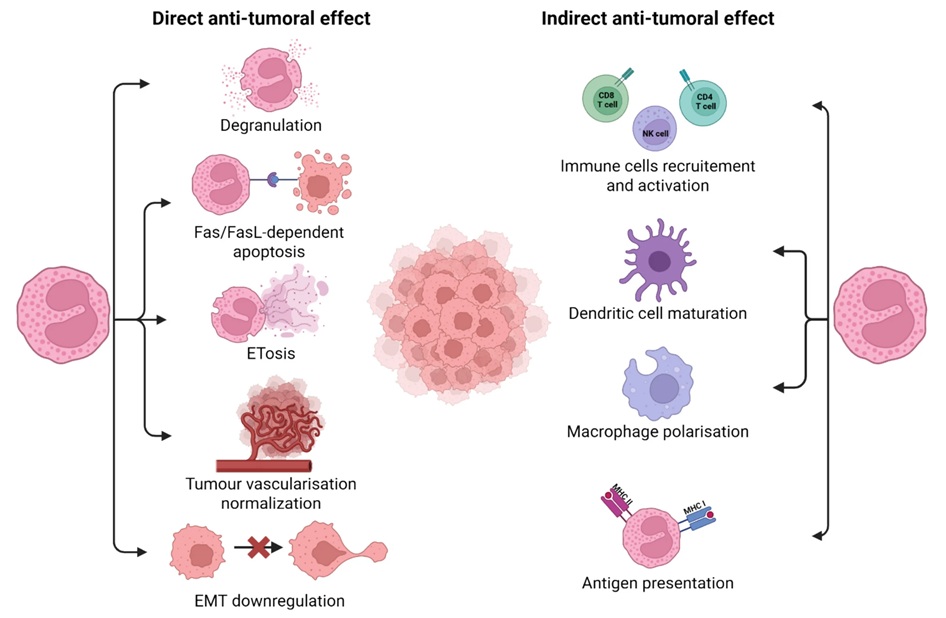
Blood Eosinophil Count May Predict Cancer Immunotherapy Response and Toxicity
Immune checkpoint inhibitors have improved outcomes across many cancers, yet only a subset of patients derive durable benefit and biomarkers to guide treatment remain limited. Eosinophils, best known for... Read more
Immunology
view channel
Antibody Profiles Provide Clues to Long COVID Severity and Symptoms
Persistent symptoms after acute COVID-19 affect millions of people, causing fatigue, respiratory issues, and cognitive deficits that can be difficult to quantify with standard tests. Clinical teams lack... Read more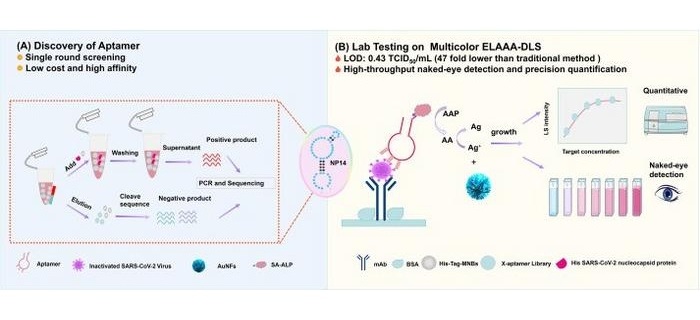
Aptamer-Based Biosensor Enables Mutation-Resilient SARS-CoV-2 Detection
Rapid evolution of severe acute respiratory syndrome coronavirus 2 (SARS-CoV-2) can undermine existing molecular diagnostics, especially when assays target small viral components. Double-antibody sandwich... Read more
Study Points to Autoimmune Pathway Behind Long COVID Symptoms
Long COVID leaves many SARS-CoV-2 survivors with persistent fatigue, cognitive issues, palpitations, and musculoskeletal pain for months or years. Estimates cited in new research suggest 4%–20% of infected... Read more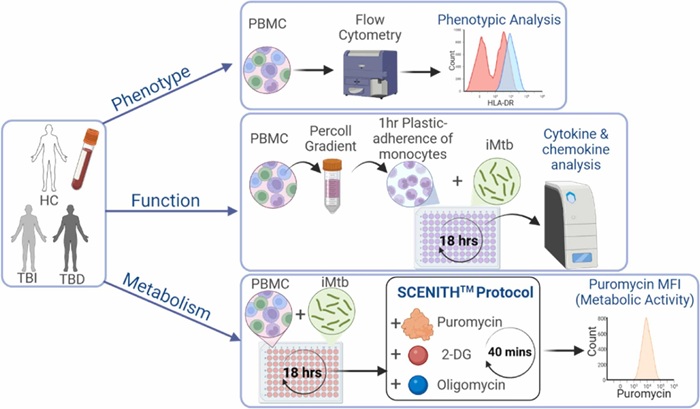
Metabolic Biomarker Distinguishes Latent from Active Tuberculosis and Tracks Treatment Response
Tuberculosis (TB) remains the world’s leading infectious killer, with 10.8 million cases and 1.25 million deaths recorded globally in 2023. Yet many infected individuals never develop active disease, underscoring... Read moreMicrobiology
view channel
Extracellular Vesicle Biomarker May Enable Noninvasive Monitoring of H. pylori
Helicobacter pylori infects an estimated 43.9% of the global population, affecting approximately 4.4 billion people worldwide. In many regions, including Africa, Eastern Europe, and Southeast Asia, prevalence... Read more
Rapid Molecular Screening Aims to Accelerate Hospital Infection Control for CPE
Drug-resistant infections remain a critical patient-safety threat in hospitals, with carbapenemase-producing Enterobacterales (CPE) among the most urgent concerns. In England, reports of acquired carbapenemase... Read more

Pathology
view channel
Stain-Free Imaging Platform Matches Standard Cancer Pathology
Histopathology underpins cancer diagnosis, but turnaround times and inter-laboratory variability can limit timely, consistent interpretation. Conventional staining relies on chemical dyes and multiple... Read more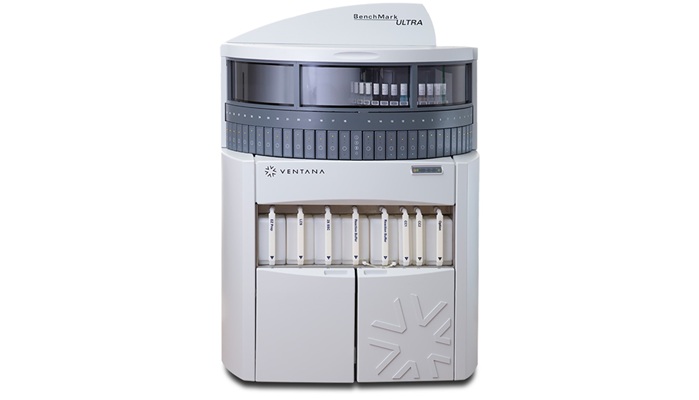
New Companion Diagnostic Expands Precision Medicine in Prostate Cancer
Prostate cancer is a leading cancer diagnosis in men and becomes particularly aggressive when it presents as metastatic, hormone-sensitive disease. Tumors with loss of phosphatase and tensin homolog (PTEN)... Read more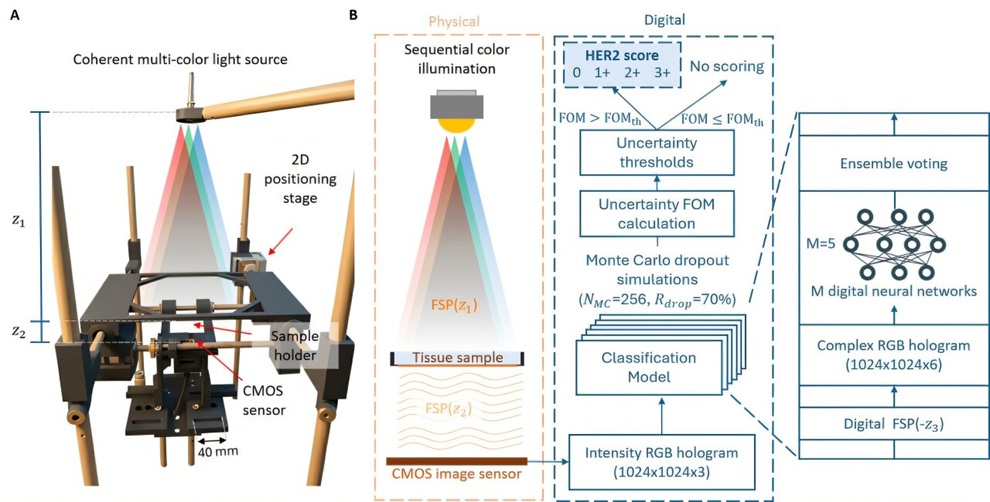
Uncertainty-Aware AI Platform Supports Automated HER2 Assessment in Breast Cancer
Accurate assessment of human epidermal growth factor receptor 2 (HER2) is critical for breast cancer diagnosis and treatment selection, yet scoring variability and infrastructure requirements can complicate... Read more
Technology
view channel
AI Platform Links Biomarker Results to Cancer Clinical Trials and Guidelines
Oncology teams must manage growing volumes of genomic data, rapidly evolving clinical trial options, and frequently updated care guidelines, all within tight clinic schedules. Translating complex tumor... Read more
Agentic AI Platform Supports Genomic Decision-Making in Oncology
Oncology care teams increasingly face the challenge of managing complex molecular diagnostics, evolving treatment options, and extensive electronic health record documentation. Translating multimodal data... Read more

Industry
view channel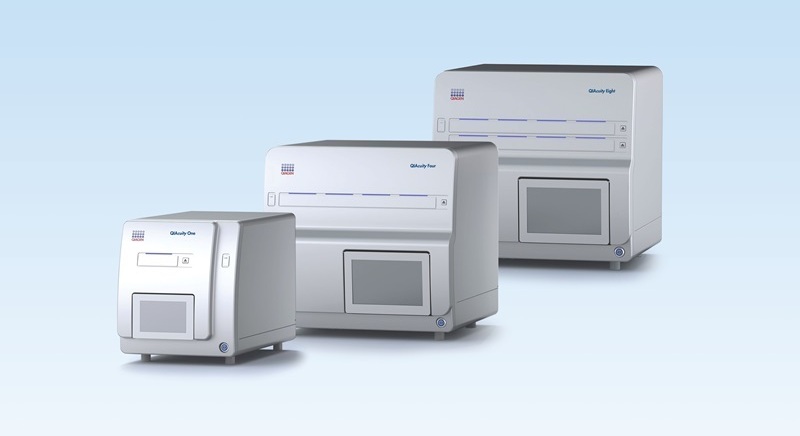
QIAGEN Enhances QIAcuity Platform with Gene Expression and Multiplexing Tools
QIAGEN (Venlo, Netherlands) has introduced additions to its QIAcuity dPCR ecosystem that focus on gene expression, expanded assay content, and workflow standardization for life sciences and biopharma users.... Read more