AI Tool Improves Breast Cancer Detection
Posted on 03 Dec 2025
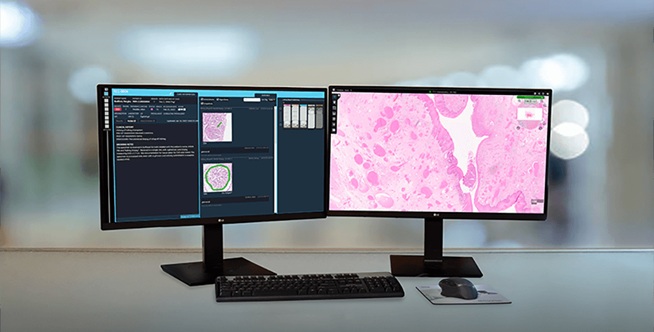
Breast cancer diagnosis relies on examining microscopic tissue samples, a time-intensive process made more challenging by global shortages of trained pathologists. Delays in diagnosis can lead to missed early treatment opportunities. Now, a new artificial intelligence (AI) system can help interpret tissue slides more quickly and accurately, potentially improving access to timely cancer diagnosis.
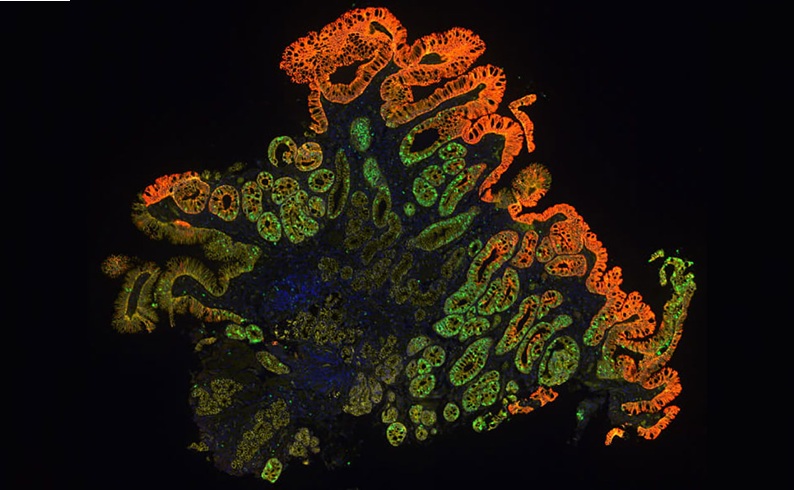
The AI system, called the Context-Guided Segmentation Network (CGS-Net), has been designed by researchers at the University of Maine (Orono, ME, USA) to mimic how human pathologists study cancer tissue by combining high-resolution cellular details with broader tissue context. This dual-encoder approach enables the model to interpret histological slides with greater precision than conventional single-input AI systems.
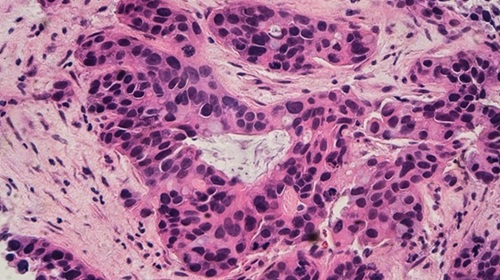
CGS-Net processes two synchronized image patches at once: one captures cell-level structure, while the other offers a wider, lower-resolution view that reflects the tissue architecture surrounding the same pixel. These complementary data streams are merged through interconnected encoders and decoders to create a more holistic analysis of breast cancer features.
The team trained the system on 383 digitized whole-slide lymph node images to distinguish between healthy and cancerous tissue. The findings, published in Scientific Reports, show that CGS-Net consistently outperformed traditional models, demonstrating stronger predictive accuracy for binary cancer segmentation. By reflecting the natural workflow of human pathologists, the tool enhances diagnostic interpretation rather than replacing clinical expertise.
The researchers say the system could expand to include multiple magnification levels, multiclass segmentation, and other cancer types. They also envision integrating radiology or molecular data to support even more comprehensive diagnostic insights. As digital pathology becomes increasingly common, AI systems modeled on real clinical behavior may help bridge diagnostic gaps, particularly in regions facing severe workforce shortages.
“This model integrates both detailed local tissue regions and broader contextual regions to improve the accuracy of cancer predictions in histological slides,” said Jeremy Juybari, who spearheaded the research. “By introducing a unique training algorithm and an innovative initialization strategy, this research demonstrates how incorporating surrounding tissue context can significantly enhance model performance. These findings reinforce the importance of holistic image analysis in medical AI applications.”
Related Link
University of Maine