Beckman Coulter Becomes First Diagnostics Company to Offer Workflow Automation Specifically for Mid-Volume Laboratories
|
By LabMedica International staff writers Posted on 05 May 2021 |


|
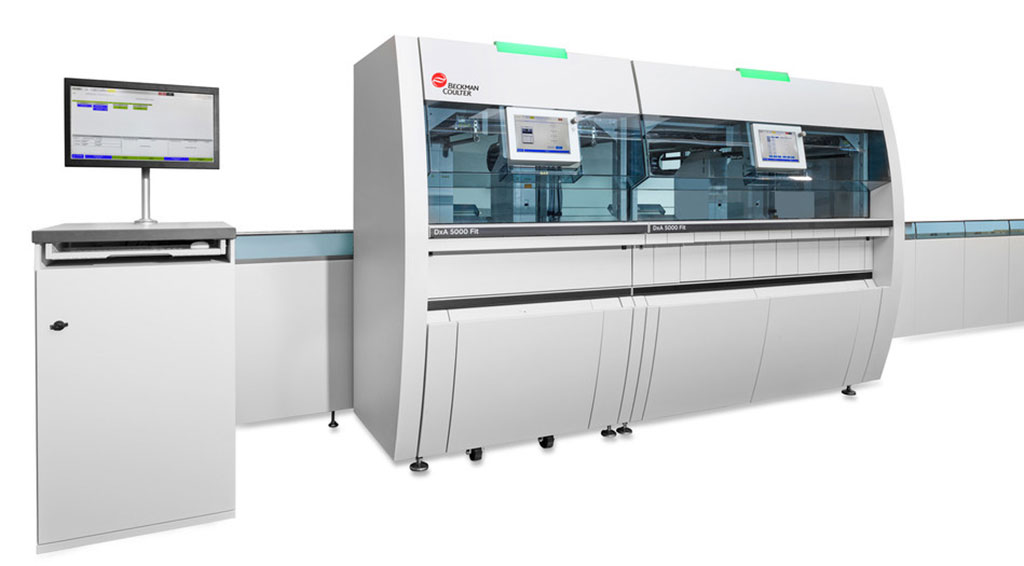
Image: DxA 5000 Fit (Photo courtesy of Beckman Coulter)
Beckman Coulter (Brea, CA, USA) has announced the global launch of the DxA 5000 Fit, a workflow-automation solution designed to fit into medium-sized labs that run fewer than 5,000 tests a day.
The clinical laboratory has gone through trial by fire in 2020, where total testing was 245% of baseline volumes, with ~55% being SARS-CoV-2 molecular tests. Despite vaccines, many industry players suggest SARS-CoV-2 testing volumes would not be impacted in the near term, and the demand for COVID-19-related testing will continue through 2021 and potentially into 2022. This means that testing-volume pressure on labs is going to continue.
Labs of all sizes are facing the same challenges: shortage of laboratory technologists and technicians, historic financial pressures on hospitals and health systems, and physically and mentally exhausted laboratory professionals - a pre-pandemic problem that has since been exacerbated. However, the TLA solutions that cater to labs processing high-sample volumes are out of reach for smaller volume labs due to space requirements and infrastructure constraints.
With the DxA 5000 Fit, mid-sized labs can enjoy the same benefits as larger-volume lab. The DxA 5000 Fit’s comprehensive workflow automation reduces up to 80% of manual steps through pre-analytical, analytical and post-analytical automation, thereby conserving precious human resources to do higher-value clinical work. It offers intelligent routing with dynamically calculated route planning for rapid and consistent TAT, with STATs always prioritized to deliver results faster. Additionally, its flexible design can be adapted to meet a mid-volume lab's space and infrastructure constraints.
"At Beckman Coulter, we believe that medium-size labs should be able to leverage the benefits of automation to address their challenges. Just because your lab is not processing a higher number of samples, doesn't mean you have to sacrifice the benefits of intelligent laboratory automation and settle for a marginally automated workcell-plus solution," said Dr. Peter Soltani, senior vice president & general manager, hematology, urinalysis & workflow information technology solutions at Beckman Coulter. "This is why we have launched DxA 5000 Fit, the first compact workflow automation solution that's the right fit for mid-volume labs because automation should be for all labs."





The clinical laboratory has gone through trial by fire in 2020, where total testing was 245% of baseline volumes, with ~55% being SARS-CoV-2 molecular tests. Despite vaccines, many industry players suggest SARS-CoV-2 testing volumes would not be impacted in the near term, and the demand for COVID-19-related testing will continue through 2021 and potentially into 2022. This means that testing-volume pressure on labs is going to continue.
Labs of all sizes are facing the same challenges: shortage of laboratory technologists and technicians, historic financial pressures on hospitals and health systems, and physically and mentally exhausted laboratory professionals - a pre-pandemic problem that has since been exacerbated. However, the TLA solutions that cater to labs processing high-sample volumes are out of reach for smaller volume labs due to space requirements and infrastructure constraints.
With the DxA 5000 Fit, mid-sized labs can enjoy the same benefits as larger-volume lab. The DxA 5000 Fit’s comprehensive workflow automation reduces up to 80% of manual steps through pre-analytical, analytical and post-analytical automation, thereby conserving precious human resources to do higher-value clinical work. It offers intelligent routing with dynamically calculated route planning for rapid and consistent TAT, with STATs always prioritized to deliver results faster. Additionally, its flexible design can be adapted to meet a mid-volume lab's space and infrastructure constraints.
"At Beckman Coulter, we believe that medium-size labs should be able to leverage the benefits of automation to address their challenges. Just because your lab is not processing a higher number of samples, doesn't mean you have to sacrifice the benefits of intelligent laboratory automation and settle for a marginally automated workcell-plus solution," said Dr. Peter Soltani, senior vice president & general manager, hematology, urinalysis & workflow information technology solutions at Beckman Coulter. "This is why we have launched DxA 5000 Fit, the first compact workflow automation solution that's the right fit for mid-volume labs because automation should be for all labs."

Platinum Member
Automated Coagulation Analyzer
Hemolumi H6
New
Gold Member
Serum Indices Control
Acusera Serum Indices Control
Automatic CLIA Analyzer
Shine i6000
New
Gold Member
Blood-Based Protein Biomarker Solution for Alzheimer's Disease
BG-DTi2000.
Latest Industry News
- New NHS Partnership Expands Access to Epigenetic CNS Tumor Classifiers
- Fujirebio Expands Access to Automated Blood-Based Neurology Testing in Canada
- Natera ctDNA Test to Support Response Monitoring in Solid Tumor Trial
- Tumor-Informed MRD Assay Gains Medicare Coverage for Immunotherapy Monitoring
- Companion Diagnostics Expand HER2 Testing in Metastatic Gastroesophageal Cancer
- Global Urinalysis Market Gowth Driven by Demand for Automated and POC Testing
- New Collaboration Expands Point-of-Care Testing Across UK Community Pharmacies
- New Collaboration Advances Precision Oncology Screening for Lung Cancer in Japan
- AI-Powered Pathology Collaboration Supports Companion Diagnostic Development
- Strategic Collaboration Expands Commercial Access to Oncology Companion Diagnostics
- Collaboration Supports Global ADC Development with AI-Powered Tissue Analysis
- Standardized Staining Technology Advances Digital Pathology Workflows
- Global Testing Service Advances Leukemia MRD Monitoring
- Ultrasensitive MRD Assay Gains Medicare Coverage for Immunotherapy and Breast Cancer Monitoring
- Genprex and Roche Collaborate on AI-Driven NSCLC Biomarker Testing
- Collaboration Explores Clinical Use of Single-Cell and Spatial Technologies
Channels
Clinical Chemistry
view channel
New Blood Biomarker Predicts May Predict Preeclampsia and Fetal Growth Restriction
Preeclampsia and fetal growth restriction are major drivers of stillbirth and serious maternal morbidity, yet clinicians still lack reliable early predictors to guide targeted surveillance.... Read more
Biomarker Score Helps Differentiate Takotsubo Syndrome from Myocardial Infarction
Takotsubo syndrome, often called broken-heart syndrome, mimics myocardial infarction and can be difficult to triage in emergency settings. It accounts for about 2% of suspected heart attacks and up to... Read more

Molecular Diagnostics
view channel
Automated System Streamlines DNA Recovery for MRD-Sensitive Testing
Molecular laboratories are under pressure to detect extremely low levels of residual disease, yet pre-analytical recovery of cell-free and genomic DNA from large-volume blood and plasma remains a persistent... Read more
New Liquid Biopsy Platform Uses Red Blood Cells to Detect Hidden Cancer Signals
Plasma-based liquid biopsy can miss clinically actionable tumor signals, particularly in early-stage disease and low-shedding tumors, limiting its utility for routine monitoring. Clinical laboratories... Read more
Hematology
view channel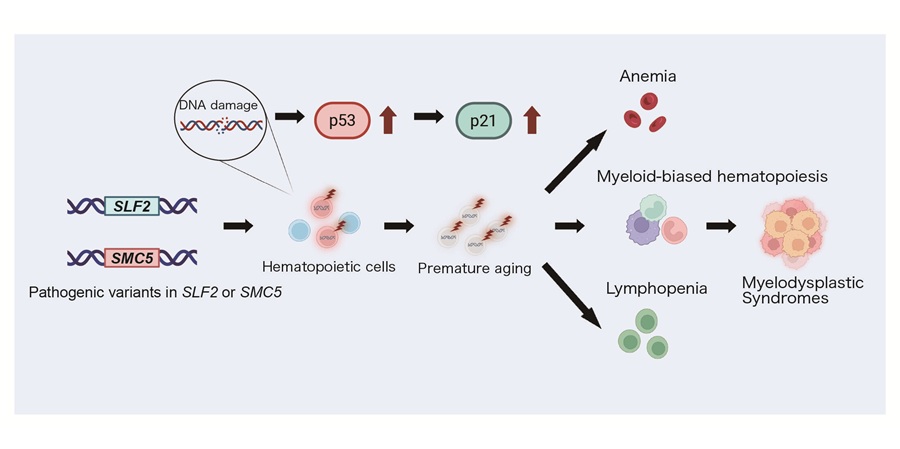
New Genetic Findings Reveal Cause of Bone Marrow Failure Syndrome
Inherited bone marrow failure syndromes (IBMFS) impair the bone marrow’s ability to produce sufficient healthy blood cells and are associated with an increased risk of early-onset myelodysplastic syndromes (MDS).... Read more
Ultra-Portable Device Enables Finger-Prick Blood Testing at Home
Patients who need frequent blood tests often face repeated clinic visits that burden services and disrupt care. In the UK, millions of tests are performed each year to diagnose disease, guide therapy,... Read more
Immunology
view channel
New Cellular Map May Help Predict Crohn’s Disease Course in Children
Crohn’s disease in children is a common and debilitating form of inflammatory bowel disease, marked by chronic intestinal inflammation and limited pediatric-specific treatments. Clinicians must decide... Read more
Temporal Immune Profiling Reveals How Sepsis States Change Over Time
Sepsis is a life-threatening condition in which the immune response to infection becomes dysregulated, leading to rapid organ failure and death. Although antimicrobials and organ support remain standard... Read more
Study Identifies Immune Cells That Drive Harmful Autoantibody Responses in COVID-19
Autoantibodies that mistakenly attack the body’s own tissues have been linked to severe COVID-19, Long COVID, and increased risk of autoimmune disease. However, the origins of these autoantibodies during... Read more
Microbiology
view channel
Gut Microbiome Classifier Improves Colorectal Cancer Risk Stratification
Colorectal cancer remains a leading cause of cancer mortality, and current noninvasive screening methods still miss many precancerous lesions. Clinicians therefore need tools that improve risk stratification... Read more
New Diagnostic Workflow Identifies Bloodstream Pathogens and Antibiotic Response in Hours
Sepsis is a life-threatening complication of infection that affects more than 1.5 million patients annually in the United States and contributes to roughly one in three in-hospital deaths.... Read more

Pathology
view channel
Label-Free Imaging Reveals Hidden Immune Activity in Blood Samples
Peripheral blood mononuclear cells (PBMCs) are widely used to monitor infection, autoimmunity, cancer, and treatment response, yet most assays depend on fluorescent labels that can perturb cells and provide... Read more
AI Tool Improves Prediction of Immunotherapy Response in Lung Cancer
Immune checkpoint therapies benefit only a subset of patients, while standard biomarkers often struggle to predict who will respond. Spatially resolved tumor profiling can provide deeper biological context,... Read more
Technology
view channel
Bacterial Vesicle Expression System Streamlines Production of Cancer Diagnostic Proteins
Recombinant proteins are central to many cancer diagnostics and therapies, but numerous targets remain difficult and costly to produce because they are unstable, toxic to microbial hosts, or require precise folding.... Read more