Das SRL Exhibits New Lab Solutions at MEDLAB 2017
|
By LabMedica International staff writers Posted on 09 Feb 2017 |


|
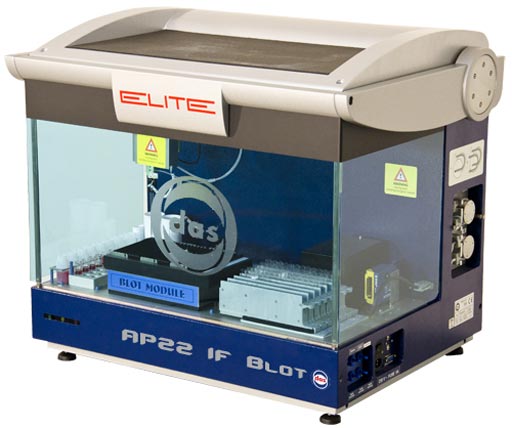
Image: The AP22 IF BLOT ELITE system (Photo courtesy of Das SRL).
Das SRL, which designs, manufactures, and markets analyzers and automated equipment for application in immuno-enzimatic, immuno-fluorescence, and clinical chemistry, exhibited its AP22 IF BLOT ELITE system and NEO BIL Plus bilirubinometer at MEDLAB 2017.
Italy-based Das SRL offers systems for automated ELISA process on micro-plates and immunofluorescence on slides; readers and washers for laboratories using micro-titre plates or micro-strips; programmable semi-automated photometers for clinical chemistry analysis; and neonatal bilirubinometers for bilirubin monitoring using centrifuged whole blood samples.
The company’s AP22 IF BLOT ELITE is a fully automated system for ELISA and IFA and BLOT methods. The instrument is capable of running 2 ELISA micro-plates with 8 tests on line, 16 IFA slides or 24 BLOT strips. It can perform full automation for the Dot/Western Blot, from sample dilution and dispensing, reagent dispensing, incubation, and strip washing to dot imaging processing and assessment for each strip.
Also on display at the 4-day exhibition held from February 6-9, 2017, in Dubai, UAE was Das SRL’s NEO BIL Plus, an advanced version of traditional bilirubinometers, designed to analyze the 'total bilirubin' through a microcapillary tube. NEO BIL Plus features a special reading system, which can carry out a precise sample measurement of both bilirubin and interferentials at the same point of the capillary using a small quantity of serum and without any reagents.





Italy-based Das SRL offers systems for automated ELISA process on micro-plates and immunofluorescence on slides; readers and washers for laboratories using micro-titre plates or micro-strips; programmable semi-automated photometers for clinical chemistry analysis; and neonatal bilirubinometers for bilirubin monitoring using centrifuged whole blood samples.
The company’s AP22 IF BLOT ELITE is a fully automated system for ELISA and IFA and BLOT methods. The instrument is capable of running 2 ELISA micro-plates with 8 tests on line, 16 IFA slides or 24 BLOT strips. It can perform full automation for the Dot/Western Blot, from sample dilution and dispensing, reagent dispensing, incubation, and strip washing to dot imaging processing and assessment for each strip.
Also on display at the 4-day exhibition held from February 6-9, 2017, in Dubai, UAE was Das SRL’s NEO BIL Plus, an advanced version of traditional bilirubinometers, designed to analyze the 'total bilirubin' through a microcapillary tube. NEO BIL Plus features a special reading system, which can carry out a precise sample measurement of both bilirubin and interferentials at the same point of the capillary using a small quantity of serum and without any reagents.

Platinum Member
Automated Coagulation Analyzer
Hemolumi H6
CMV CLIA Diagnostic
CLIA CMV IgA Screen Group
Gold Member
Neonatal Heel Incision Device
Tenderfoot
Latest MEDLAB 2017 News
- AXA Diagnostics Showcases SkyLAB752 ELISA Analyzer
- Norma Diagnostika Showcases Icon Hematology Analyzers at MEDLAB
- AITbiotech Exhibits abTES Molecular Diagnostics Assays at MEDLAB 2017
- Binding Site Unveils Optilite Protein System
- Priorclave Showcases Energy-Efficient Lab Autoclaves in Dubai
- Diatron Exhibits Abacus 5 and Aquila Hematology Analyzers
- DRG Group Presents New Analyzer and ELISAs at Dubai Lab Exhibition
- Beckman Coulter Exhibits New Lab Solutions in Dubai
- Siemens Healthineers Showcases Latest Diagnostic Innovations
Channels
Clinical Chemistry
view channel
Common Kidney Function Tests May Miss CKD in Cancer Patients
Chronic kidney disease (CKD) can complicate cancer care, as reduced kidney filtration may affect treatment eligibility and dosing. In oncology, kidney function assessment often relies on estimated glomerular... Read more
Point-of-Care Blood Biomarker Test Detects Brain Injury Missed by CT
Traumatic brain injury remains difficult to assess in emergency settings because some patients continue to have symptoms despite normal computed tomography findings. Approximately 2.8 million people in the U.... Read more

Molecular Diagnostics
view channel
Updated Framework Guides Assessment of Actionable Cancer Biomarkers
Cancer care increasingly relies on molecular testing to guide targeted treatment selection. Broader use of tumor sequencing has expanded the volume and diversity of biomarker data available to oncologists,... Read more
Genomic Tissue Test Predicts Metastasis and Abiraterone Benefit in High-Risk Prostate Cancer
Prostate cancer is the most common cancer in men, affecting more than 1 million men worldwide in 2013. Its clinical course varies substantially between patients, complicating efforts to identify those... Read more

Hematology
view channel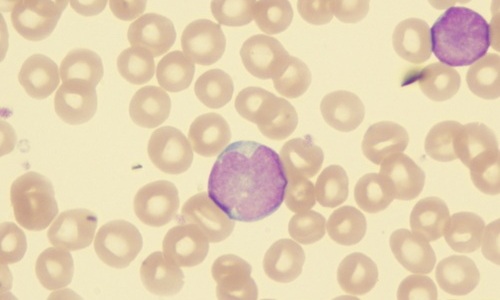
New Risk-Stratification Tool Predicts Relapse After Blinatumomab in Childhood ALL
Acute lymphoblastic leukemia in children and young people requires careful assessment of relapse risk, particularly as treatment approaches move beyond standard chemotherapy. Traditional relapse predictors... Read more
New Myelofibrosis Guidelines Recommend Expanded Genetic Testing at Diagnosis
Myelofibrosis is a rare, life-threatening blood cancer affecting up to six per 100,000 people. The disease causes scarring in the bone marrow, limiting the production of healthy blood cells and potentially... Read more

Immunology
view channel
Antibody Profiling Predicts Inflammatory Bowel Disease Years Before Diagnosis
Inflammatory bowel disease (IBD), which includes Crohn’s disease and ulcerative colitis, involves abnormal immune responses that cause persistent inflammation and damage in the digestive system.... Read more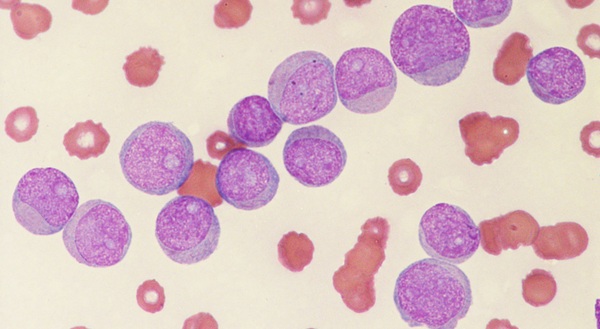
Immune Profiling Initiative Aims to Improve Bone Marrow Analysis in Leukemia
Acute myeloid leukemia (AML) is an aggressive blood cancer in which assessing disease burden after therapy can help guide clinical evaluation. Patients with measurable residual disease (MRD) after treatment... Read more
Immune Profiling Identifies Early Maternal Autoantibodies Linked to Preterm Birth Risk
A typical pregnancy lasts about 40 weeks, but labor begins prematurely in roughly one in 10 pregnancies. Preterm birth is the leading cause of newborn death worldwide, yet its underlying causes and which... Read more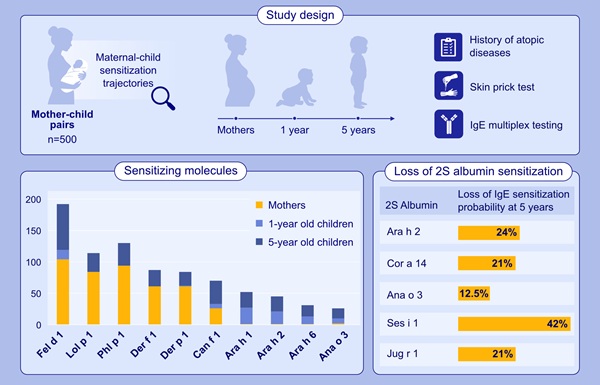
Longitudinal Blood Testing Reveals Changes in Allergen Sensitization During Childhood
Food allergy is a major childhood health concern, and distinguishing persistent risk from transient sensitization can guide clinical decisions. Specific IgE antibodies may be detectable even when a child... Read moreMicrobiology
view channel
Decentralized Laboratory Network Improves Detection of Viral Hemorrhagic Fevers in Guinea
Viral hemorrhagic fevers remain a major diagnostic challenge in West Africa because their early symptoms can resemble those of other febrile illnesses. The 2014–2016 Ebola epidemic underscored the need... Read more
Molecular Panel Gains WHO Emergency Use Listing to Support Ebola Outbreak Response
The ongoing Ebola Bundibugyo outbreak in the Democratic Republic of the Congo and neighboring countries has become one of the largest outbreaks of this Ebola virus species recorded to date.... Read more

Pathology
view channel
Digital Pathology Test Stratifies Recurrence Risk in Early Breast Cancer
In hormone receptor-positive, human epidermal growth factor receptor 2 (HER2)-negative early breast cancer, accurate recurrence-risk assessment helps guide treatment decisions. However, individual risks... Read more
AI Pathology Tool Predicts DNA Repair Deficiency in High-Grade Serous Ovarian Cancer
High-grade serous tubo-ovarian carcinoma is an aggressive cancer arising in the ovaries or fallopian tubes. Some tumors exhibit homologous recombination deficiency (HRD), a feature reflecting impaired DNA repair.... Read more
Technology
view channel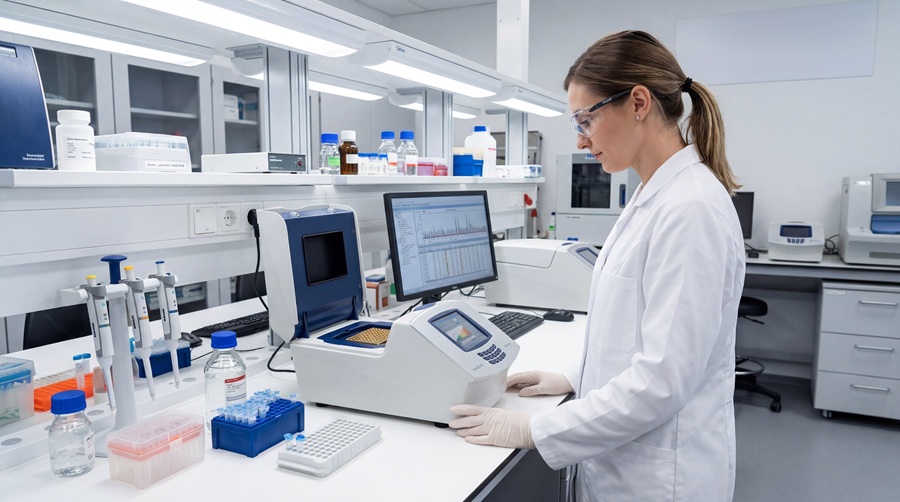
Compact PCR Thermal Cycler Launches for Routine Molecular Laboratory Workflows
Molecular laboratories rely on nucleic acid analysis to detect molecular information accurately and reproducibly across a wide range of applications. Supporting these routine workflows, a newly launched... Read more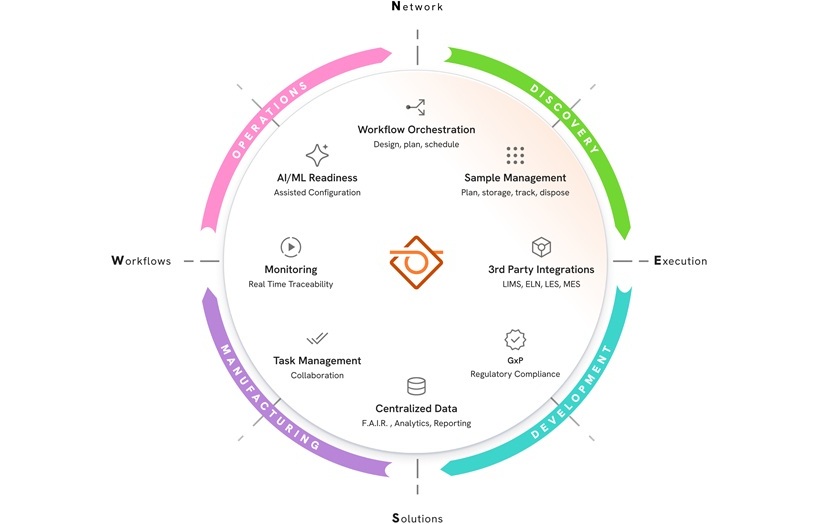
New AI-Powered System Aims to Streamline Laboratory and Manufacturing Workflows
Scientific laboratories supporting drug development, biotechnology, and materials research increasingly rely on coordinated digital workflows to move data, samples, and activities across teams.... Read more
Industry
view channel
Collaboration Brings Tumor-Informed MRD Monitoring to Breast Cancer Care in Abu Dhabi
For many patients, cancer treatment does not eliminate the risk of recurrence, which may occur months or years later and become harder to treat after spreading. Recurrence is often detected only after... Read more