Molecular Marker Identifies Hormone Therapy Resistance Pathway in Prostate Cancer
Posted on 14 May 2026
Most prostate cancers depend on androgen signaling, making hormone suppression or blockade a central treatment strategy. Although many patients respond initially, tumors often adapt and eventually progress, creating uncertainty about which patients will benefit from existing regimens. Tissue-based markers of resistance could help stratify patients and guide treatment decisions. New findings show that a specific gene fusion may serve as a molecular marker of cortisol-driven escape from hormone therapy.
Weizmann Institute of Science researchers, working with international collaborators, identified the TMPRSS2-ERG gene fusion as a marker that allows prostate tumors to sidestep androgen dependence and instead rely on cortisol signaling. The team shows that the fusion produces a protein that partners with the glucocorticoid (cortisol) receptor, activating cancer‑promoting genes and enabling tumors to evade standard androgen‑targeted therapy. This shift provides a rationale for testing whether combined inhibition of androgen signaling and cortisol activity could improve disease control in fusion‑positive cases.
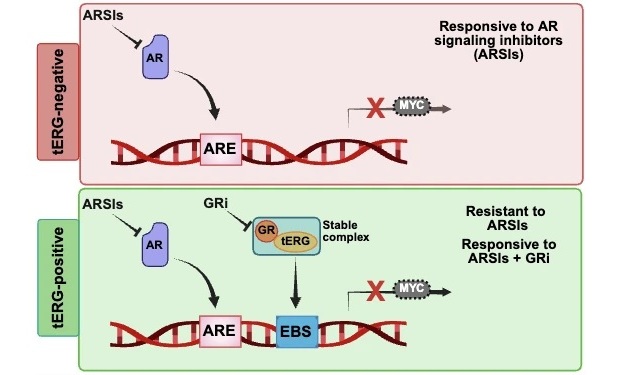
The study drew on data from human patients obtained in collaboration with the National Cancer Institute in Bethesda, Maryland, and used mouse models of human prostate cancer to interrogate mechanism and therapeutic response. In these experimental models, a treatment strategy that simultaneously blocked androgen signaling and reduced cortisol activity suppressed tumor growth over time and extended survival compared with either approach alone. The researchers also flag a clinical concern: steroid medications commonly given in advanced disease may inadvertently activate the cortisol pathway and foster resistance when the fusion is present.
The work is published in EMBO Molecular Medicine and is presented as a potential path to more precisely guiding therapy selection in prostate cancer characterized by the TMPRSS2‑ERG fusion. The authors outline how targeting the glucocorticoid receptor, in combination with standard anti‑androgen therapy, may be more effective in this molecular context while underscoring caution with steroid administration in affected patients.
"These findings suggest that patients with gene fusion could benefit from combination therapy. They also highlight the need for caution when prescribing steroids, since these drugs may activate the cortisol pathway that allows the cancer to resist treatment. A drug that blocks cortisol receptors was approved last month by the U.S. Food and Drug Administration for ovarian cancer. Since this drug showed promising results in mice in our study, I hope it also proves successful in prostate cancer," said Yosef Yarden, Professor, Weizmann Institute of Science.
Related Links
Weizmann Institute of Science