Genetic Signature Predicts Myeloid Leukemia Risk in Down Syndrome
Posted on 27 Apr 2026
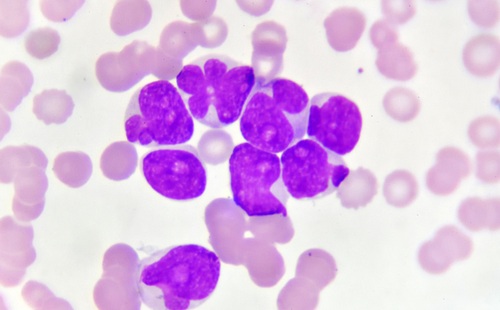
Children with Down syndrome face a markedly increased risk of myeloid leukemia, yet early lesions and pre-cancerous cells can appear indistinguishable under the microscope. Many are born with a transient preleukemic blood condition, making it difficult to predict which cases will progress and underscoring the need for clearer molecular markers. New findings now detail genetic and transcriptional features that distinguish pre-cancer from leukemia in this population.
Wellcome Sanger Institute (Cambridge, UK) and collaborators mapped the evolution of myeloid leukemia in children with Down syndrome (ML-DS) using in-depth genomic techniques. The team examined how cancer cells differ from morphologically similar pre-cancer cells to pinpoint why some progress to malignancy. Published in Nature Communications, the study identifies major changes that drive the transition from normal cells to cancer and describes a potential genetic Achilles’ heel.
The investigation found that the molecular backbone across all stages—pre-cancerous transient abnormal myelopoiesis (TAM) and fully developed ML-DS—is highly similar, suggesting a shared vulnerability and treatment target. A specific change in the GATA1 gene was present at every stage of disease. Although additional genetic alterations arise when TAM advances to ML-DS, GATA1-induced molecular differences persist throughout, leading the researchers to suggest that a therapy directed at this axis could be possible in the future.
To define disease trajectories, the team analyzed transcriptional data, which indicate which genes are active in a cell at a given time. While ML-DS and TAM appear the same under the microscope, they produced distinct transcriptional profiles. Using these data, the researchers were able to predict which TAM cells would become cancerous; with further study, this could serve as a clinically relevant biomarker to identify children at higher risk.
The international effort included Great Ormond Street Hospital, Goethe University Frankfurt, and Cambridge University Hospitals. The work appears as “Single cell transcriptional evolution of myeloid leukaemia of Down syndrome” in Nature Communications (2026).
“This is the first time that it has been possible to investigate the full evolution of pre-cancer to cancer cells in the context of ML-DS. Rare cancers impact the lives of children and families around the world, and research is the only way that we will find answers that can help inform new approaches and treatments,” said Dr. Jack Bartram, co-senior author at Great Ormond Street Hospital.
“While it has been previously known that there is an increased risk of myeloid leukemia in children with Down syndrome, the underlying genetic programs were obscure. Although further investigation is needed before this can have clinical implications, our research has shown that it is possible to identify which pre-cancerous cells develop into myeloid leukemia in children with Down syndrome by looking at the genomic data,” said Professor Jan-Henning Klusmann, co-senior author at the Goethe University Frankfurt.
Related Links
Wellcome Sanger Institute