FDA Approval Expands Use of PD-L1 Companion Diagnostic in Esophageal and GEJ Carcinomas
Posted on 31 Mar 2026
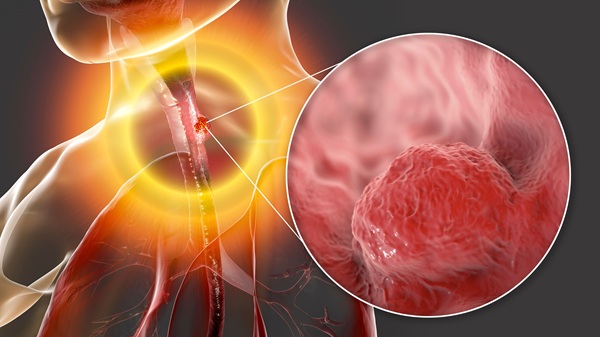
Esophageal and gastroesophageal junction carcinomas (GEJ) have a poor prognosis, with approximately 16,250 deaths in the United States in 2025 and a five-year relative survival of 21.9%. Accurate identification of patients who may benefit from immunotherapy depends on consistent assessment of tumor PD-L1 expression to guide treatment decisions. A newly approved companion diagnostic now enables selection of patients with esophageal or GEJ carcinoma for pembrolizumab based on tumor PD-L1 expression.
Agilent Technologies’ (Santa Clara, CA, USA) PD-L1 IHC 22C3 pharmDx, Code SK006, has received U.S. Food and Drug Administration (FDA) approval as a companion diagnostic to aid in identifying patients with esophageal or GEJ carcinoma who may be eligible for treatment with KEYTRUDA (pembrolizumab), Merck’s anti-PD-1 therapy. It is the only FDA‑approved companion diagnostic indicated to identify patients with esophageal or GEJ carcinoma whose tumors express PD‑L1 with a Combined Positive Score of at least 1 for potential treatment with KEYTRUDA. This authorization represents the eighth FDA-approved companion diagnostic indication currently available for PD‑L1 IHC 22C3 pharmDx, Code SK006, for use with KEYTRUDA.
The PD-L1 IHC 22C3 pharmDx assay is an immunohistochemistry test designed to determine PD‑L1 expression in tumor specimens. Results are interpreted using the Combined Positive Score, and patients meeting the threshold of 1 or greater may be considered for pembrolizumab therapy under the approved indication. The assay was developed by Agilent in partnership with Merck (known as MSD outside the United States and Canada) as a companion diagnostic for KEYTRUDA.
KEYTRUDA is indicated for patients with locally advanced or metastatic esophageal or GEJ carcinoma (tumors with epicenter 1 to 5 centimeters above the gastroesophageal junction) that is not amenable to surgical resection or definitive chemoradiation, in combination with platinum‑ and fluoropyrimidine‑based chemotherapy, for tumors expressing PD‑L1 (CPS ≥ 1). Beyond the new indication, PD‑L1 IHC 22C3 pharmDx, Code SK006, is also indicated to help identify patients with non‑small cell lung cancer (NSCLC), esophageal squamous cell carcinoma, cervical cancer, head and neck squamous cell carcinoma, triple‑negative breast cancer, gastric or GEJ adenocarcinoma, and epithelial ovarian, fallopian tube, or primary peritoneal carcinoma who may benefit from treatment with KEYTRUDA.
“With the expanded FDA approval of PD-L1 IHC 22C3 pharmDx in esophageal or GEJ carcinoma, Agilent is proud to support clinicians in identifying patients eligible for treatment with KEYTRUDA,” said Nina Green, vice-president and general manager of Agilent’s Clinical Diagnostics Division. “This milestone reinforces Agilent’s commitment to advancing precision medicine and underscores its leadership in delivering trusted companion diagnostics that help enable treatment with anti-PD-1 therapies.”
Related Links
Agilent Technologies