High Rates of Hepatitis B Infection Found in Aboriginals
By LabMedica International staff writers
Posted on 07 Oct 2014
Hepatitis B virus (HBV) infection remains an important cause of morbidity and mortality in Aboriginal and Torres Strait Islander people, who have high rates of infection compared with non-Indigenous Australians.Posted on 07 Oct 2014
Aboriginal and Torres Strait Islander people experience a rate of liver cancer up to 10 times that of the non-indigenous population with an overall two-to-threefold increase in the rate of HBV-related liver cancer expected by 2017.
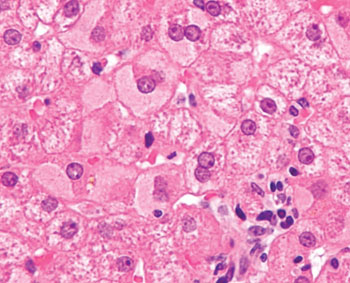
Image: Photomicrograph from a liver biopsy showing ground glass hepatocytes, as seen in a chronic hepatitis B infection with a high viral load (Photo courtesy of Nephron).
Scientists at the University of New South Wales (Sydney, Australia) implemented a retrospective, cross-sectional analysis of clinical encounter data contained within the medical records of patients attending Aboriginal community controlled health services (ACCHS). Records of patient visits were included if they related to a clinical visit of a person aged from 15 to 54 years from January 8, 2009, to July 11, 2013.
Serology results were examined for patients with concurrent testing for hepatitis B surface antigen (HbsAg), and hepatitis B surface antibody (HbsAb) and hepatitis B core antibody (HbcAb). A total of 2,959 people aged 15 to 54 years were screened for HBV, representing 17.2% of all people with a clinical visit in the study period. A total of 865 Aboriginal patients were tested concurrently for HbsAg, HbsAb, and HbcAb. Of those, 352 (40.7%) were susceptible to HBV infection and 34 (3.9%) had either an acute or chronic infection indicated by a positive HBsAg result In 329 women with antenatal screening, 6 (1.8%) returned a positive HBsAg result.
The authors concluded that a substantial proportion of patients tested were susceptible to HBV, with a high percentage potentially infectious compared with the general population. High levels of active infection and susceptibility to infection suggest many opportunities for transmission and indicate the potential benefit of routine HBV testing and vaccination in this population. The study was published on September 15, 2014, in the Medical Journal of Australia.
University of New South Wales




Platinum Member

Automated Coagulation Analyzer
Hemolumi H6

Gold Member

Flocked Fiber Swabs
Puritan® Patented HydraFlock®

Immunofluorescence Analyzer
IFA System

CMV CLIA Diagnostic
CLIA CMV IgA Screen Group