FDA Clearance Extends Mass Spectrometry Testing to Myeloma Monitoring
Posted on 25 Nov 2026
Multiple myeloma and Waldenström’s macroglobulinemia are monoclonal gammopathies that require ongoing monitoring of M-protein levels following diagnosis. Conventional testing methods can be limited by low M-protein concentrations and interference from therapeutic antibodies, making accurate interpretation challenging. To improve disease monitoring, a newly cleared expansion of an existing mass spectrometry-based test now supports ongoing assessment of M-protein levels in addition to confirmatory diagnosis.
Thermo Fisher Scientific has received U.S. Food and Drug Administration (FDA) clearance for an expanded intended use of the EXENT Analyser with the Immunoglobulin Isotypes (GAM) Assay for the EXENT Analyser kit. The clearance allows clinical laboratories to use the system as an aid in monitoring disease status and treatment response in patients with multiple myeloma and Waldenström’s macroglobulinemia. Previously cleared to aid in diagnosis, the system can now also support longitudinal monitoring of patients following diagnosis.
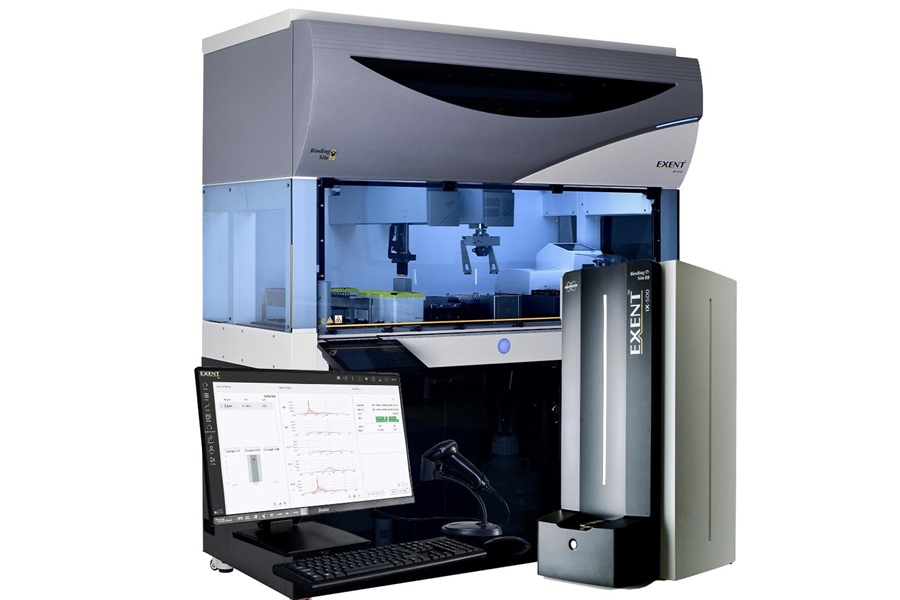
The EXENT system combines the EXENT Analyser with the Immunoglobulin Isotypes (GAM) Assay and uses mass spectrometry to detect and track monoclonal proteins over time. Within its cleared intended use, the system can identify and monitor M-proteins, including at low concentrations, while helping distinguish disease-related proteins from certain known therapeutic antibodies that may interfere with conventional testing. Designed for routine clinical laboratory workflows, the system does not require prior mass spectrometry expertise.
Patients with multiple myeloma and Waldenström’s macroglobulinemia typically require lifelong monitoring to assess disease status, evaluate treatment response, and detect possible relapse. According to National Cancer Institute information cited in the source, an estimated 36,000 new cases of multiple myeloma occurred in the United States in 2026. Over the past three years, the EXENT system has been used to test thousands of patients across 13 countries.
“For patients living with multiple myeloma or Waldenström's macroglobulinemia, understanding how their disease is responding to treatment is critical. This expanded clearance brings the precision of mass spectrometry beyond diagnosis and into ongoing monitoring, giving clinicians greater insight into disease status and treatment response. It reflects our commitment to bringing innovative diagnostics into clinical practice to help physicians make more informed decisions and give patients greater confidence in their care,” said Stephen Harding, vice president and general manager, protein diagnostics, Thermo Fisher Scientific.