Bedside CSF Monitor Detects Early Infection in Fluid Drains
Posted on 05 Jun 2026
External drainage of cerebrospinal fluid (CSF) after traumatic brain injury, hydrocephalus, or hemorrhage carries a significant risk of infection. These infections can prolong intensive care, cause severe meningitis and neurological injury, and increase mortality. Detection today relies on intermittent laboratory testing of fluid samples, which can miss early changes. To help address this gap, researchers have now developed a bedside system that continuously monitors CSF drain output for early signs of infection and flow problems.
Called NeuroSense, the monitoring platform was developed by an international team led by the University of Waterloo (Ontario, Canada). It is intended to save lives and reduce health-care costs in brain-injury care by enabling earlier identification of complications in intensive care units. The study reporting the technology was published in Science Translational Medicine.
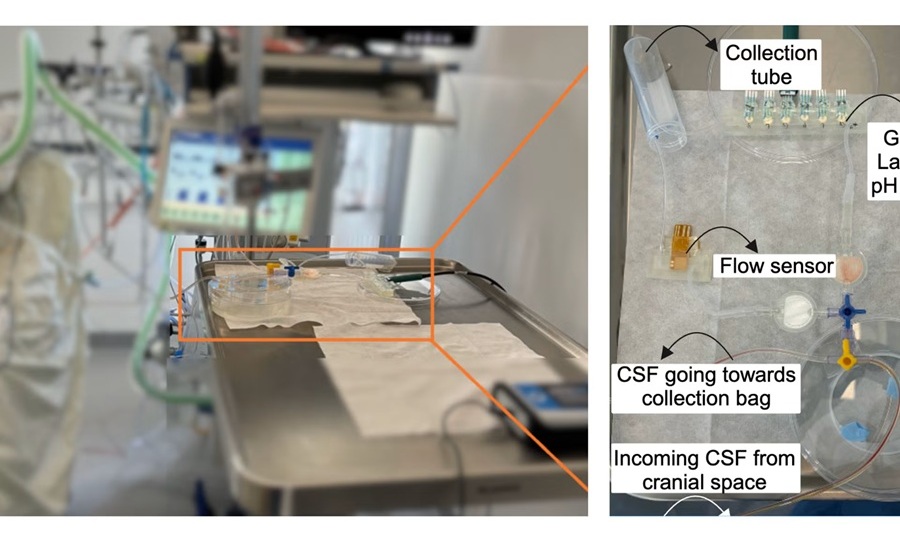
NeuroSense connects inline to standard drainage tubing to analyze CSF in near real time. A 3D-printed device about the size of a smartphone houses four sensors that feed an electrochemical analyzer and a bedside display. The system tracks infection-associated biomarkers, including glucose, lactate, and pH, as well as flow rate, allowing staff to follow trends rather than wait for periodic lab results.
The clinical burden is substantial. In the United States, about 25,000 hospitalized patients each year require drains to remove excess brain fluid following traumatic brain injury or conditions such as hydrocephalus and brain hemorrhage. Up to 20% of these cases develop infections, which can more than double hospital length of stay and lead to severe meningitis, neural damage, disability, or death. Current detection relies on manual sampling sent to laboratories, a labor-intensive process typically performed only once every day or two.
Initial evaluations found NeuroSense performed well compared with standard testing in the laboratory and in a small number of intensive care patients. The project includes collaborators from University Medicine Rostock, the Massachusetts Institute of Technology, and Harvard Medical School. Next steps include adding an automated alarm to flag abnormal trends, conducting larger clinical studies, and refining components toward potential commercialization.
“This platform is designed to almost instantly capture trends and identify complications before they become much more serious,” said Dr. Mahla Poudineh, a professor of electrical and computer engineering and the Canada Research Chair in Health Monitoring BioNano Devices at Waterloo.
“The benefits include early warning of infection or drain malfunction, enabling faster, better treatment decisions,” said Fatemeh Keyvani, a Ph.D. student in electrical and computer engineering at Waterloo who led the research.
Related Links
University of Waterloo