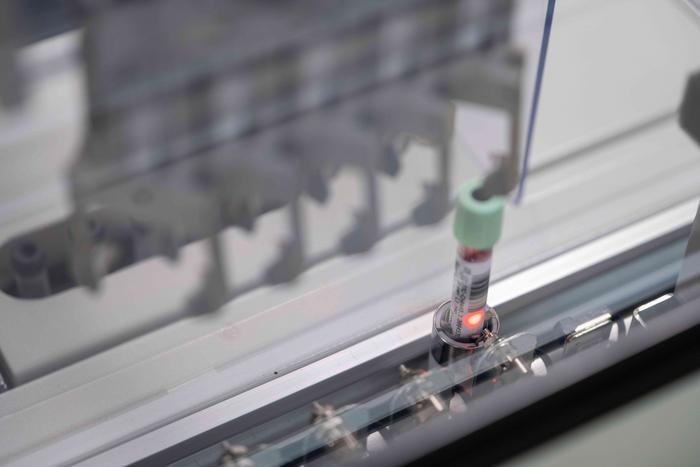
Portable Troponin Assay Brings Heart Attack Diagnosis Closer to Patients
Posted on 07 Aug 2026
Timely confirmation of myocardial infarction often depends on laboratory testing that may not be immediately available at the point of care. This gap between clinical suspicion and definitive evidence can be especially significant in rural settings, nursing homes, and ambulances, where reliance on centralized cardiac troponin I assays may delay treatment decisions. A new study describes a portable, high-sensitivity troponin assay designed to bring molecular confirmation closer to patients.
Texas A&M University researchers, working with an international team, developed a magnetic nanoparticle-based assay for cardiac troponin I (cTnI). The approach is designed as a classification tool to support myocardial infarction diagnosis in resource‑limited environments. It is designed to narrow the delay between clinical suspicion and biochemical confirmation outside centralized laboratories.

The assay uses a structured DNA aptamer that remains inert until it encounters cTnI, initiating a cascade of molecular reactions that amplifies the detection signal. Magnetic nanoparticles assist with target capture and enrichment, and the amplified output is measured using portable optical sensing hardware. By coupling target‑triggered activation with signal amplification and compact optics, the method is intended to detect very small amounts of troponin associated with heart muscle injury.
According to the team, the original implementation required about two hours to complete. Iterative development has reduced the testing time to under 25 minutes, and ongoing work targets less than 15 minutes to improve usability in time‑sensitive settings. The researchers stated that additional development is needed before the technology could be integrated into clinical practice.
The work originated in Texas A&M University’s College of Engineering, including the Optical and Bio‑Sensing Laboratory and the Center for Remote Health Technologies and Systems. The study, titled “A locked aptamer‑magnetic nanoparticle assay for cardiac troponin I classification to support myocardial infarction diagnosis in resource‑limited environments,” was published in Biosensors and Bioelectronics. The authors characterize the platform as highly sensitive and oriented toward settings where advanced laboratory instrumentation is scarce.
“A heart attack doesn't wait for laboratory results,” said Sayantan Tripathy, assistant research scientist at Texas A&M University's Optical and Bio‑Sensing Laboratory in the College of Engineering. “By reducing the time needed to detect heart muscle damage, we're helping clinicians move more quickly from uncertainty to action, not only in hospitals, but also in ambulatory and resource-constrained settings where rapid diagnostic tools are often unavailable."
“Our goal is for emergency medical technicians in an ambulance to be able to take someone's fingertip sample—just a small finger prick—put that sample into a cartridge that contains all of our components, plug the cartridge into our device, and then be able to run the test in five minutes,” said Dr. Samuel Mabbott, associate professor of biomedical engineering and study co‑author.
Related Links
Texas A&M University