Blood Test Reveals Hidden Pancreatic Cancer After Treatment
Posted on 30 Jun 2026
Pancreatic cancer often returns even after chemotherapy and surgery, while microscopic disease can remain difficult to detect during surveillance. Standard imaging and broad-panel liquid biopsy tests may miss circulating tumor DNA (ctDNA) at very low levels, limiting accurate risk assessment. A sensitive, repeatable blood test could help identify patients at greatest risk of relapse.
At Northwestern Medicine, investigators evaluated a highly sensitive digital droplet PCR (ddPCR) blood test that targets KRAS mutations in ctDNA. Both ddPCR and next‑generation sequencing (NGS) are blood‑based “liquid biopsies” that look for tumor DNA shed into the bloodstream, but they operate differently: NGS surveys many cancer‑associated genes simultaneously, whereas ddPCR interrogates one gene set at a time. In this study, ddPCR was configured to focus specifically on KRAS mutations.
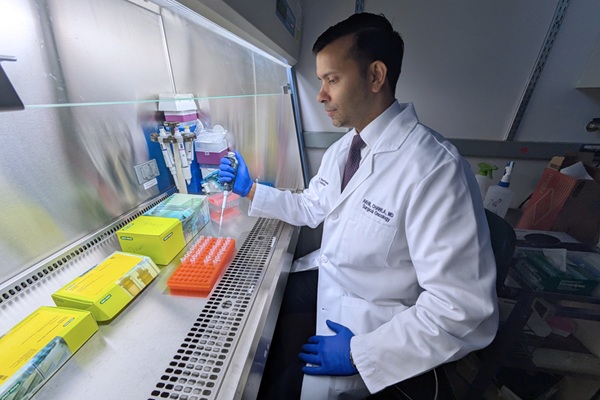
The study followed 106 patients with localized pancreatic cancer from diagnosis through chemotherapy and surgery. All participants were enrolled in a larger clinical trial, and blood samples were collected before treatment, after chemotherapy, and after surgery between October 2020 and October 2024. The analysis compared detection by ddPCR with conventional NGS at each time point.
At diagnosis, ddPCR identified tumor KRAS DNA in 65% of patients, compared with 17% using NGS. After chemotherapy, detection was 60% with ddPCR versus 5% with NGS; after surgery, 56% versus 9%, respectively. Better detection also stratified outcomes: patients positive on both tests had a median survival of 11 months, those negative on both had 41 months, and a previously hidden high‑risk group missed by NGS but detected by ddPCR had 27 months.
The findings are published in Clinical Cancer Research on June 30, 2026. The team noted that ddPCR continued to detect cancer in most patients even after chemotherapy and surgery, and that larger multicenter studies are needed before routine use.
“As we enter the era of KRAS‑targeted therapies, having a screening tool that tracks the same mutation becomes increasingly important. That combination could fundamentally change how we identify high‑risk patients, monitor microscopic disease and potentially intervene earlier before recurrence becomes clinically visible, ultimately getting more patients to cure,” said Dr. Akhil Chawla, clinical associate professor of surgery at Northwestern University Feinberg School of Medicine and complex surgical oncologist at Northwestern Medicine.
Related Links
Northwestern University Feinberg School of Medicine
Northwestern Medicine