Genomic Assays Predict Anthracycline Benefit in Early-Stage Breast Cancer
Posted on 29 Jun 2026
Anthracycline-based chemotherapy remains a cornerstone of treatment for early-stage, hormone receptor–positive, human epidermal growth factor receptor 2–negative breast cancer, but its risks of cardiotoxicity and secondary leukemias complicate adjuvant decision-making. Multiple randomized trials have struggled to clarify which patients gain additional benefit over anthracycline-free regimens, leaving clinicians with continued uncertainty. A new genomic profiling approach now helps delineate which patients are likely to benefit from anthracyclines and which may safely avoid them.
Agendia’s MammaPrint and BluePrint assays were evaluated in a newly published JCO Precision Oncology paper using data from the prospective, real-world FLEX Study. MammaPrint is a 70-gene expression test that stratifies tumors into UltraLow, Low, High Risk 1 (H1), and High Risk 2 (H2) categories, while BluePrint is an 80-gene molecular subtyping assay that classifies tumors as Luminal-, HER2-, or Basal-type. Together, these genomic profiles identified a subset of patients most likely to benefit from anthracycline-containing regimens.
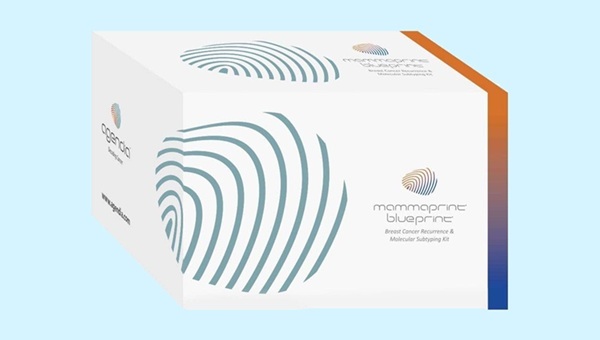
The observational FLEX analysis included 1,259 patients with stage I–III HR+/HER2− disease whose tumors were classified as BluePrint Luminal B. Patients received either anthracycline plus taxane (AC-T) or taxane with cyclophosphamide (TC), with a median follow-up of 3.2 years. Investigators used inverse probability of treatment weighting to balance clinical characteristics and approximate a randomized comparison.
Key results showed H2 tumors had superior 3‑year invasive disease‑free survival with AC‑T versus TC (100% vs 94.8%), an absolute gain of 5.2% (p=0.023), while H1 tumors had identical 3‑year invasive disease‑free survival with both regimens (95.9%). A significant treatment‑by‑MammaPrint interaction (p=0.036) indicated increasing anthracycline benefit with higher genomic risk. In light of these findings, the National Comprehensive Cancer Network Clinical Practice Guidelines in Oncology now recognize MammaPrint as the only genomic test guiding personalized anthracycline use in this population.
Related Links
Agendia