






Regenerative Nanoparticles May Lengthen Life
By Biotechdaily staff writers
Posted on 21 Aug 2003
By combining a process for engineering nanoparticles for industrial use with a specialized brain cell that repairs damaged neurons, researchers have found they can triple or quadruple the life of brain cells, perhaps allowing people to live longer and with fewer age-related health problems.Posted on 21 Aug 2003
Knowing that anti-oxidants have potential anti-aging properties, the researchers used a newly developed process for engineering industrial nanoscale particles to miniaturize microglia, which initiate the response to either repair or destroy a damaged neuron. The miniaturized particles were introduced into the brain cells of rats.
"In culture, rat brain cells usually live about three weeks,” said Beverly Rzigalinski, assistant professor in the department of molecular biology and microbiology at the University of Central Florida (Orlando, USA; www.ucf.edu). "The cells exposed to the engineered nanoparticles lived three to four times longer.”
To confirm the results, the process was repeated multiple times. When Prof. Rzigalinski explored the quality of the aged neurons, she found they were signaling each other in the same manner as their youthful counterparts, showing a potential not only for extending life but also for preserving function. More recently, Prof. Rzigalinski has found that the nanoparticles have potent anti-inflammatory properties. The nanoscientist working with her, Sudipta Seal, is an associate engineering professor at the Advanced Materials Processing and Analysis Center at the university. The two researchers will receive a $1.4 million grant from the US National Institutes of Health to conduct further studies.
Related Links:
Univ. of Central Florida




Platinum Member

Automated Coagulation Analyzer
Hemolumi H6
New
Gold Member

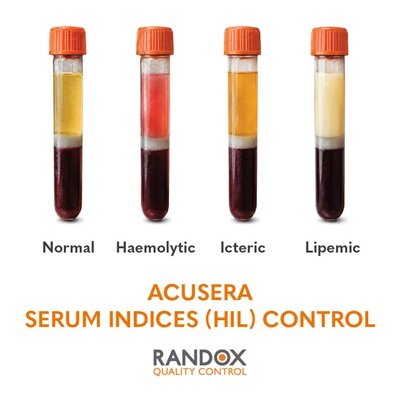
Serum Indices Control
Acusera Serum Indices Control
New

Alzheimer's Disease Biomarker Assay
Elecsys Phospho-Tau (217P) Plasma
New
Silver Member

Vitamin D Assay
EZ Vitamin D Assay


