Immunoaffinity Technology Helps Identify Rare Proteins
By Biotechdaily staff writers
Posted on 21 Aug 2003
By using new immunoaffinity technology to specifically target and remove six high-abundance proteins from human blood serum, liquid chromatography (LC) allows researchers to identify more rare proteins that could serve as drug targets or biologic markers of disease.Posted on 21 Aug 2003
The LC column uses affinity-purified polyclonal antibodies to rapidly remove more than 99% of targeted proteins: albumin, immunoglobulin G, immunoglobulin A, alpha-1-antitrypsin, transferring, and haptoglobin. Removal of other proteins is minimal. The antibody attachment chemistry is robust enough to permit a long column lifetime (200+ injections) without leaching of covalently coupled antibody receptors. The removal system was developed by Agilent Technologies (Palo Alto, CA, USA).
"The Multiple Affinity Removal System from Agilent has allowed us to rapidly identify three to four different proteins that we believe could act as biomarkers for the onset of disease,” said Prof. Gary Siuzdak of The Scripps Research Institute (La Jolla, CA, USA). "Previous to this technology we were unsuccessful at identifying markers in this sample because of the masking effect of the high-abundance proteins on the proteins of interest.”




Platinum Member

Automated Coagulation Analyzer
Hemolumi H6


Nucleic Acid Purification Instrument
QIAsymphony Connect
Gold Member

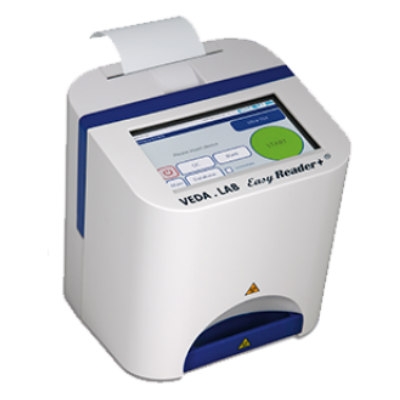
Quantitative POC Immunoassay Analyzer
EASY READER+