






Genetic Modulators of Skeletal Formation Identified
By Biotechdaily staff writers
Posted on 30 Jul 2003
By studying a genetically engineered line of mice lacking all the Hox10 and Hox11 families of developmental genes, researchers have concluded that these genes are required to globally pattern the mammalian skeleton.Posted on 30 Jul 2003
After overcoming initial problems of sterility and failure to develop, investigators at the University of Utah (Salt Lake City, USA) were successful in developing a line of mice lacking both the Hox10 and Hox11 families of developmental genes. They reported in the July 18, 2003, issue of Science that in the absence of Hox10 function, no lumbar vertebrae were formed. Instead, ribs projected from all posterior vertebrae, extending caudally from the last thoracic vertebrae to beyond the sacral region. In the absence of Hox11 function, sacral vertebrae were not formed, and instead these vertebrae assumed a lumbar identity.
"These results tell us that these genes control global patterning of the skeletal structures, as opposed to forming the structures rib by rib, for example,” explained senior author Dr. Mario Capecchi, professor of biology and human genetics at the University of Utah. "This understanding also suggests an evolutionary pathway by which vertebrates could evolve different patterns for different species. Even among mammals, there are enormously different body shapes, from giraffes to monkeys, humans, and mice. And the take-home lesson from research such as ours is that you can generate all these different body plans using moderately simple rules and the same set of genes, but just by modulating them differently.”
Related Links:
University of Utah




Platinum Member

Automated Coagulation Analyzer
Hemolumi H6
Gold Member

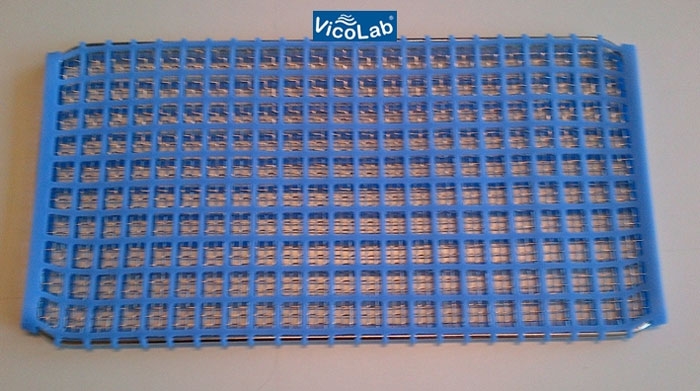
NEW PRODUCT : SILICONE WASHING MACHINE TRAY COVER WITH VICOLAB SILICONE NET VICOLAB®
REGISTRED 682.9

New

MR-proADM Test
B•R•A•H•M•S MR-proADM KRYPTOR test


All-in-One Molecular System
AIO M160


