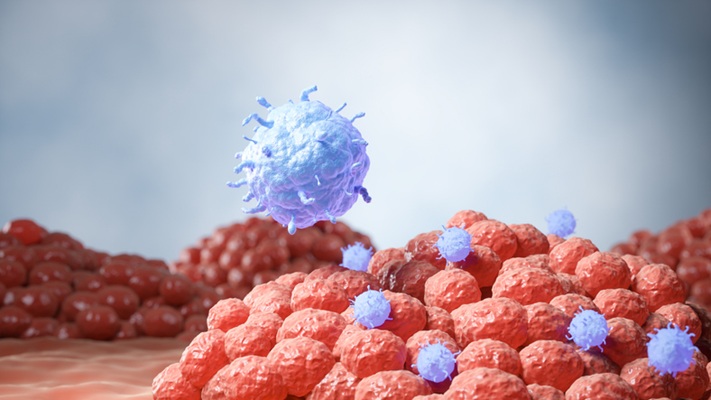
Closed, Secure Cell Culture System
By Biotechdaily staff writers
Posted on 29 May 2003
A closed, scalable cell culture system offers researchers a contamination-free environment and can be used to culture adherent and non-adherent cells.Posted on 29 May 2003
The system has been in successful trials for the expansion of hematopoietic progenitor stem cells, production of dendritic cells from selected adherent monocytes from CD34+, production of dendritic cells from adherent mononucleate cells, selection and expansion of mesenchymal stem cells, culture and production of hybridoma antibodies, and culture of immortal cell lines.
The system, called CLINIcell, is scalable from 25 cm2 to 1,000 cm2+ culture area, is gas permeable, and offers good clarity in observation through optical microscopes. The closed system is safe for both the culture and the manipulator. CLINIcell provides two independent culturing surfaces in one system that can be combined with other cell conditioning systems. CLINIcell is the product of Laboratories Mabio-International (Tourcoing, France).
Laboratories Mabio-International develops new-generation serum-free cell culture systems for healthcare research, diagnosis, and biotechnology applications. The company notes that its CLINIcell system may be adapted to suit a client's specific needs.
Related Links:
Laboratories Mabio-International




Platinum Member

Automated Coagulation Analyzer
Hemolumi H6


MR-proADM Test
B•R•A•H•M•S MR-proADM KRYPTOR test

Gold Member

Platelet Function Analyzer
PL-12