






Olfactory Receptors May Be Metalloproteins
By Biotechdaily staff writers
Posted on 12 Mar 2003
Based on new findings, researchers hypothesize that metalloproteins, proteins capable of binding metal ions, play a major role as olfactory receptors. The findings appeared February 27, 2003, in the online edition of the Proceedings of the National Academy of Sciences.Posted on 12 Mar 2003
The average human nose can detect nearly 10,000 distinct scents, which requires about 1,000 olfactory genes, or roughly 3 % of the human genome. About 75% of the proteins coded by the olfactory genes have structures that suggest they could strongly bind metal ions. Investigators from the University of Illinois (Urbana-Champaign, USA) made synthetic peptide analogs of the potential binding site in the olfactory receptor proteins. Metal ions, particularly zinc and copper, bound very strongly to the peptides.
The researchers then used computer models to develop a theory to explain the relationship between the binding of metal ions to olfactory receptors and the sense of smell. When a long peptide loop containing the metal ion slides into the cell membrane, a portion of the receptor protein's fourth helix is pushed outside the membrane. When an odorant binds to the metal ion, the loop is ejected from the membrane, and the fourth helix is dragged back in, triggering a sequence of events leading to nerve cell activity. Then, when the odorant leaves the metal ion, the process can repeat.
"Computer simulations initially put this big loop outside the cell membrane because the loop is negatively charged,” explained senior author Dr. Kenneth Suslick, professor of chemistry at the University of Illinois. "When a positively charged metal ion binds to the site, however, the loop's charge is neutralized, so the computer places the loop in the membrane.”
"Another piece to this puzzle is that one of the first symptoms of dietary zinc deficiency is loss of the sense of smell,” Dr. Suslick said. "That, too, is keeping with this idea that the olfactory receptors are metalloproteins.”
Related Links:
University of Illinois




Platinum Member

Automated Coagulation Analyzer
Hemolumi H6
Gold Member

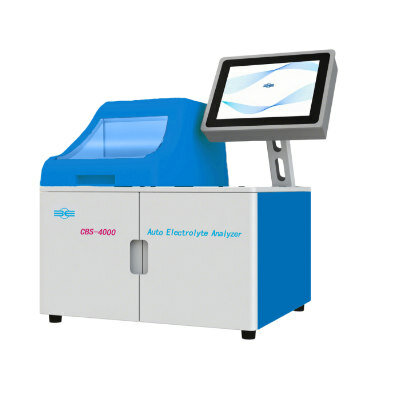
Electrolyte Analyzer
CBS-4000 (CBS-400)

Automatic CLIA Analyzer
Shine i6000
Gold Member

Blood-Based Protein Biomarker Solution for Alzheimer's Disease
BG-DTi2000.


