Cancer Development Linked to Faulty Gene Repair Mechanism
By Biotechdaily staff writers
Posted on 20 Jan 2003
Researchers studying the role of DNA repair as a factor in cancer development have found evidence that the BLM gene helps to thwart cancer by maintaining genomic stability through promotion of efficient DNA repair, which prevents double-strand break repair by less precise pathways. Their findings were reported in the January 10, 2003, issue of Science.Posted on 20 Jan 2003
An autosomal recessive mutation of the BLM gene causes Bloom syndrome, a rare disorder in which sufferers exhibit an extremely high incidence of cancer in many tissues. In addition to being highly cancer-prone, children born with the syndrome are short throughout their lives, sterile, and have poorly functioning immune systems.
To study the disorder, researchers from the University of North Carolina (Chapel Hill, USA) have worked with a Drosophila model lacking BLM.
Previous research suggested that Drosophila BLM functioned in the repair of DNA double-strand breaks. Most double-strand breaks in flies are repaired by homologous recombination through the synthesis-dependent strand-annealing pathway. The mutant flies no longer have this repair mechanism. In the current study, the investigators found that repair in the mutants was completed by error-prone pathways that created large deletions. This finding suggests that BLM does maintain genomic stability by promoting efficient DNA repair and preventing double-strand break repair by less precise pathways.
"We feel that our results represent a substantial step forward in understanding this important DNA repair gene,” explained senior author Dr. Jeff Sekelsky, assistant professor of biology at the University of North Carolina. "This will aid in our understanding of Bloom syndrome, DNA repair pathways and, perhaps most importantly, cellular defects that lead to cancer.”
Related Links:
University of North Carolina




Platinum Member

Automated Coagulation Analyzer
Hemolumi H6
Gold Member

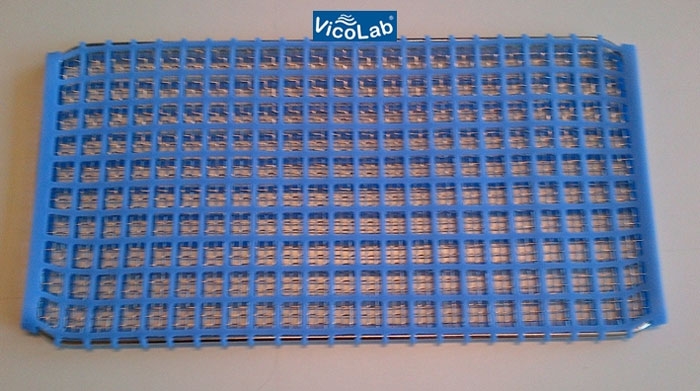
NEW PRODUCT : SILICONE WASHING MACHINE TRAY COVER WITH VICOLAB SILICONE NET VICOLAB®
REGISTRED 682.9
New

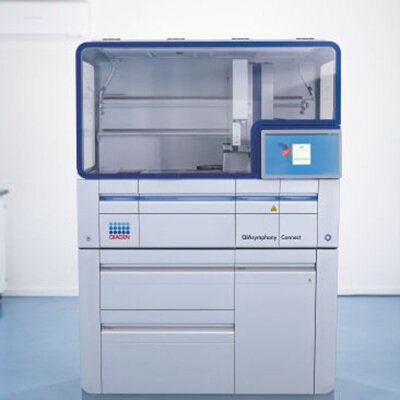
Nucleic Acid Purification Instrument
QIAsymphony Connect

New
Gold Member

Serum Indices Control
Acusera Serum Indices Control