Protein Kinase May Trigger Malignant Melanomas
By Biotechdaily staff writers
Posted on 18 Dec 2002
Researchers have found that mitogen-activated protein kinase (MAPK), which is inactive in benign moles, is turned on in early-stage malignant melanomas, where it activates two genes that encode for proteins that stimulate angiogenesis and cancerous growth. These findings were published in the December 2002 issue of Clinical Cancer Research. Posted on 18 Dec 2002
The investigators, from Emory University (Atlanta, GA, USA), studied levels of activated MAPK in 131 tissue samples from precancerous moles (atypical nevi) and from malignant melanomas. They found high levels of activated MAPK in early melanomas, but not in moles that are the precursors to melanoma. Furthermore, two genes known to be up regulated by MAPK, vascular endothelial growth factor (VEGF) and tissue factor (TF), and missing from precancerous moles were present in early melanomas.
"Our finding is of interest for two reasons,” explained senior author Dr. Jack L. Arbiser, assistant professor of dermatology at Emory. "First, it may help physicians determine whether a mole is malignant, which is often difficult. Second, drugs that target MAPK could become available as creams and help prevent the change of moles to melanomas. Our study identifies MAPK as a pathway that must be targeted in the prevention and treatment of melanoma.”
Related Links:
Emory University




Platinum Member

Automated Coagulation Analyzer
Hemolumi H6
Gold Member

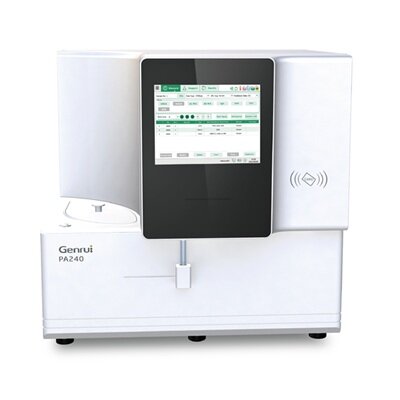
Fully-auto Specific Protein (Nephelometry) Analyzer
PA240


CMV CLIA Diagnostic
CLIA CMV IgA Screen Group

Gold Member

Platelet Function Analyzer
PL-12