






VEGF Isoforms Control Blood Vessel Development
By Biotechdaily staff writers
Posted on 24 Oct 2002
A new study has described how different isoforms of vascular endothelial growth factor (VEGF) protein act to regulate blood vessel branching during mammalian embryogenesis. The study was published in the October 15, 2002, issue of Genes and Development.Posted on 24 Oct 2002
VEGF has been studied in its role as a potent inducer of angiogenesis in normal physiologic contexts as well as in numerous pathologic contexts, such as tumor angiogenesis, that entail the formation of new vasculature. The VEGF protein is present in several isoforms, which are generated via alternative RNA splicing from the VEGF gene. The various VEGF isoforms differ in their ability to bind to heparin, and thereby in their ability to attach to the extracellular matrix or cell surface.
Investigators from the Cancer Research Institute (London, UK) worked with mutant mouse lines engineered to express only one VEGF isoform. One strain expressed a soluble (non-heparin-binding) VEGF isoform, while another strain expressed a heparin-binding isoform. The researchers found that the mice that only expressed soluble VEGF displayed a marked decrease in vessel branching and had abnormally wide microvessels, while the mice that only expressed the heparin-binding VEGF isoform suffered the opposite phenotype: excessive vessel branching and abnormally thin microvasculature.
This work demonstrated that the different VEGF isoforms have different functional roles in embryonic vascular development. First author Dr. Christiana Ruhrberg explained, "Our findings will open up new avenues in the treatment of human disease, because we now know that blood vessel growth might be controlled much more precisely than previously thought through the selective manipulation of the VEGF isoforms.”
Related Links:
Cancer Research UK London Research Institute




Platinum Member

Automated Coagulation Analyzer
Hemolumi H6
Gold Member

Quantitative POC Immunoassay Analyzer
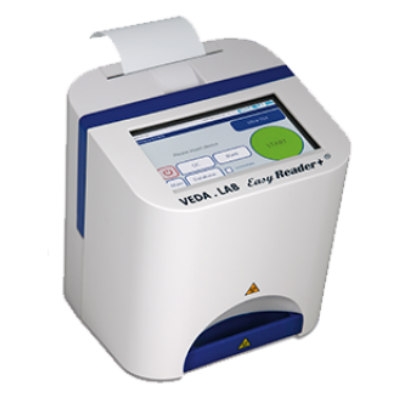
EASY READER+

New
Silver Member

Connectivity Solution
EKF Link
Platinum Member
Integrated Biochemical & Immunological System
Biolumi CX Solution X10+C10


