Vitamin D Analog Stimulates Bone Growth
By Biotechdaily staff writers
Posted on 17 Oct 2002
Researchers have synthesized a highly potent analog of 1,25-Dihydroxyvitamin D3 (a principal regulator of calcium and phosphorus homeostasis through actions on intestine, kidney and bone that is not considered to play a significant role in bone formation) that induces bone formation both in vitro and in vivo. The research was reported in the October 8, 2002, Proceedings of the National Academy of Sciences.Posted on 17 Oct 2002
The compound, called 2MD by the researchers from the University of Wisconsin (Madison, USA; www.wisc.edu), was tested in rats that had their ovaries removed to mimic menopause and the bone wasting associated with osteoporosis. Rats given the 2MD analog exhibited a 9% increase in total body bone mass. Vertebrae in the treated rats exhibited a 25% increase in bone mass, and mass was also added to the long bones in the limbs of the animals.
Studies conducted on cells growing in tissue culture showed that 2MD at concentrations as low as 10-12 M caused primary cultures of osteoblasts to produce bone. This effect was not found with 1,25-Dihydroxyvitamin D3 even at 10-8 M.
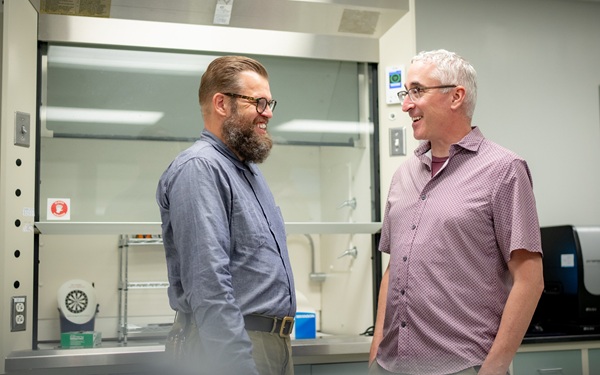
"We have a compound that is very selective for bone,” explained senior author Dr. Hector F. DeLuca. "It is very effective in animals, increasing bone density significantly in rats with a condition that mimics human osteoporosis, and can be used in the lab to grow bone in culture. Our results suggest that 2MD exhibits at very low concentrations a marked and unexpected activity in stimulating the synthesis of new bone. This activity is at best only weakly observed with Dihydroxyvitamin D3 and then only at very high concentrations.”
Related Links:
University of Wisconsin




Platinum Member

Automated Coagulation Analyzer
Hemolumi H6

Gold Member

Neonatal Heel Incision Device
Tenderfoot

Immunofluorescence Analyzer
IFA System
New

Nucleic Acid Purification Instrument
QIAsymphony Connect