Gene Identified that Prevents Abnormal Heart Growth
By Biotechdaily staff writers
Posted on 10 Sep 2002
Researchers have found that class II histone deacetylases (HDACs), which are present in heart muscle tissue, control the ability of the heart muscle to grow in response to stress. Abnormal heart growth is a dangerous condition that can lead to cardiac arrest. The study was published in the August 2002 edition of Cell.Posted on 10 Sep 2002
The investigators, from the University of Texas Southwestern Medical Center (Dallas, USA; www.swmed.edu), developed mouse models that lacked the HDAC9 gene and compared their heart development to that of normal mice. After one month under normal conditions, the hearts of the normal and HDAC9-negative mice were about the same size, but by eight months of age the hearts of the mice lacking the gene were, on average, 46% larger than normal.
When mechanical stress was applied to the animals by constricting their thoracic aortas, it was found that after three weeks the left-ventricle mass had increased by 56% percent in the normal mice and by 105% percent in the HDAC9-negative mice.
In another series of experiments, the researchers artificially activated calcineurin, a calcium sensor that promotes heart muscle growth in normal and HDAC9-negative mice. Four weeks later, heart mass in the normal mice had increased by 130% on average, compared to an average increase of 220% in the HDAC9-negative mice.
"Now that we know that HDAC9 is a key regulator of heart growth, we can use it to develop assays to find small molecules that could be developed into drugs,” explained Dr. Eric Olson, chairman of molecular biology at UT Southwestern and senior author of the study.
Related Links:
UT Southwestern Medical Center




Platinum Member

Automated Coagulation Analyzer
Hemolumi H6
Gold Member

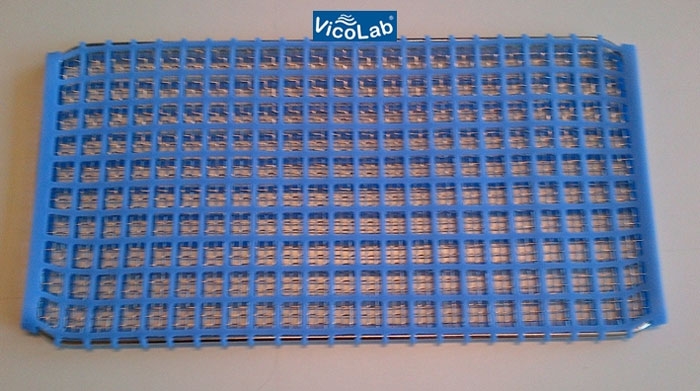
NEW PRODUCT : SILICONE WASHING MACHINE TRAY COVER WITH VICOLAB SILICONE NET VICOLAB®
REGISTRED 682.9
New

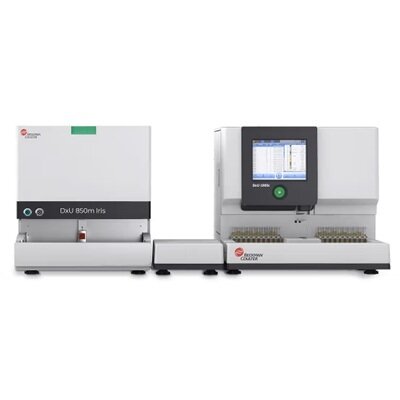
Fully Automated Urinalysis System
DxU 1800 Fully Automated Urinalysis System
Gold Member

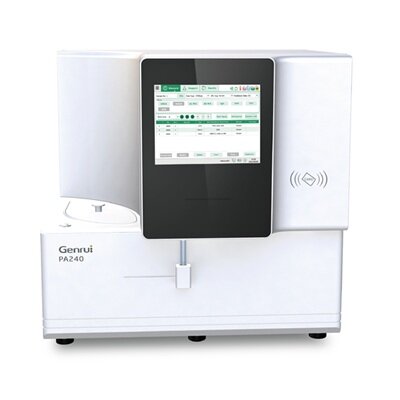
Fully-auto Specific Protein (Nephelometry) Analyzer
PA240