New Clues Link Fat and Colon Cancer
By Biotechdaily staff writers
Posted on 29 May 2002
Researchers have found that the association between high-fat diets and colon cancer may be partly due to the body's inability to cope with a buildup of lithocholic acid, which is highly toxic. The finding was reported in the May 17, 2002, issue of Science.Posted on 29 May 2002
The body produces bile acids when it breaks down cholesterol, or dietary fat. These bile acids go to the small intestine and are broken down into secondary bile acids, one of which is lithocholic acid. Most secondary bile acids circulate to the liver, but only a small amount of lithocholic acid does so. Much of it remains in the small intestine and then moves into the colon, or large intestine. Here, according to the new finding, the lichocholic acid-controlling receptor is unable to cope with large volumes of lithocholic acid.
The researchers, from the University of Texas Southwestern Medical Center (Dallas, USA), also found that this receptor is similar to another receptor that binds vitamin D to help the body absorb calcium. They discovered that the vitamin D receptor also binds to lithocholic acid, then binds to the CYP3A gene, which triggers production of an enzyme that breaks down the toxic acid.
However, the researchers point out that taking extra vitamin D to stimulate more activity in the vitamin D receptors in order to break down more lithocholic acid would cause the body to absorb more calcium, which could lead to hypercalcemia.
"Lithocholic acid is highly toxic, and it builds up in a high-fat diet,” said Dr. David Mangelsdorf, professor of pharmacology at UT Southwestern. "We don't know how it causes cancer, but it is known to cause cancer in mice, and people with colon cancer have high concentrations of it.”




Platinum Member

Automated Coagulation Analyzer
Hemolumi H6
Gold Member

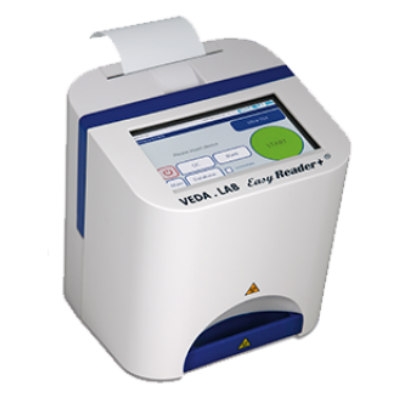
Quantitative POC Immunoassay Analyzer
EASY READER+
Gold Member

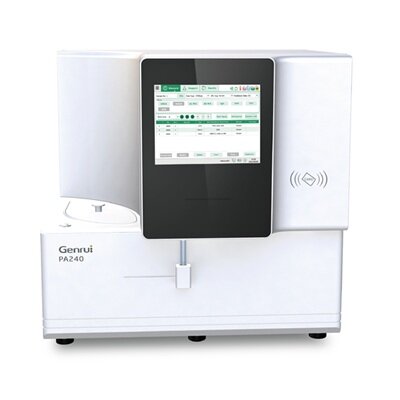
Fully-auto Specific Protein (Nephelometry) Analyzer
PA240
LAIR2 Antibody Pair Set
LAIR2 Antibody Pair [Biotin]