Vitamin C Deficiency Linked to Birth Complications
By Biotechdaily staff writers
Posted on 27 May 2002
In a study of "knockout mice” with markedly reduced levels of ascorbic acid, researchers found that the mice died within minutes after birth due to massive cerebral hemorrhage and complete respiratory failure. The study was published in the May 2002 issue of Nature Medicine.Posted on 27 May 2002
The researchers created a mouse model with a defective gene (Slc23a1) that encodes the protein that transports vitamin C into cells. They discovered that this knockout mouse could not deliver vitamin C from the blood to many fetal tissues nor transport it across the placental border. As a result, the gene-deficient mice had very reduced levels of ascorbic acid in their blood and very low levels in their brains and other organs. Massive cerebral bleeding and respiratory failure occurred whether the mice were delivered normally after 21 days' gestation or delivered early by cesarian section to avoid birth trauma.
The abnormalities in lung function were not due to loss of surfactant protein production since levels of a critical protein were found to be normal. Because 4-hydroxypoline levels were also normal, intracerebral hemorrhage due to vascular fragility and collagen processing deficiency from low vitamin C levels were also ruled out as possible causes. Also, while in the womb, the mice had developed normally.
"What I'm suggesting is that we need to take a look at whether vitamin C in human fetuses before birth, transported from the maternal circulation, is a normal physiologic factor that helps to mature and protect the lungs and brain of newborn infants,” said Dr. Robert Nussbaum, chief of the Genetic Disease Research at the National Human Genome Research Institute (NHGRI, Bethesda, MD, USA; www.nhgri.org) and co-author of the study.




Platinum Member

Automated Coagulation Analyzer
Hemolumi H6
Gold Member

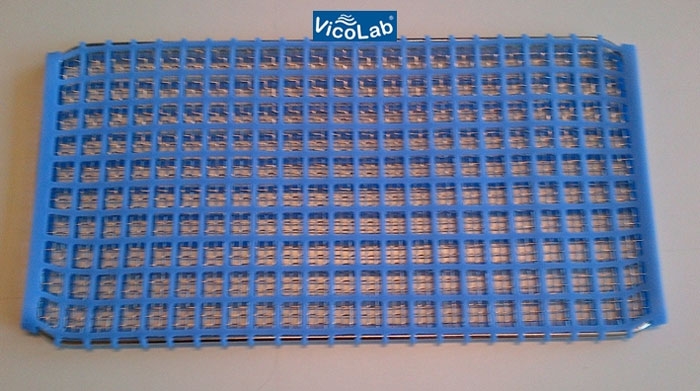
NEW PRODUCT : SILICONE WASHING MACHINE TRAY COVER WITH VICOLAB SILICONE NET VICOLAB®
REGISTRED 682.9

HPV Test
Allplex HPV28 Detection

Gold Member

Platelet Function Analyzer
PL-12