Gene Vaccine Protects Mice from Influenza Virus Strains
By LabMedica International staff writers
Posted on 13 Nov 2017
A team of molecular virologists protected mice from deadly infection caused by a range of influenza viruses by using a deactivated adenovirus vector to vaccinate them with a cocktail of centralized viral genes.Posted on 13 Nov 2017
In a study conducted by investigators at the University of Nebraska, Lincoln (USA), mice were immunized with replication-defective adenovirus expressing the H1-con, H2-con, H3-con, and H5-con HA (hemagglutinin) consensus influenza virus genes in combination (multivalent) and compared to mice immunized with the traditional 2010–2011 FluZone and FluMist seasonal vaccines. The mice were then challenged with 10–100 MLD50 (the median lethal dose required to kill half the population) of H1N1, H3N1, H3N2 and H5N1 influenza viruses.
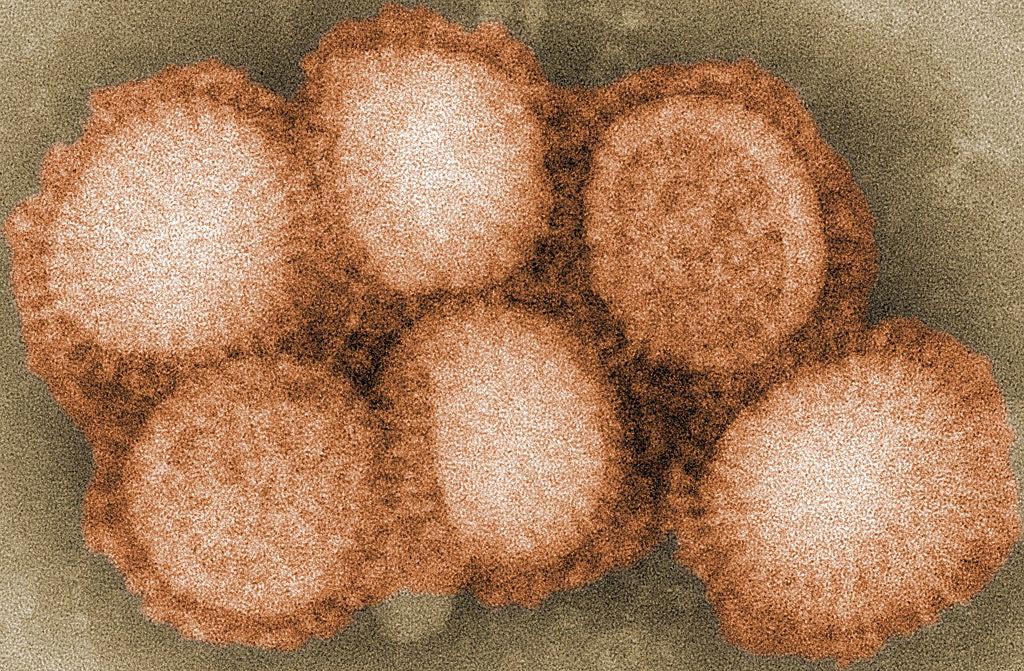
Image: A scanning electron micrograph (SEM) of the influenza virus (Photo courtesy of the CDC).
The investigators reported in the November 2, 2017, online edition of the journal Scientific Reports that the traditional vaccines induced robust levels of HA inhibition (HI) titers, but failed to protect against five different heterologous lethal influenza challenges. Conversely, the multivalent consensus vaccine induced protective HI titers against eight of 10 influenza viruses that represented a wide degree of divergence within the HA subtypes and protected 100% of mice from eight of nine lethal heterologous influenza virus challenges.
The vaccine protection was dose dependent, in general, and a low dose still provided 100% survival against seven of nine lethal heterologous influenza challenges. These data indicated that very low doses of adenovirus-vectored consensus vaccines induced superior levels of immunity against a wide divergence of influenza subtypes as compared to traditional vaccines.
"Our idea is that these centralized antigens can set up a foundation of immunity against influenza," said senior author Dr. Eric Weaver, assistant professor of biological sciences at the University of Nebraska, Lincoln. "Because they are centralized and represent all the strains equally, they could provide a basis for immunity against all evolved strains. An ideal influenza vaccine would be inexpensive, provide long-lasting immunity, require few immunizations, and would work against all variants of the virus. The ultimate goal is to be able to vaccinate once and provide lifelong protection."
Related Links:
University of Nebraska, Lincoln




Platinum Member

Automated Coagulation Analyzer
Hemolumi H6

Gold Member

Fully-auto Specific Protein (Nephelometry) Analyzer
PA240

New

Nucleic Acid Purification Instrument
QIAsymphony Connect


All-in-One Molecular System
AIO M160