DNA Analysis Speeds Up Identification of Pathogenic E. coli
By Biotechdaily staff writers
Posted on 24 Mar 2008
Posted on 24 Mar 2008
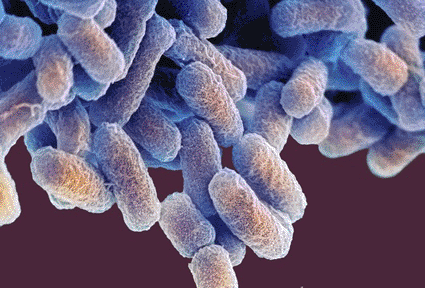
Image: Colored scanning electron micrograph (SEM) of <i>Escherichia coli</i> bacteria (Photo courtesy of Steve Gschmeissner / SPL).
E coli produce toxins, called Shiga toxins, which are responsible for illness in infected people. These toxins block protein synthesis, an essential cellular function, particularly in the kidneys. The scientists found that the different clades (groups of organisms from a single ancestor) produced different kinds of Shiga toxins in varying amounts based on their DNA. The individual bacteria could be separated into nine major clades.
The bacteria usually come from animal waste that has contaminated human sources of food or water. Finding out how the bacteria entered the food source always has been a challenge, but now food safety experts can use DNA in the same manner that police use DNA at crime scenes. Scientists will be able to identify those bacteria making people sick, find out where they entered the food source, and use this information to reduce the contamination.
"It used to take three months to score one gene individually,” said Thomas Whittam, Hannah Distinguished Professor at the National Food Safety and Toxicology Center at Michigan State University (NFSTC; East Lansing, MI, USA). "Now, we are working on a new, more rapid system that can do thousands of genes per day.”
In a study reported in the March 2008 issue of the Proceedings of the [U.S.] National Academy of Sciences (PNAS), Prof. Whittam and colleagues examined DNA of more than 500 strains of a particularly dangerous member of the E. coli family, O157:H7. "For the first time, we know why some outbreaks cause serious infections and diseases and others don't,” Prof. Whittam said. "The different E. coli groups produce different toxins. Now, we are working on a new, more rapid system that can do thousands of genes per day.”
Prof. Whittam also has plans to use the methodology to study other bacterial strains, such as Shigella, a major cause of diarrhea around the world. "This new equipment can be used to identify hundreds of thousands of pathogenic bacteria,” he said.
Related Links:
National Food Safety and Toxicology Center at Michigan State University




Platinum Member

Automated Coagulation Analyzer
Hemolumi H6
.jpg)
Gold Member

Clinical Chemistry Assay
Sorbitol Dehydrogenase (SDH)
New

Microbiology Laboratory Automation Solution
BD Kiestra™ ReadA+BarcodA
CMV CLIA Diagnostic
CLIA CMV IgA Screen Group