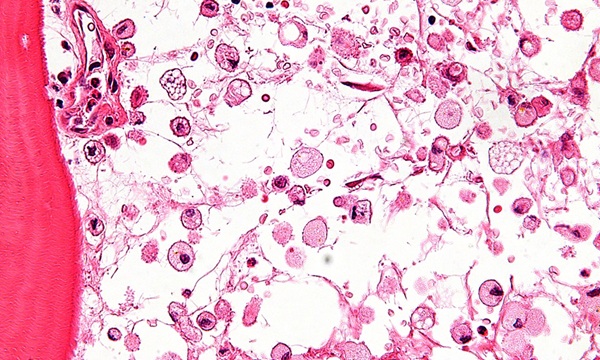
Myriocin Prevents Growth of Atherosclerotic Lesions
By Biotechdaily staff writers
Posted on 18 Feb 2008
Cardiovascular disease researchers have found that the antibiotic myriocin reduced the concentration of atherogenic lipids in the blood and inhibited the growth of atherosclerotic lesions in blood vessels.Posted on 18 Feb 2008
Myriocin is a very potent inhibitor of serine palmitoyltransferase, the first step in sphingosine biosynthesis. Due to this property, it is used in biochemical research as a tool for depleting cells of sphingolipids. Myriocin possesses immunosuppressant activity. It is reported to be 10 to 100 fold more potent than cyclosporin.
Investigators at the University of New South Wales (Sydney, AU) worked with a line of mice that lacked the gene for apolipoprotein E. In humans, defects in apolipoprotein E result in familial dysbetalipoproteinemia, or type III hyperlipoproteinemia (HLP III), in which increased plasma cholesterol and triglycerides levels are the consequence of impaired clearance of chylomicron and VLDL remnants. The purpose of the study was to examine the effect of myriocin on established atherosclerotic lesions.
Adult genetically engineered mice were fed a high-fat diet for 30 days, and lesion formation was confirmed histologically. Replicate groups of mice were then transferred to either regular chow or chow containing myriocin (0.3 mg/kg/day) and maintained for a further 60 days. Results published in the February 2008 issue of the Journal of Lipid Research revealed that myriocin significantly inhibited the progression of established atherosclerosis when combined lesion areas (aortic sinus, arch, and celiac branch point) were measured.
While myriocin did not cause established lesions to shrink, it did prevent their further progression. This inhibition of lesion progression was associated with reductions in hepatic and plasma sphingomyelin, cholesterol, and triglyceride levels, and increased hepatic and plasma apolipoprotein A-I levels. The authors concluded that these findings suggest that myriocin could offer therapeutic benefits to individuals with early-stage atherosclerosis.
Related Links:
University of New South Wales




Platinum Member

Automated Coagulation Analyzer
Hemolumi H6

Gold Member

Aspiration System
VACUSAFE
Platinum Member
Integrated Biochemical & Immunological System
Biolumi CX Solution X10+C10
New

Fully Automated Urinalysis System
DxU 1800 Fully Automated Urinalysis System