Rapid Method Developed for Fabrication of Protein Recording Material
By Biotechdaily staff writers
Posted on 14 Feb 2008
A novel, rapid method for the fabrication of a "protein recording material” has been developed that enables spatiotemporal regulation of the recording, reading, and erasing of a fluorescent protein array as information by using a photochemical technique.Posted on 14 Feb 2008
This new protein-based memory device could provide an alternative to conventional magnetic and optical storage systems, which are quickly approaching their storage capacities. In addition to conventional memory storage devices, the proteins also show promise for improved diagnostic assays, biosensors, cell adhesion technologies, and biochip microarrays.
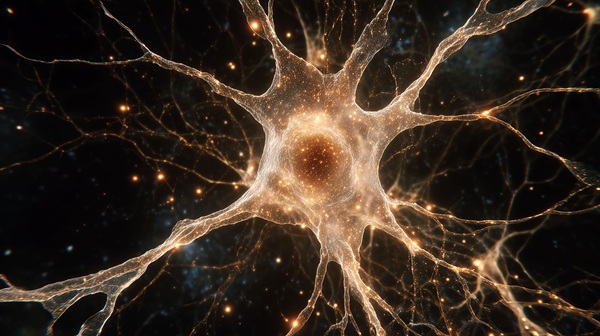
Proteins are the memory storage medium of the brain; scientists have spent years exploring the possibility of using proteins and other biologic materials to construct memory-based devices. Although a few protein-based memory materials have shown promise in experimental studies, developing such materials for practical use remains a challenge.
In a new study, Dr. Tetsuro Majima and colleagues used a special fluorescent protein to etch or "record” a specific information pattern on a glass slide. Using an innovative combination of light and chemicals, the researchers showed they could "read” the pattern and subsequently erase it at will, demonstrating that the proteins could provide storage, playback, and erasure of information--the hallmarks of a successful memory device.
The recording process was almost completed after one minute of photoirradiation to read a clear pattern consisting of a specific protein-ligand complex with high spatiotemporal resolution. Erasure of the protein array was then achieved by photoirradiation onto the entire patterned surface.
A specific protein can be assembled on a patterned ligand by a protein-ligand interaction and can then be collected by photoelimination of the protein-ligand interaction. In terms of a diagnostic assay, this concept becomes an effective technique for the detection and collection of a specific protein. As a first trial for the fabrication of the protein recording material, the scientists used streptavidin, which has a strong association with biotin, and investigated the physicochemical property of this material in detail.
The study led by Dr. Tetsuro Majima, took place at The Institute of Scientific and Industrial Research (ISIR; Osaka, Japan).
Related Links:
The Institute of Scientific and Industrial Research




Platinum Member

Automated Coagulation Analyzer
Hemolumi H6
Gold Member

Nucleic Acid Extractor System
NEOS-96 XT

Manual Pipetting Aid
Pipette Controllers macro
New

Microbiology Laboratory Automation Solution
BD Kiestra™ ReadA+BarcodA