Inherited Retardation, Autism in Mice Corrected
By Biotechdaily staff writers
Posted on 28 Jan 2008
Researchers have recently corrected major symptoms of mental retardation and autism in mice.Posted on 28 Jan 2008
The study, which was published in the December 20, 2007, issue of the journal Neuron, indicated that a specific class of drugs could have the same effect in humans. These drugs are not yet approved by the U.S. Food and Drug Administration (FDA), but will soon be entering into clinical trials.
Fragile X syndrome (FXS), affecting 100,000 people in the United States alone, is the most common inherited cause of mental retardation and autism. The researchers corrected FXS in mice modeling the disease. "These findings have major therapeutic implications for fragile X syndrome and autism,” said study lead author Dr. Mark F. Bear, director of the Picower Institute and professor of neuroscience at the Massachusetts Institute of Technology (MIT; Cambridge, MA, USA).
These findings support the hypothesis that many of FXS's psychiatric and neurologic symptoms--learning disabilities, autistic behavior, and childhood epilepsy--are caused by too much activation of one of the brain's major network managers, the metabotropic glutamate receptor mGluR5.
"Fragile X is a disorder of excess--excess synaptic connectivity, synthesis, memory extinction, body growth, excitability--and remarkably, all these excesses can be reduced by reducing mGluR5,” said Dr. Bear.
Individuals with FXS have mutations in the X chromosome's FMR1 gene, which encodes the fragile X mental retardation protein, FMRP. The MIT study found that FMRP and mGluR5 are at opposite ends of a kind of molecular seesaw. They keep each other in check, and without FMRP, mGluR5 signals run out of control.
Dr. Bear and colleagues examined how genes and environment interact to refine connections in the brain. Synapses are the brain's connectors and their modifications are the basis for all learning and memory. There is a growing consensus among researchers that developmental brain disorders such as FXS, schizophrenia, and autism should be considered "synapsopathies”--diseases of synaptic development and plasticity (the ability to change in response to experience).
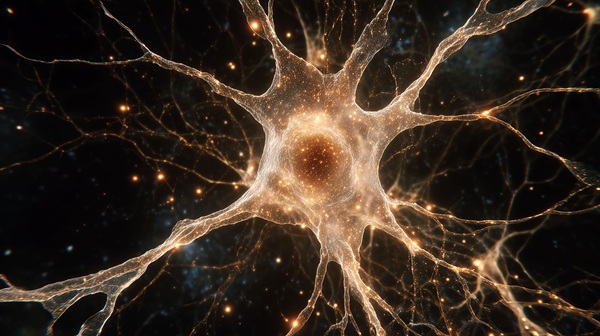
Dendritic spines--little bumps on neurons' branchlike projections--receive many of the synaptic inputs from other neurons. Abnormal spines have long been associated with various forms of human mental retardation. In FXS, spines are more numerous, longer, and more spindly than they should be. Thin spines tend to form weak connections.
The researchers discovered that a 50% decrease in mGluR5 corrected multiple defects in the fragile X mice. In addition to correcting dendritic spines, reduced mGluR5 improved altered brain development and memory, restored normal body growth, and reduced seizures--many of the symptoms experienced by humans with FXS.
The researchers utilized genetic engineering to reduce mGluR5, but a drug could achieve the same thing. Although not yet approved by the U.S. Food and Drug Administration (FDA), mGluR5 blockers are entering into human clinical trials. "Insights gained by this study suggest novel therapeutic approaches, not only for fragile X but also for autism and mental retardation of unknown origin,” Dr. Bear said.
Earlier this year, MIT Picower Institute researcher Dr. Susumu Tonegawa and colleagues reported positive results using a different approach to reversing FXS symptoms. Dr. Tonegawa and colleagues identified a key enzyme called p21-activated kinase (PAK) that affects the number, size, and shape of connections between neurons.
Related Links:
Massachusetts Institute of Technology




Platinum Member

Automated Coagulation Analyzer
Hemolumi H6

New
Gold Member

Serum Indices Control
Acusera Serum Indices Control

New

Neurofilament Light Chain Assay
Lumipulse G NfL Blood

Gold Member

Fully-auto Specific Protein (Nephelometry) Analyzer
PA240