Skin Aging Reversed in Mice by Suppressing Action of Single Protein
By Biotechdaily staff writers
Posted on 17 Dec 2007
Posted on 17 Dec 2007
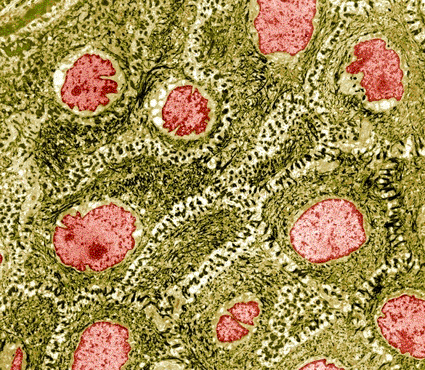
Image: Colored transmission electron micrograph (TEM) of a section through keratinocyte skin cells, which are found in the epidermis layer of the skin (Photo courtesy of Steve Gschmeissner / SPL).
The research, performed by investigators from Stanford University School of Medicine (CA, USA), could one day be beneficial in helping older people heal from an injury as quickly as they did when they were younger, according to senior author Howard Chang, M.D., PhD, assistant professor of dermatology. However, Dr. Chang and his colleagues cautioned their findings would likely be useful in short-term therapies in older individuals but not as a potential fountain of youth. The study supports the hypothesis that aging is the result of specific genetic changes instead of accumulated wear and tear, according to Dr. Chang. Furthermore, those genetic changes can be reversed even late in life. "The implication is that the aging process is plastic and potentially amenable to intervention,” Dr. Chang said. The study's findings were published in the advance online version of the December 15, 2007, issue of the journal Genes and Development.
The study took place due to existing data from experiments using microarrays, which detect the activity of all genes in a cell. In earlier studies, researchers had discovered a large number of diverse genes that become either more active or less active in older individuals. Dr. Chang and graduate student Adam Adler, the study's first author, searched through this existing data to see if those age-related genes had anything in common. It turned out that their activity increased or decreased with the help of the protein called NF-kappa-B. Dr. Chang reported that people had long known that NF-kappa-B travels into a cell's nucleus to control the activity of genes. What they did not know is that many of those genes regulated by the protein have a role in aging.
The investigators evaluated whether blocking the activity of NF-kappa-B in the skin of older mice for two weeks had a youthful effect. "We found a pretty striking reversal to that of the young skin,” Dr. Chang said.
First, the researchers assessed the genetic alterations resulting from blocking NF-kappa-B. After two weeks, the skin of two-year-old mice had the same genes active as cells in the skin of newborn mice-a striking difference when compared with the skin of a normal two-year-old mouse. In addition, the skin looked more youthful. It was thicker and more cells appeared to be dividing, much like the skin of a younger mouse.
Drs. Chang and Adler cautioned that their findings are not likely to be the basic for the fountain of youth. This is because they do not know if the rejuvenating effects of NF-kappa-B are long lasting. Moreover, the protein has roles in cancer, the immune system, and a range of other functions throughout the body. Suppressing the protein on a long-term basis could indeed result in cancers or other diseases that undermine its otherwise youthful effect.
"You might get a longer lifespan but at the expense of something else,” Dr. Chang said. Instead, the researchers believe their research could point to a way of helping older individuals heal more quickly after surgery or enhance organ function during illness. These short-term applications are not as likely to risk side effects that could go together with inhibiting such a critical protein.
Related Links:
Stanford University School of Medicine




Platinum Member

Automated Coagulation Analyzer
Hemolumi H6

Gold Member

Automatic Hematology Analyzer
CF9600
New

MR-proADM Test
B•R•A•H•M•S MR-proADM KRYPTOR test

Manual Pipetting Aid
Pipette Controllers macro